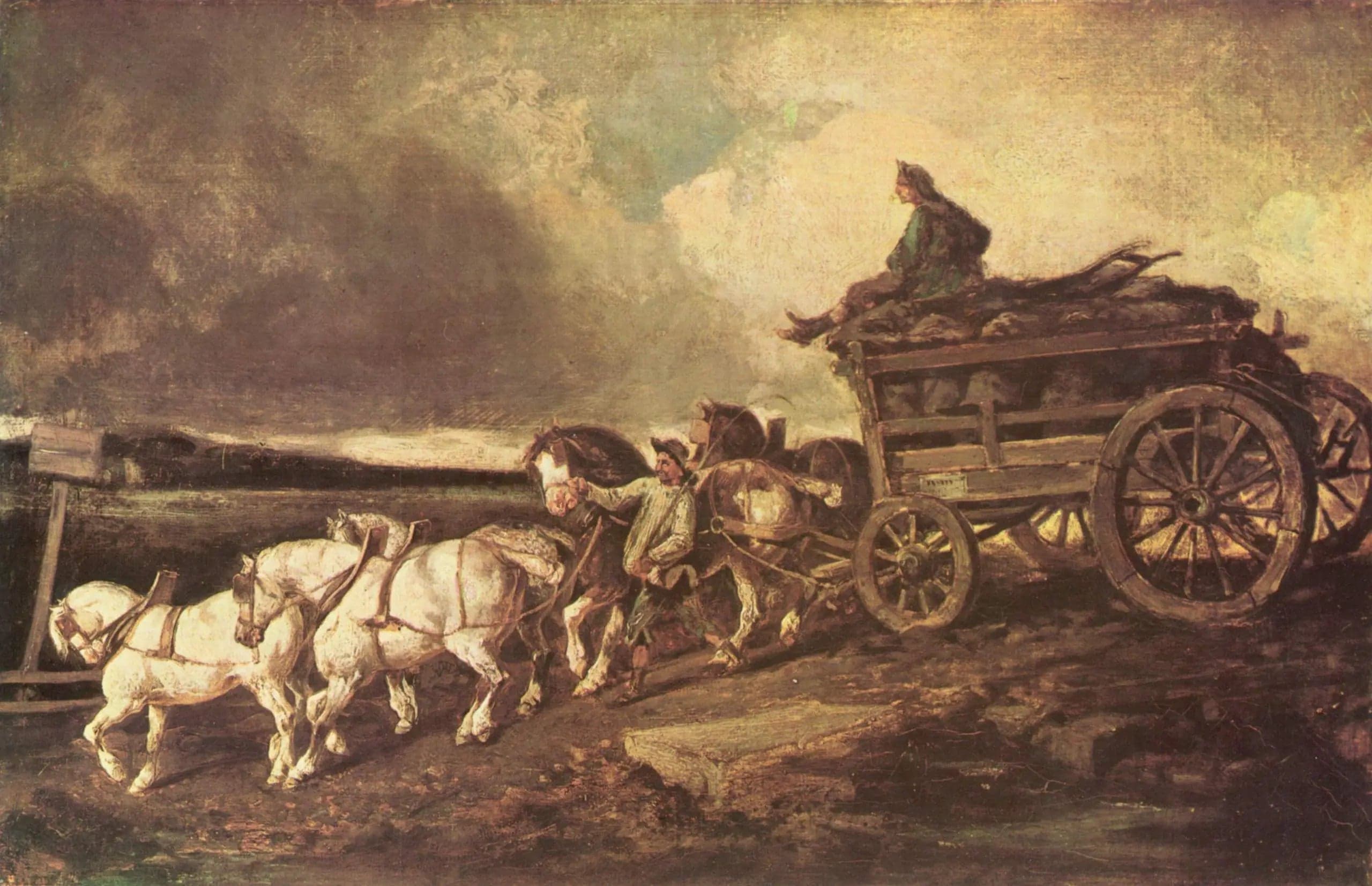
The Coal Cart
- Original dimensions
- 65 x 42 cm
- Museum
- Kunsthalle Mannheim
- Year
- 1821
Scene depicted
The painting "The Coal Cart" portrays a poignant scene from the daily life of coalmen. This painting depicts a cart loaded with coal, a symbol of the emerging industry and the struggles of workers. The dynamic movement of the cart, the faces marked by fatigue and the sun embody the real challenges of this time, while the urban landscape in the background evokes the emerging modernity taking shape in the wake of tradition.
Historical context
Created in 1821, this iconic painting of the romantic movement is rooted in the tumultuous context of post-Napoleonic France. It captures a world where traditions clash with modern aspirations, thus reflecting the spirit of a society in full transformation. The painting, now preserved at the Kunsthalle Mannheim in Germany, is a striking example of this era, measuring 65 x 42 cm.
Place in the artist's career
"The Coal Cart" sits at a crucial crossroads in Géricault's career. Both a work of maturity and transition, it precedes compositions such as " The Raft of the Medusa " and " The Race of Free Horses ", highlighting the evolution of his technical and emotional approach, evolving towards increasingly dramatic poles.
Anecdote
Théodore Géricault often said: “True painting lies in the expressiveness of forms and the depth of emotions.” One autumn morning, as the sun cast long shadows on the cobblestones of Paris, the artist drew inspiration from the harsh reality of coalmen, electrified by the energy of their labor. This canvas is a reflection of that passion.