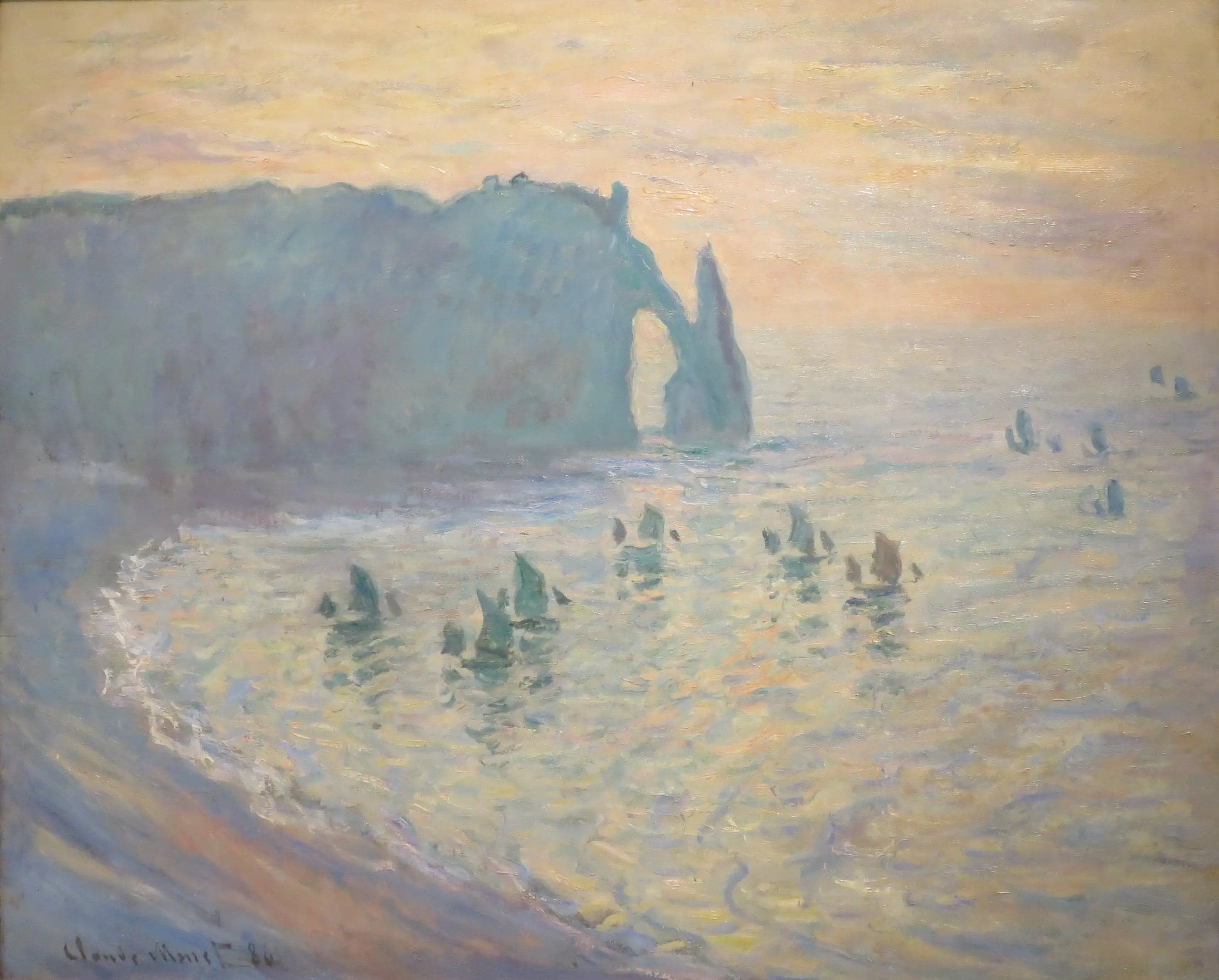
The Cliffs at Étretat
- Original dimensions
- 81 x 66 cm
- Museum
- Pushkin State Museum of Fine Arts
- Year
- 1886
Scene depicted
“The Cliffs at Étretat ” depicts the majestic natural landscape of the chalk cliffs overlooking the sea, viewed from an angle where light plays with the nuances of the wind. The painting reveals a peaceful atmosphere while conveying the energy and movement of nature, a duality dear to the artist.
Historical context
Year: 1886 |BRK| Museum: Pushkin State Museum of Fine Arts |BRK| Dimensions: 81 x 66 cm
Place in the artist's career
This painting is situated at a significant turning point in Monet's career. As he established himself in the art world, “The Cliffs at Étretat ” marks a period of maturity where the Impressionist style fully flourishes. Alongside it, works such as “ Impression, Sunrise ” and “ Water Lilies ” demonstrate Monet's technical and emotional evolution, translating his relentless quest for light.
Anecdote
“The sea inspires me, it dances under the brilliance of the sky.” One summer morning, at the crashing of the waves against the cliffs, Monet sought to capture this living beauty. The fresh air, imbued with the salty scent, and the murmur of the waves pushed him to create a masterpiece where each brushstroke pays homage to the wild soul of this coast.