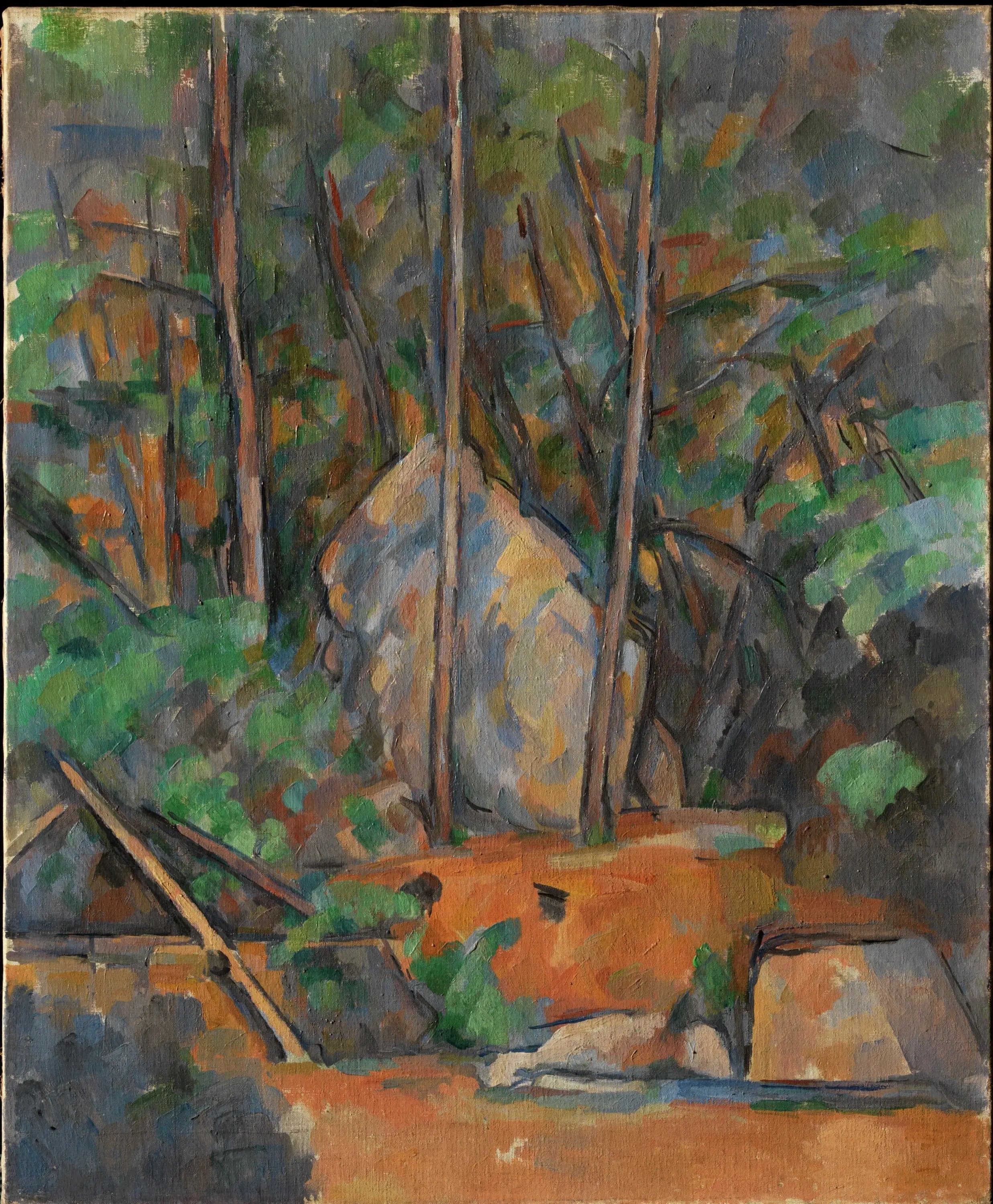
The Cistern in the Park of the Black Castle
- Original dimensions
- 60.95 x 74.29 cm
- Museum
- Princeton University Art Museum
- Year
- 1900
Scene depicted
This painting depicts a peaceful scene where a cistern, surrounded by lush greenery, harmoniously integrates into the landscape. The composition, marked by the depth of colors and the richness of textures, illustrates the harmony between man and nature, the very essence of Cézanne's pictorial work.
Historical context
Created in 1900 in Aix-en-Provence, the painting "The Cistern in the Park of the Black Castle" is part of the post-impressionist movement, a time when art breaks free from traditional norms to explore new visual sensations. Currently, this prestigious painting is housed in the Princeton University Art Museum , testifying to Cézanne's lasting impact on the history of art.
Place in the artist's career
"The Cistern in the Park of the Black Castle" represents a crucial step in Cézanne's career, positioned between his early impressionist explorations and his more structured approach to forms. Alongside paintings such as "Mont Sainte-Victoire" and "The Card Players," this work demonstrates the evolution of his style, marking a maturation in his artistic expression.
Anecdote
"Nature is a mystery that I strive to clarify," Cézanne might have said while contemplating the garden of the Black Castle. It is in the heart of this enchanting setting that the artist found inspiration, under a gentle spring sun, transforming a simple cistern into a canvas vibrant with life and emotion.