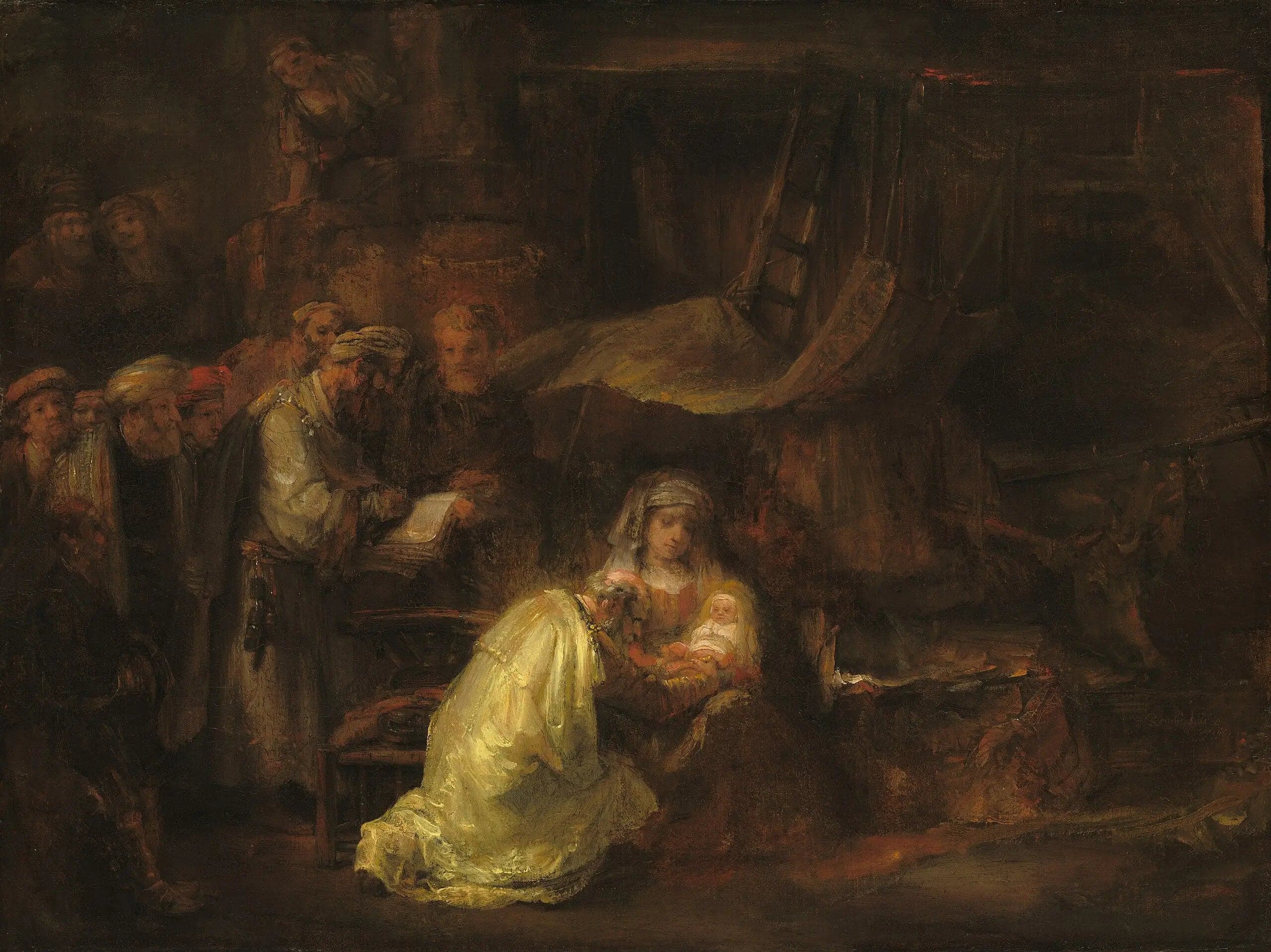
The Circumcision
- Original dimensions
- 75 x 56.5 cm
- Museum
- National Gallery of Art
- Year
- 1661
Scene depicted
In this canvas , Rembrandt chooses to represent a crucial moment filled with symbolism – that of the circumcision of Jesus, a ritual rite of passage. The captivating composition shows the faces in turmoil, revealing the tension and tenderness in pain. Each character, illuminated by this soft and divine light, tells a touching story, inviting the observer to feel the intensity of this sacred moment.
Historical context
Created in 1661, this painting is an iconic work by Rembrandt that belongs to a period when Dutch art flourished in Amsterdam, at the heart of the Dutch Republic. This painting illustrates a powerful biblical scene, fitting within the Caravaggesque movement and demonstrating an extraordinary mastery of light and shadow. To this day, this work is preserved at the National Gallery of Art , where it continues to enchant visitors.
Place in the artist's career
The Circumcision stands in Rembrandt's career as a significant milestone, marking the peak of his use of light and color to transcend human emotion. Compared to his earlier works, such as The School of Athens and The Night Watch , this painting reflects his artistic evolution towards a more intimate and personal approach to pictorial storytelling.
Anecdote
“I always seek to capture the light of the soul, even in the heart of pain,” Rembrandt might have said while observing the intensity of his work. This painting was born from a misty morning, where a ray of light filtered through a window, revealing the intimate truth of humanity. This vision ignites the scene depicted in The Circumcision , giving the moment an unparalleled depth.