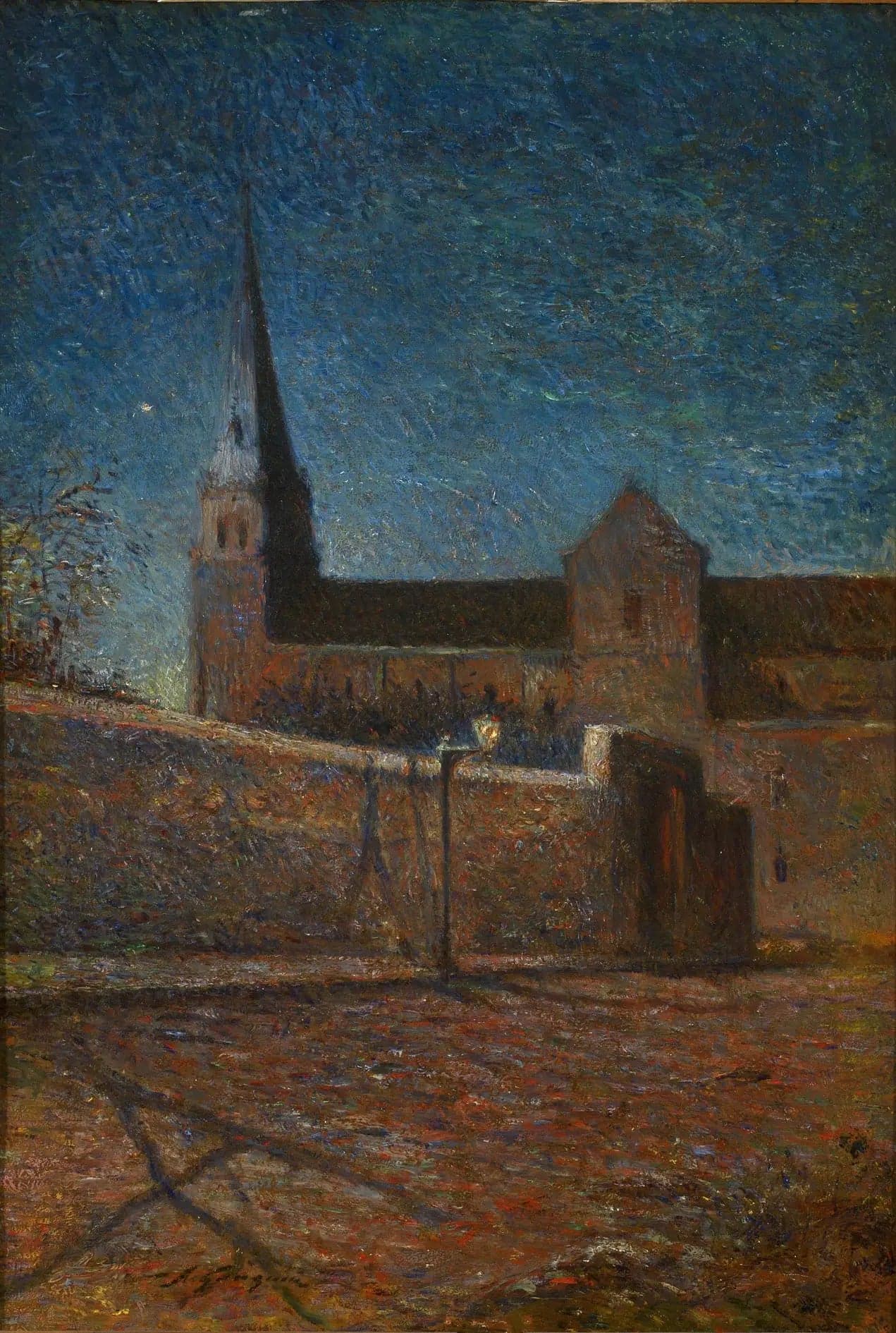
The Church of Vaugirard
- Original dimensions
- 34.5 x 50 cm
- Museum
- Groningen Museum
- Year
- 1879
Scene depicted
In The Church of Vaugirard, Gauguin pays tribute to the architectural harmony of this monument. The painting delivers a poetic vision of faith, enveloped in a tranquil atmosphere where shadows and lights merge. The artist is part of a tradition where spirituality intertwines with the stripped beauty of the places, creating a significant pictorial experience for the viewer.
Historical context
Created in 1879, during a period of artistic flourishing in Paris, this iconic painting is part of the post-impressionist movement. In a changing society, Gauguin captures the essence of The Church of Vaugirard, a place rich in history and presence. His painting, now housed in the Groningen Museum, evokes a harmony between color and light, measuring 34.5 x 50 cm.
Place in the artist's career
The Church of Vaugirard marks a pivotal stage in Gauguin's career, signifying the transition to a freer and bolder style. In parallel, works such as "Vision after the Sermon" and "The Source" illustrate his technical evolution. Far from a mere reflection, this canvas finds its place in Gauguin's artistic maturity, revealing his commitment to color and composition.
Anecdote
“Painting is for me a quest for lost beauty,” wrote Gauguin, recalling his inspiration for this masterpiece. One spring morning, the artist wandered through the quiet streets of Vaugirard. The soft light and enchanting aromas of blooming flowers surrounded him. This fleeting moment nourished the evocative power of his canvas, imbued with memories.
Major exhibitions
Paris 1863 – 1874: Revolution in Art