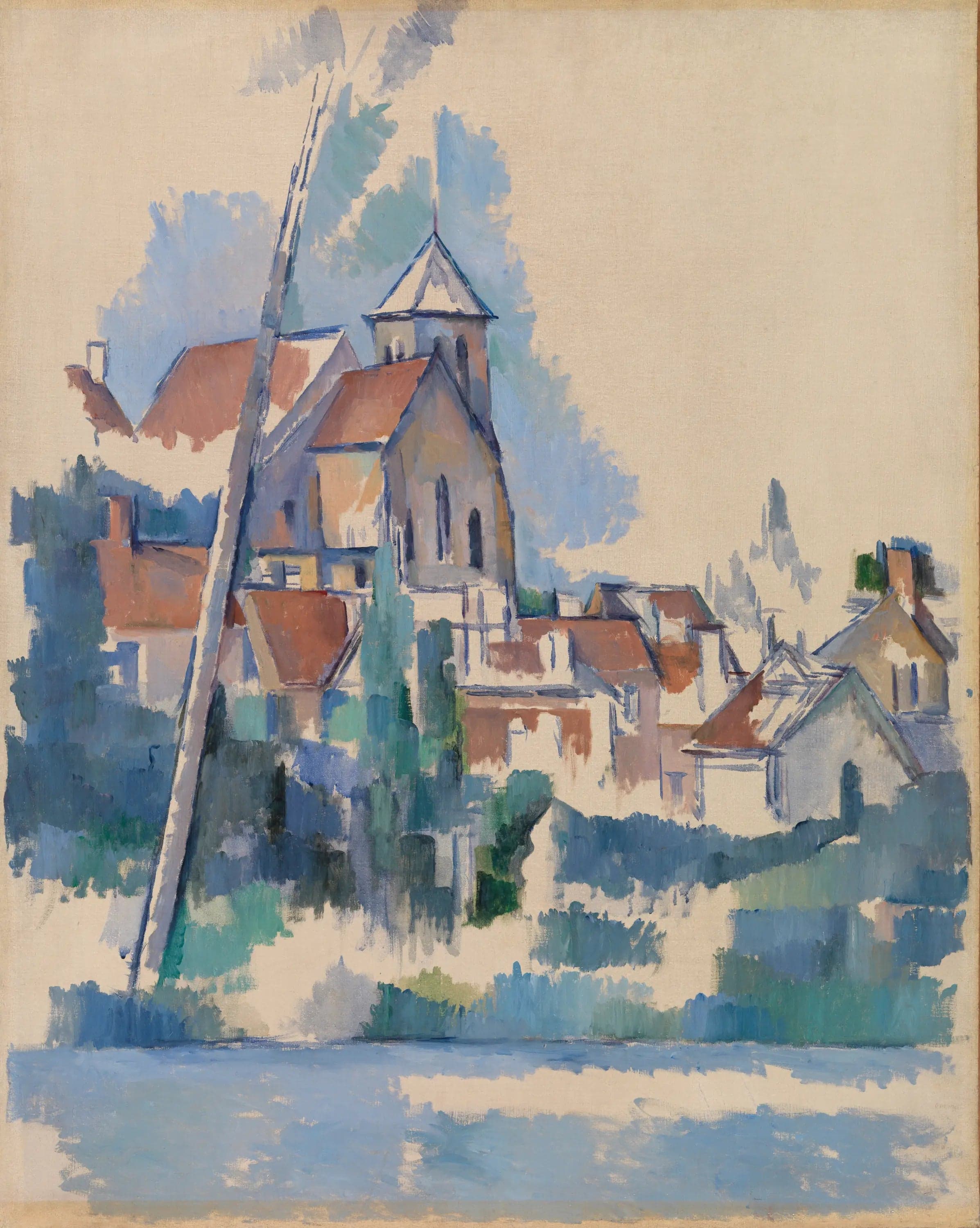
The Church of Montigny-sur-Loing
- Original dimensions
- 74 x 93 cm
- Museum
- Barnes Foundation
- Year
- 1898
Scene depicted
This painting, depicting the village church, illustrates Cézanne's mastery in capturing the harmony between architecture and the surrounding landscape. The painting illustrates not only the church but also the peaceful sides of rural life, framed by majestic trees, creating a serene dialogue between nature and the building. The touches of bright colors evoke both tranquility and spiritual depth.
Historical context
Created in 1898, this painting emblematic of Paul Cézanne captures the very essence of Montigny-sur-Loing, a small French commune located in Île-de-France. Belonging to the Impressionist movement, this canvas is set in an artistic context where light and color take precedence over drawing. Currently exhibited at the Barnes Foundation , this painting impresses with its dimensions of 74 x 93 cm, representing a moment frozen in time.
Place in the artist's career
The Church of Montigny-sur-Loing is a major milestone in Cézanne's career, an artist in full quest of his style. This painting positions itself between his early Impressionist compositions and his more abstract works, such as The Large Bathers and The Montagne Sainte-Victoire, showing an evolution in the way he interprets light and space.
Anecdote
“Nature must be painted as I see it, not as I think it,” said Cézanne while contemplating the landscape that inspired him. That morning, enveloped by the light mist of early morning, he photographed the church of Montigny-sur-Loing in his mind, overwhelmed by a palpable serenity that would nourish the evocative power of his masterpiece .