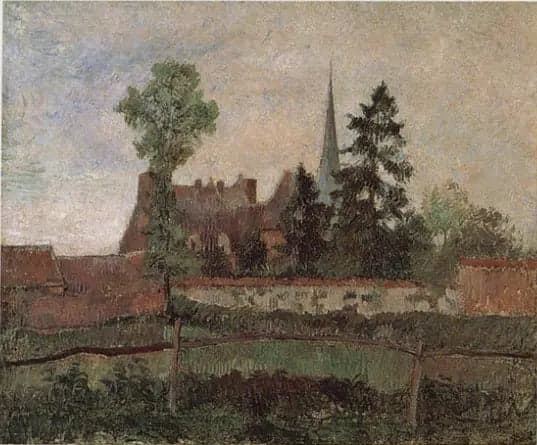
The Church and Manor of Éragny
- Original dimensions
- 63 x 54.5 cm
- Museum
- Gunma Modern Art Museum
- Year
- 1884
Scene depicted
The canvas depicts an ancestral church and a majestic manor, standing proudly amidst a verdant landscape. The fluid strokes of the painting reveal a striking harmony between nature and human architecture, a subtle dance between shadow and light. This composition is a tribute to the tranquility of the rural landscape, capturing the essence of a fleeting moment, like a breath of life.
Historical context
Created in 1884, this painting embodies a rare delicacy, transporting us to the peaceful commune of Éragny, nestled in the Paris region. Camille Pissarro , a central figure of the Impressionist movement, immortalizes here a scene rooted in an environment that is both familiar and filled with memories. The canvas , reverently displayed at the Gunma Modern Art Museum, serves as a window into a time when the rural landscape was worth much more than a mere backdrop.
Place in the artist's career
The Church and the Manor of Éragny occupies a crucial crossroads in the career of Camille Pissarro . A period of maturity for the artist, this pictorial work follows productions such as “The Potato Harvest” and “Kettle, Still Life,” two other canvases that testify to his technical and emotional evolution. The carefreeness of the early years gives way to a richness of color and structure that marks his later work.
Anecdote
“Nature is the most beautiful of painters,” said Pissarro, contemplating the manor and the church that inspired him so much. That morning, bathed in the light of a spring sun, the artist observes the play of shadow and light in a soothing silence, a simple yet powerful scene that then transforms into the masterpiece we know today.