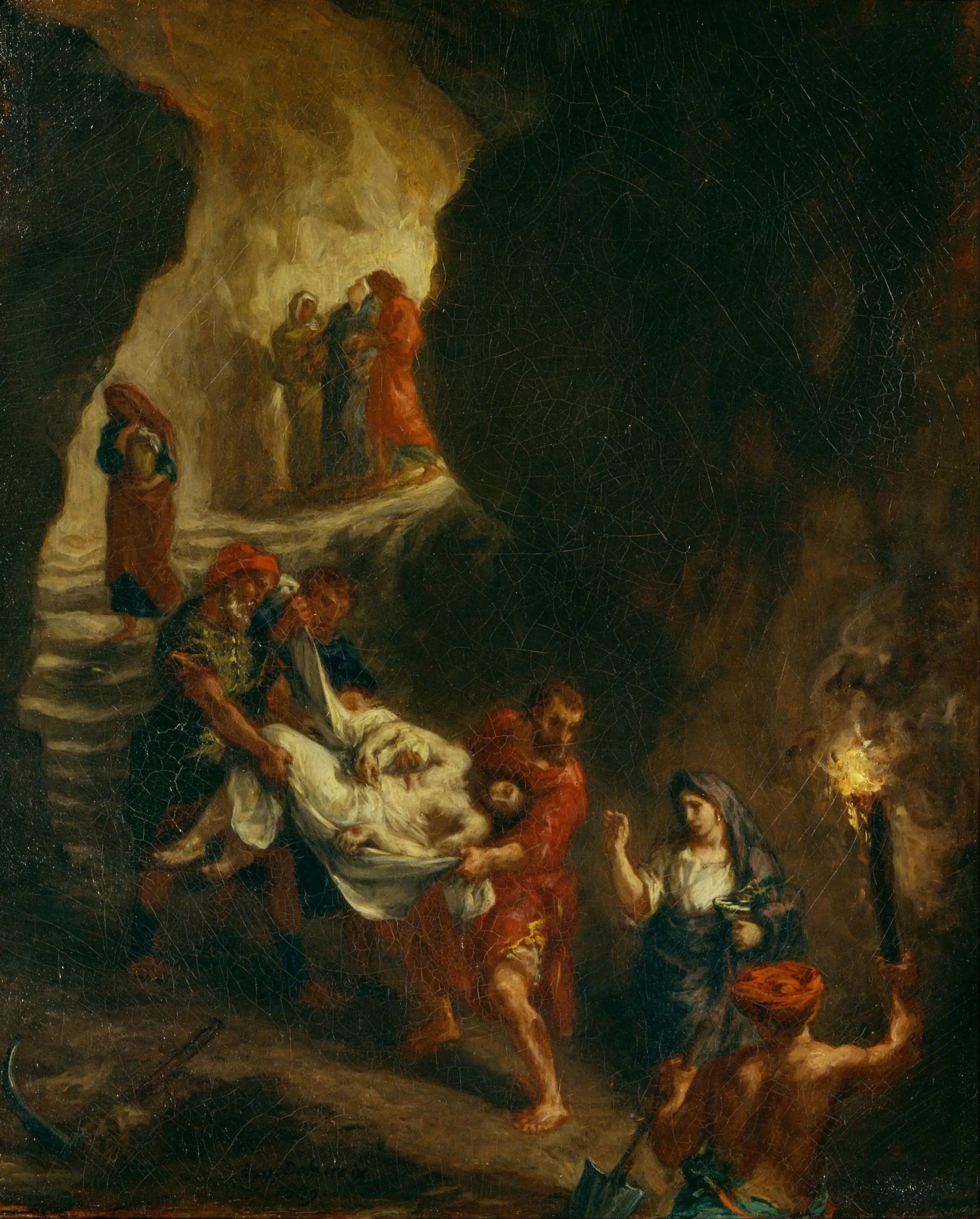
The Christ Laid in the Tomb
- Original dimensions
- 463 x 563 cm
- Museum
- National Museum of Western Art
- Year
- 1859
Scene depicted
In this moving painting, Delacroix depicts Christ, taken down from the cross, supported by a group of disciples. The poignant atmosphere of the scene illustrates pain and love, the sadness of loss and the idea of rebirth. Every detail, from the delicacy of the hands to the features marked by grief, resonates with an emotional power that transcends the simple visual to touch the soul.
Historical context
Created in 1859 in Paris, The Christ Carried to the Tomb is at the heart of the Romantic movement, reflecting a time when emotion and passion took precedence over the coldness of rationalism. In a period of creative effervescence, Eugène Delacroix emerges as a major figure of this artistic heritage, exhibiting his canvas in the famous National Museum of Western Art , where it still finds its place today. Its monumental dimensions, 463 x 563 cm, invite immersive and profound contemplation.
Place in the artist's career
The Christ Carried to the Tomb represents a pivotal moment in Delacroix's career. This painting, situated at the peak of his Romantic expression, testifies to his stylistic evolution alongside other iconic compositions such as Liberty Leading the People and The Massacre at Chios . Each work reveals a facet of an artistic genius always in search of new emotions.
Anecdote
“Light is the breath of color,” could have said Eugène Delacroix while painting this canvas. Inspired by a misty morning in an old cemetery, the artist captured the dramatic intensity of the moment, that sweet blend of light and darkness that he masters perfectly in this pictorial work, The Christ Carried to the Tomb.