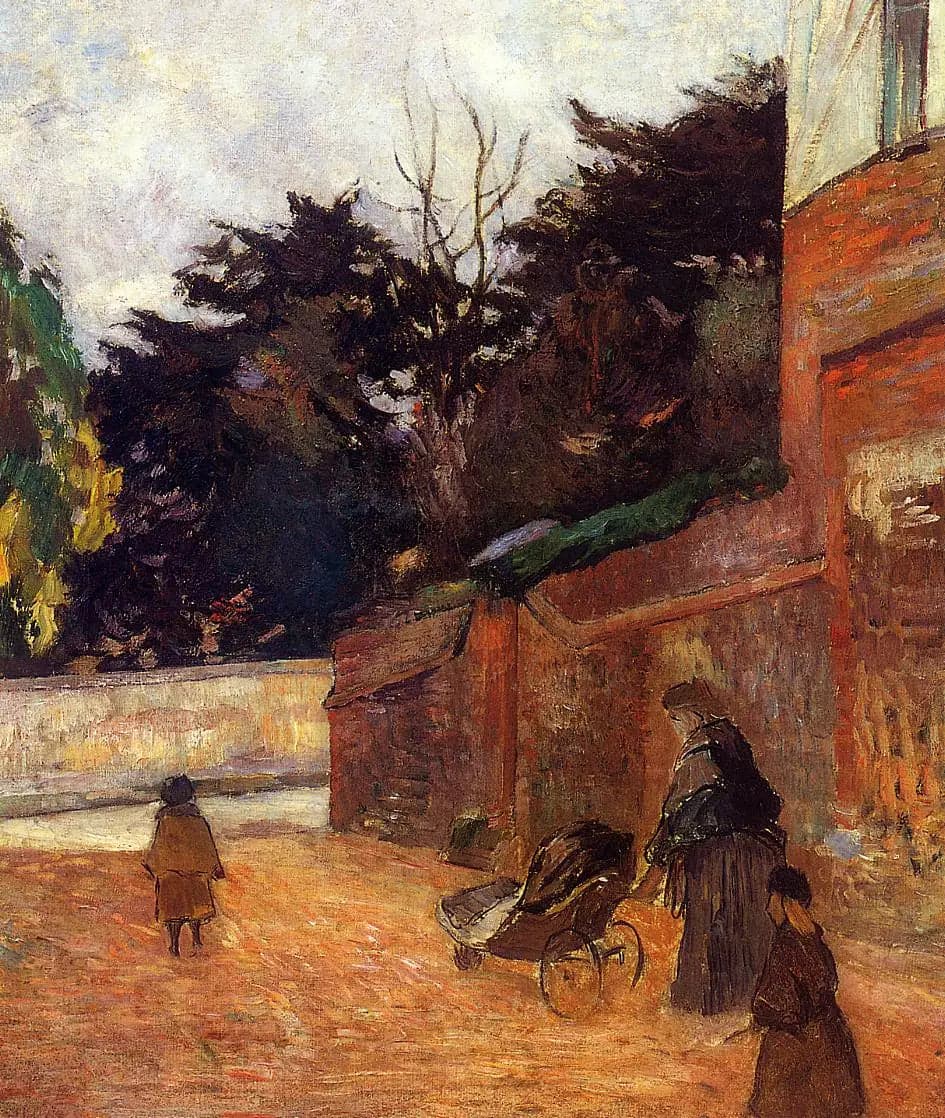
The Children in the Street
- Original dimensions
- 46 x 55 cm
- Museum
- Not specified
- Year
- 1884
Scene depicted
In “The Children in the Street,” the canvas depicts a lively scene where children are playing, symbols of a preserved innocence amidst the Parisian frenzy. The delicate silhouettes are bathed in soft light, and each detail tells a story of complicity, joy, and melancholy, striking the heart of anyone who lingers on the painting.
Historical context
Created in 1884, this painting , the fruit of the genius of Paul Gauguin , captures the essence of urban life in Paris, the cradle of the Impressionist movement. It immerses the viewer in a time when modernity was beginning to evolve; France, at that time, was a melting pot of artistic innovations. No precise indication exists regarding the current location of the canvas , but its presence in private collections is surely delicate. With its dimensions of 46 x 55 cm, this canvas subtly highlights the contrasts of city life.
Place in the artist's career
This painting represents a fundamental step in Gauguin's career, illustrating the beginning of his search for a unique style. In parallel with works such as “The Visionary” and “The Night of Christmas,” these paintings testify to his artistic evolution. With an increased sensitivity to color and a nascent abstraction, Gauguin begins to shape his distinctive imprint.
Anecdote
“Every child is a representative of their time, a little messenger of innocence in the heart of a transforming world,” could have said Paul Gauguin . The inspiration for this masterpiece was born on a sweet spring morning, as he discovered the laughter and games of children in a Parisian alley. This fleeting moment marked his work, anchoring in this painting a powerful emotion that transcends the ages.