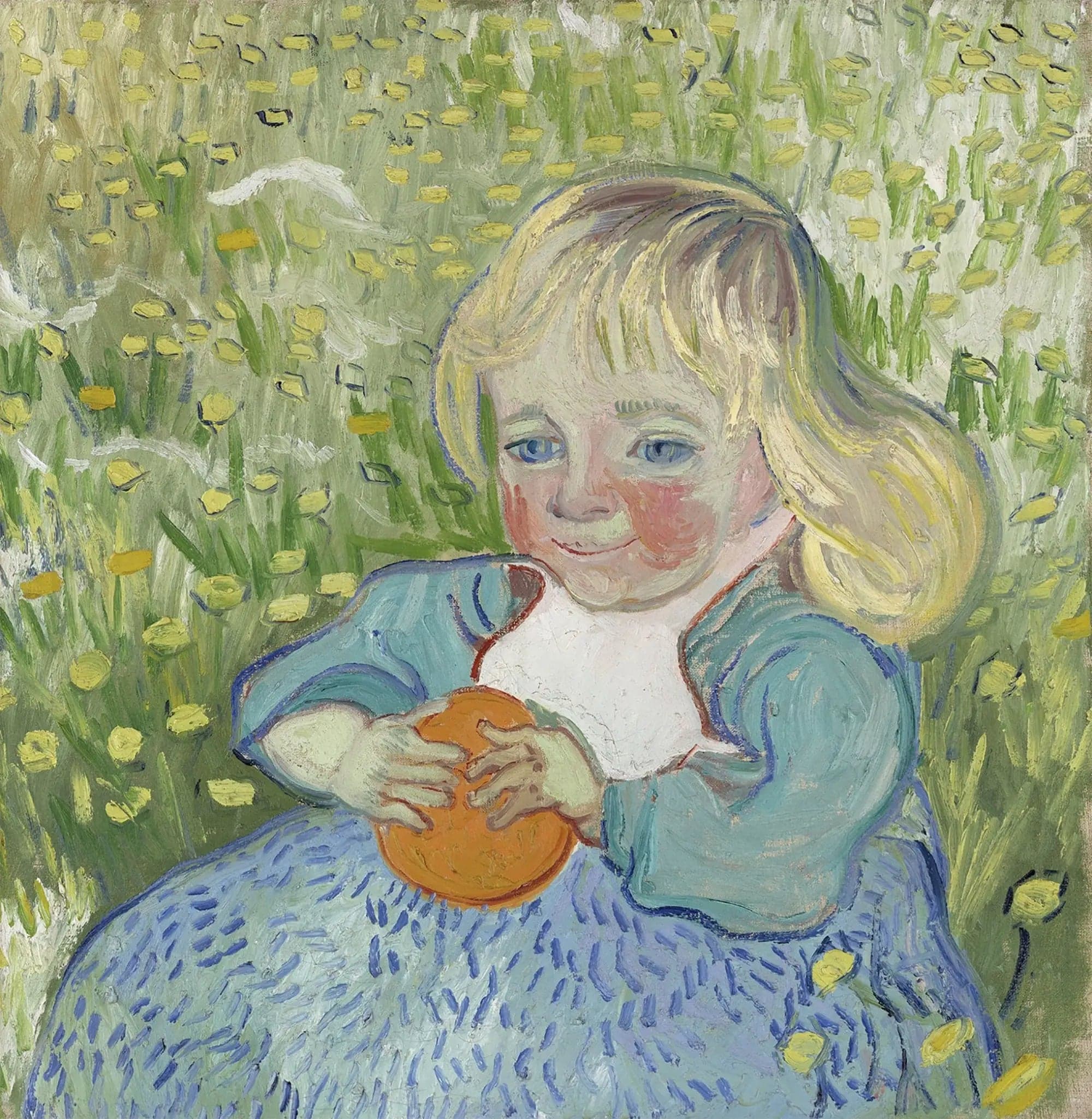
The Child with the Orange
- Original dimensions
- 51 x 50 cm
- Museum
- villa Flora
- Year
- 1890
Scene depicted
The painting “The Child with the Orange” depicts a young child, whose sparkling gaze and carefree attitude radiate a simple yet profound joy for life. Holding a bright orange, a symbol of energy and vitality, this little character becomes the protagonist of a scene filled with warmth and light. The composition is both intimate and universal, reflecting the innocence of childhood and the ephemeral beauty of life.
Historical context
Artwork: The Child with the Orange |BRK| Artist: Vincent van Gogh |BRK| Year: 1890 |BRK| Museum: villa Flora |BRK| Place of Creation: Auvers-sur-Oise |BRK| Dimensions: 51 x 50 cm
Place in the artist's career
This painting fits into a pivotal period of Van Gogh's career. Created at a time when he achieves emotional and technical mastery, The Child with the Orange converses with other iconic works such as “ The Sunflowers ” and “ Starry Night ”. Together, these paintings reveal Van Gogh's evolution, oscillating between dramatic intensity and touching simplicity, illustrating the richness of his artistic legacy.
Anecdote
“To see the light, one must first feel the darkness.” This quote from Van Gogh resonates deeply with the essence of The Child with the Orange , born from a sweet morning in Auvers-sur-Oise , where the sun's rays filter through the leaves, illuminating a young child full of innocence. It is in this atmosphere imbued with tenderness that the artist captured the simple elegance of youth, elevating this canvas to the status of masterpiece.