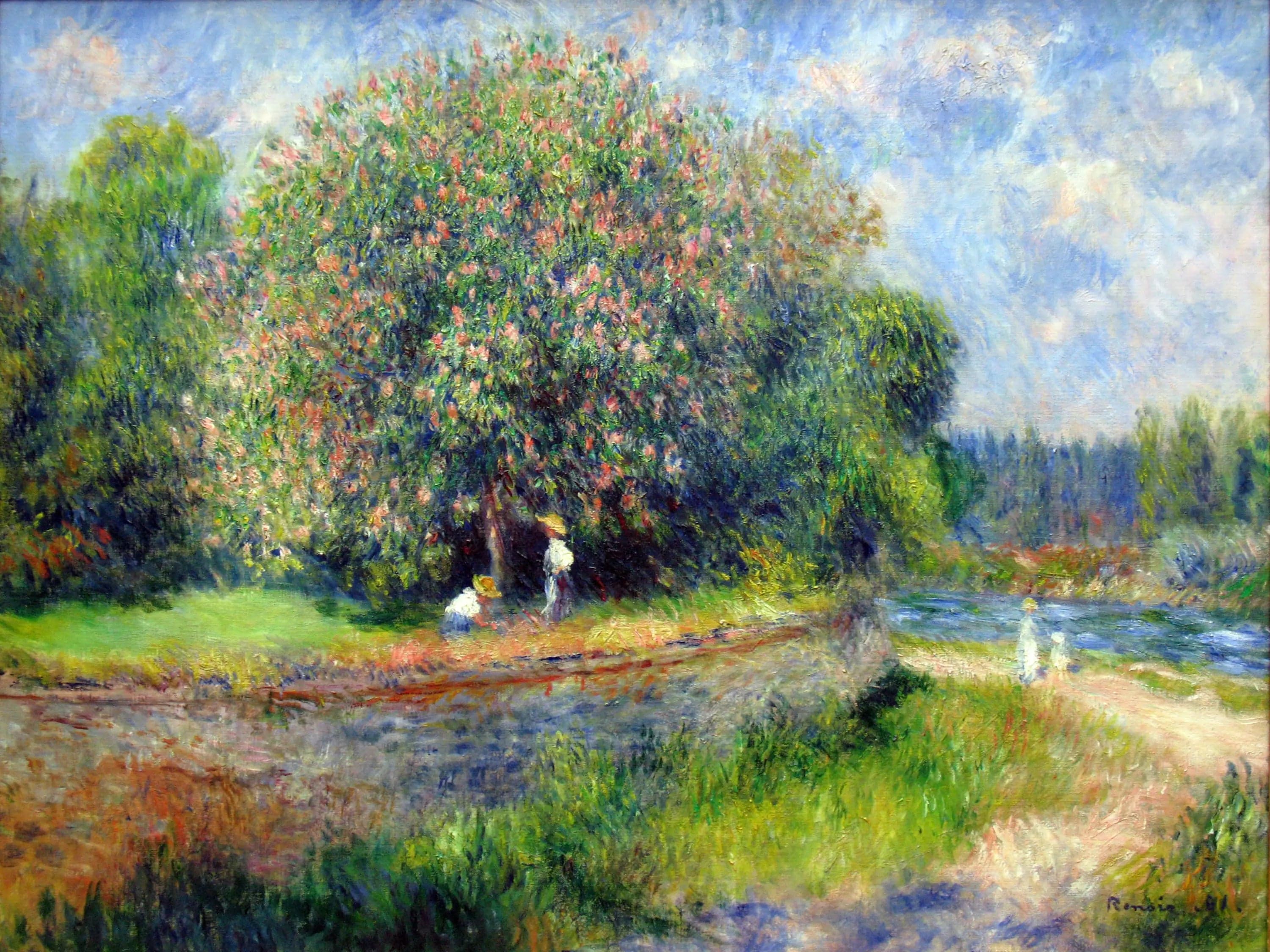
The Chestnut Tree in Bloom - Pierre
- Original dimensions
- 89 x 71 cm
- Museum
- Alte Nationalgalerie
- Year
- 1881
Scene depicted
Through the painting , Renoir invites us to explore a garden bathed in light, where the chestnut trees, crowned with bright white flowers, rise majestically. The composition is a celebration of nature: vibrant colors and delicate shapes blend together, while the gentle breeze seems to caress the leaves. The work exudes a peaceful atmosphere, a scent of blooming and renewal, plunging the viewer into a suspended moment.
Historical context
Created in 1881, the painting "The Chestnut Tree in Bloom" is an emblematic example of the Impressionist movement, born in Paris during the second half of the 19th century. This canvas , carefully preserved at the Alte Nationalgalerie in Berlin, immerses us in the floral landscapes and spring atmospheres that characterize Renoir's work. The artist, at the height of his talent, captures the ephemeral beauty of nature in this vibrant composition, measuring 89 x 71 cm.
Place in the artist's career
"The Chestnut Tree in Bloom" represents a turning point in Renoir's career, revealing his transition from a more academic style to a sensational and vibrant expression of emotion. Alongside this masterpiece, works such as "Luncheon of the Boating Party" and "Dance at Bougival" also mark his exploration of human passions and light, reflecting his flourishing artistic evolution.
Anecdote
"Beauty lies in the details of everyday life." This quote, a true credo of Renoir, resonates in the genesis of his masterpiece. It was one spring morning, as golden light filtered through the leaves of the blooming chestnut trees, that the artist was inspired. He then imagined this painting , which would become a symbol of joy and rebirth .