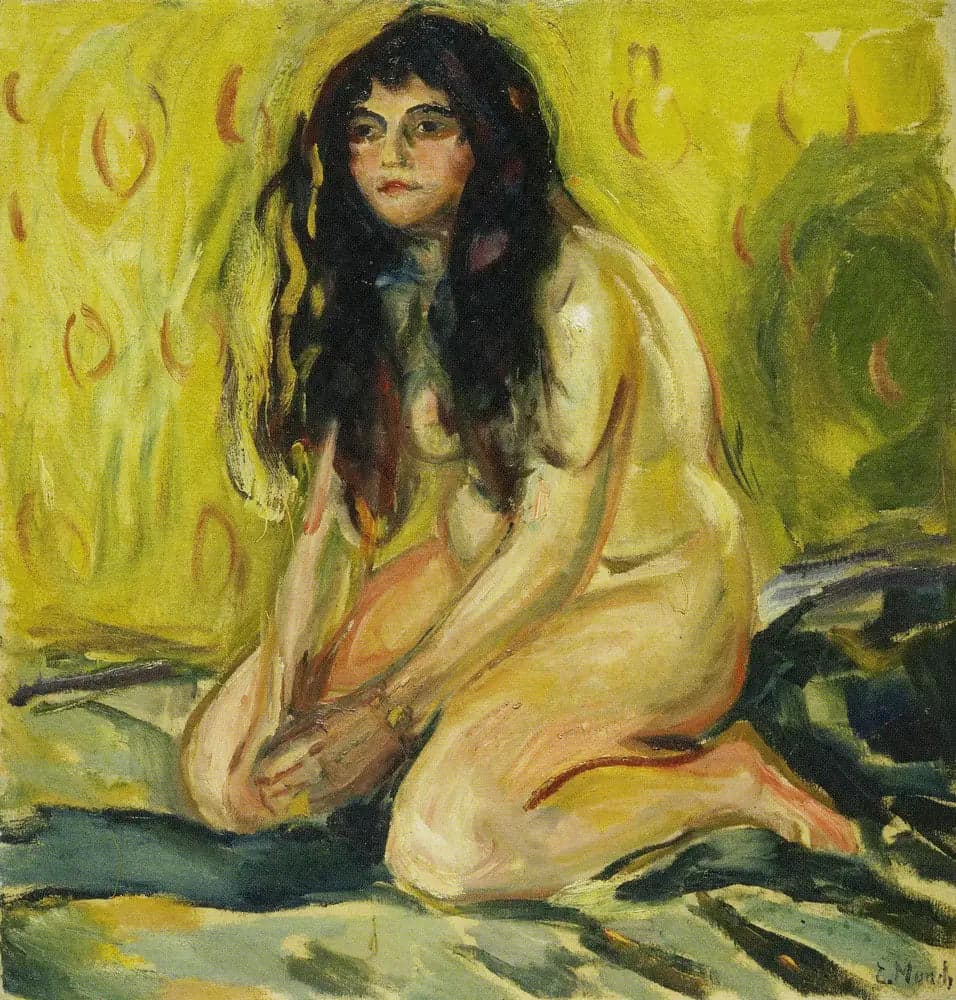
The Cat
- Original dimensions
- 120 x 100 cm
- Museum
- Not specified
- Year
- 1919
Scene depicted
In The Cat , Munch explores the mysteries of animal intimacy. The painting reveals a majestic cat, a symbol of delicacy and solitude, immersed in a delicate environment vibrant with colors. The depth of the animal's eyes is accentuated by bold brushstrokes, reminding us that behind every creature lies a story yet to be told.
Historical context
Created in 1919, in the heart of post-war Europe, The Cat unfolds as a reflection on the human soul, capturing the nuances of a troubled era. Munch, influenced by symbolism , brought this painting to life using techniques unique to him, evoking the melancholy and fleeting beauty of existence. Currently, the canvas , although without a specified host museum, is renowned for its unique dimension of 120 x 100 cm, attracting the gaze of art lovers.
Place in the artist's career
The Cat represents a significant milestone in Munch's career, marking the transition from his early works to more introspective compositions. Among his other paintings , this canvas can be compared to The Scream , which evokes themes of despair and melancholy, as well as The Madonna , which is more romantic. Munch continues to evolve, his technique refining, and his capturing of human emotions reaching new heights in The Cat .
Anecdote
“In every look of a cat lies a mysterious world,” would have declared Edvard Munch about his composition . The inspiration for this masterpiece was born from a quiet morning, as Munch observed a cat passing through his house, his heart calmed by the gentle whisper of spring. This fleeting moment awakened a deep emotion within him, anchoring this painting with a contemplative aura.
Major exhibitions
Edvard Munch and his models: 1912-1943