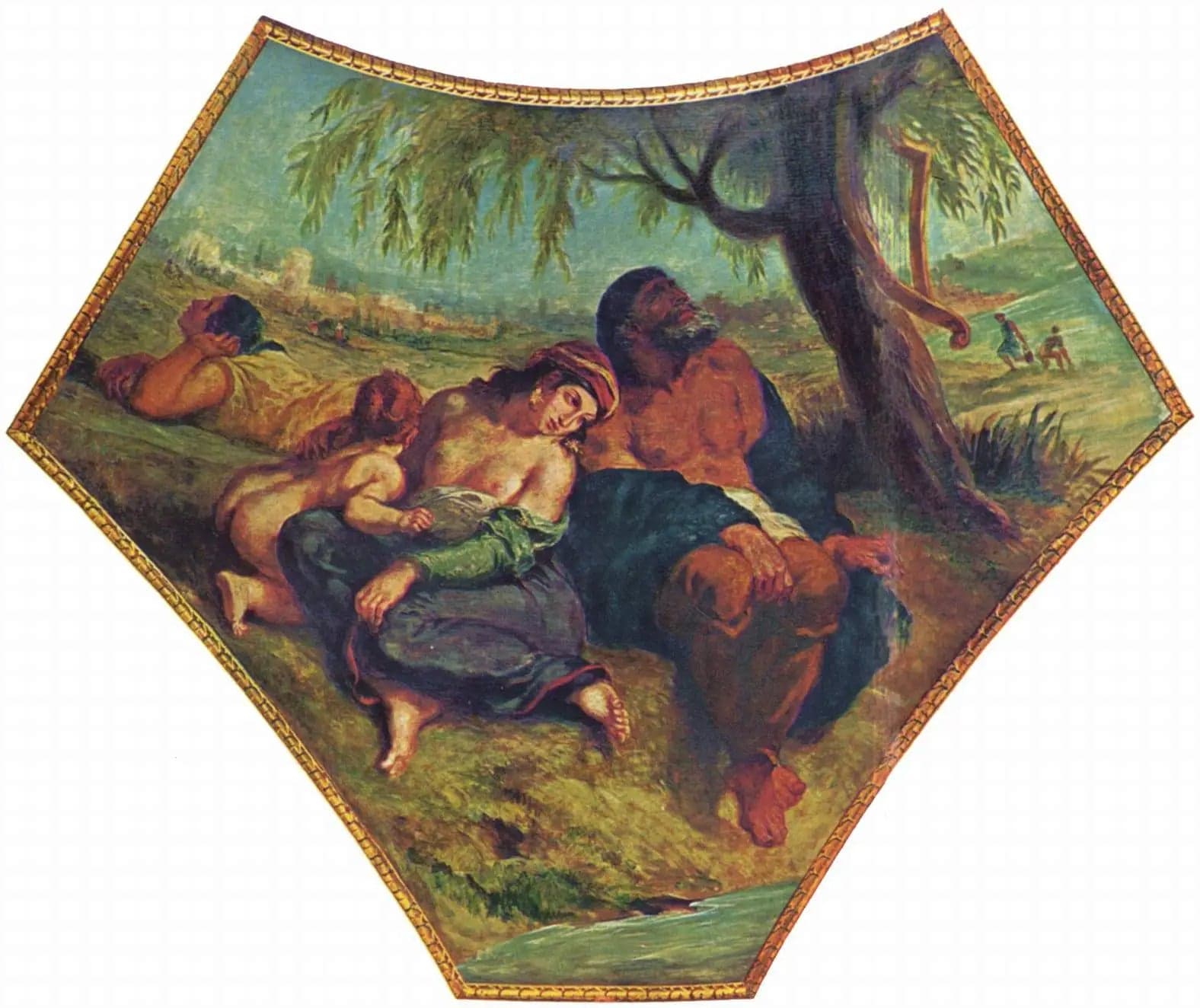
The Captivity in Babylon
- Original dimensions
- 292 x 221 cm
- Movement
- Romanticism
- Museum
- Palais Bourbon
- Year
- 1842
Scene depicted
In this pictorial work, Delacroix portrays the drama of the captives, transcending human pain through a tumultuous composition. The characters, frozen in their struggle for freedom, are enveloped in an atmosphere of melancholy, while the nuances of light and shadow immerse the viewer in the heart of their suffering.
Historical context
Created in 1842, in Paris, by a hero of the romantic movement, The Captivity in Babylon is a major work that encapsulates the spirit of an era where the awakening of human feelings and passion are reflected in art. Currently exhibited at the Palais Bourbon, this majestic canvas of 292 x 221 cm evokes tales of despair and beauty.
Place in the artist's career
The Captivity in Babylon represents a turning point in Delacroix's career, marking the culmination of his artistic quest. Compared to other masterpieces such as Liberty Leading the People and The Massacre at Chios , this painting shows an evolution towards a more mature expression and a strengthened palette.
Anecdote
Delacroix once stated: “Art should not only be seen, it should be felt.” It is this desire to resonate with the soul that led him to capture the emotional power of the scene depicted in The Captivity in Babylon. Imagine him, one spring morning, wandering through the streets of Paris, inspired by the emotion of a face he encountered.