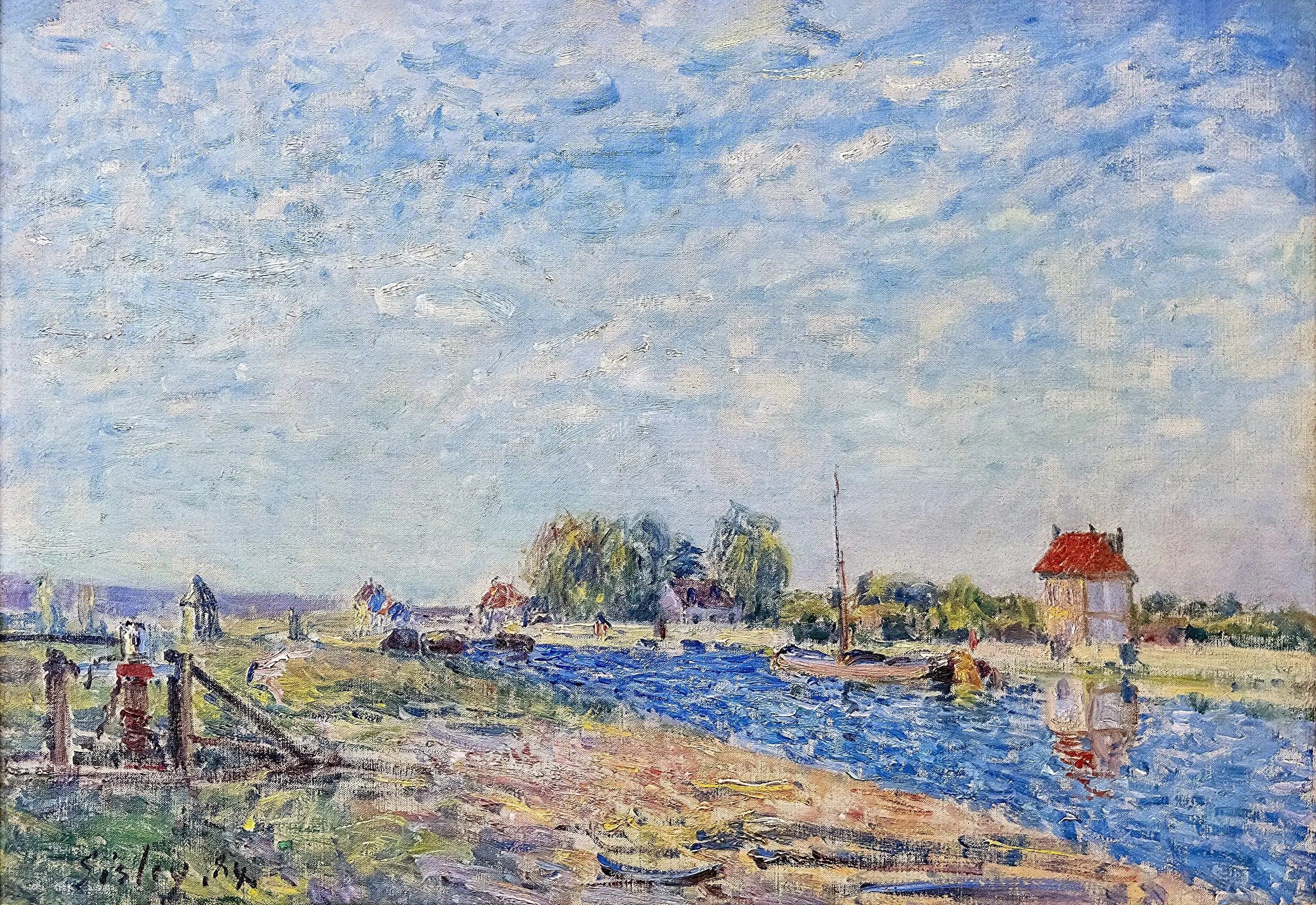
The Canal du Loing
- Original dimensions
- 92.5 x 73.5 cm
- Movement
- Impressionism
- Museum
- Orsay Museum
- Year
- 1892
Scene depicted
In this pictorial work, Sisley transports us along the banks of the Canal du Loing. The peaceful water reflects the vivid strokes of his brush, while the trees lining the scene flourish in a symphony of vibrant greens. This painting evokes the tranquility of nature, an invitation to the peaceful contemplation of this fluid and soothing movement.
Historical context
Created in 1892, this painting embodies life in the picturesque setting of the town of Moret-sur-Loing, in the heart of the Île-de-France region. This masterpiece of Impressionism flourishes under the attentive and sensitive gaze of Alfred Sisley , a master of Impressionist transcription. Today, the painting finds refuge at the Orsay Museum in Paris, waiting to captivate eyes and souls.
Place in the artist's career
The Canal du Loing marks the pinnacle of Alfred Sisley 's career, demonstrating his technical evolution towards mastery of light and reflections. In parallel, one can mention “Impression, Sunrise” by Claude Monet and “The Charing Cross Bridge” by Monet as well, to illustrate the stylistic evolutions between these variations of Impressionism .
Anecdote
“Art must capture not only light but also the soul of a place.” This quote resonates strongly when discussing the inspiration of Alfred Sisley . Imagine that spring morning, a gentle murmur of the Loing mingling with the song of birds; that perfect moment when the canvas awaits to be revealed. This is how the magic of this painting is born.