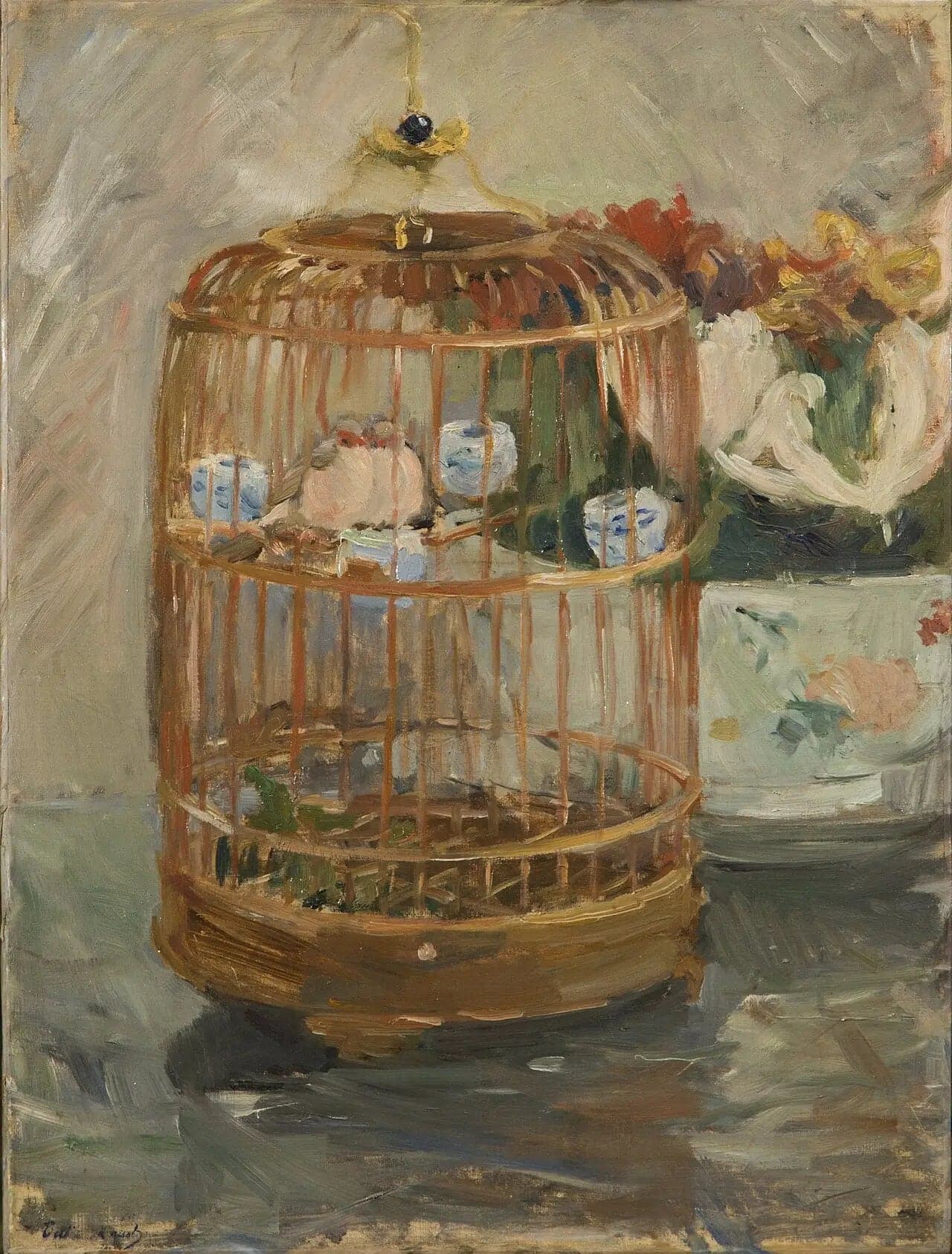
The Cage
- Original dimensions
- 38.1 x 50.5 cm
- Museum
- National Museum of Women in the Arts
- Year
- 1885
Scene depicted
The painting “The Cage” illustrates a warm domestic scene, highlighting the tenderness of family relationships. The woman at the center, delicately painted, observes a cage adorned with a bird, a symbol of freedom and confinement. The composition, both intimate and introspective, resonates as a tribute to everyday life, while raising questions about female emancipation at that time.
Historical context
Created in 1885 in Paris, this canvas is emblematic of the Impressionist period, a movement that captured the light and emotions of everyday life. Berthe Morisot , a prominent figure of this movement, skillfully translated the nuances of feminine and family life, projecting the sensitivity of her time. Today, the painting is preserved at the National Museum of Women in the Arts in Washington, testifying to the lasting legacy of this pictorial work.
Place in the artist's career
This painting is situated at an important turning point in Morisot's career, as she begins to assert herself as a unique voice among her peers. Alongside works such as “The Cradle” and “Reading,” “The Cage” testifies to her distinctive style, where fluid brushstrokes and the accuracy of the light attached to her subjects reveal a significant technical and emotional evolution.
Anecdote
It is said that Morisot declared: “Nature inspires me, especially when the sun makes the shadows dance.” Imagine her, as she paints, immersed in the softness of a summer morning, dazzled by the play of light on the leaves. This lively scene, full of life, resonates with the evocative power of The Cage.