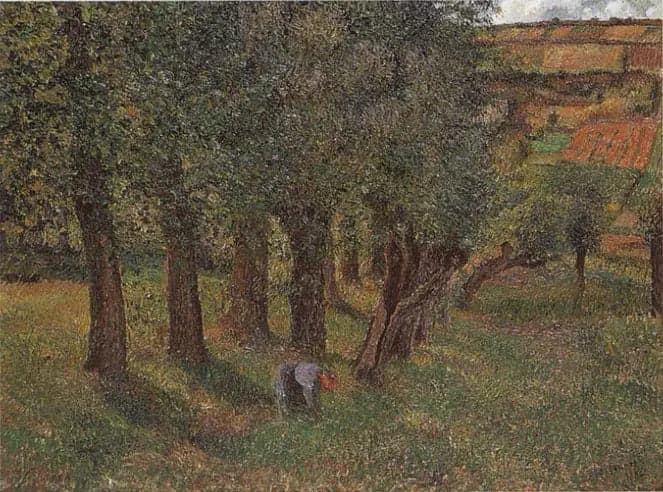
The Cabbage at Pontoise
- Original dimensions
- 92 x 73 cm
- Museum
- Not specified
- Year
- 1882
Scene depicted
In this painting , Pissarro immerses us in a living tableau, where cabbages, with their proud stature, are highlighted, surrounded by the lush greenery that adorns the landscape. The scene depicts a rural market, revealing not only the sincere beauty of nature but also the labor of the men and women who cultivate this generous land. The painting, at first glance simple, unveils a world vibrant with authenticity and harmony between man and his environment.
Historical context
Created in 1882 in the charming town of Pontoise, located in the heart of Île-de-France, this iconic work belongs to the rich impressionist tradition that strongly marked this era. Within this painting, Camille Pissarro captures a rural scene where nature is both the backdrop and the central subject, testifying to a love for the landscape and peasant life. Today, the painting remains a treasure of a museum or a private collection, inviting viewers to explore its dimensions of 92 x 73 cm.
Place in the artist's career
Le Chou à Pontoise is at the heart of Pissarro's career, marking a period of maturity and technical mastery in his work. Alongside other significant creations like Les Jardins de l’Hermitage à Pontoise and La Récolte des Pois, this canvas reveals the evolution of his style, as he explores the nuances of light and color, propelling realism towards new impressionist horizons.
Anecdote
“Light and color are my mistresses.” This phrase could well summarize the inspiration that led Pissarro to immortalize a spring morning, where the softness of the air and the scent of fresh vegetables resonated in the alleys of Pontoise. The authenticity of this vibrant painting takes root in this fleeting moment, transforming a simple cabbage into a symbol of life and nature.