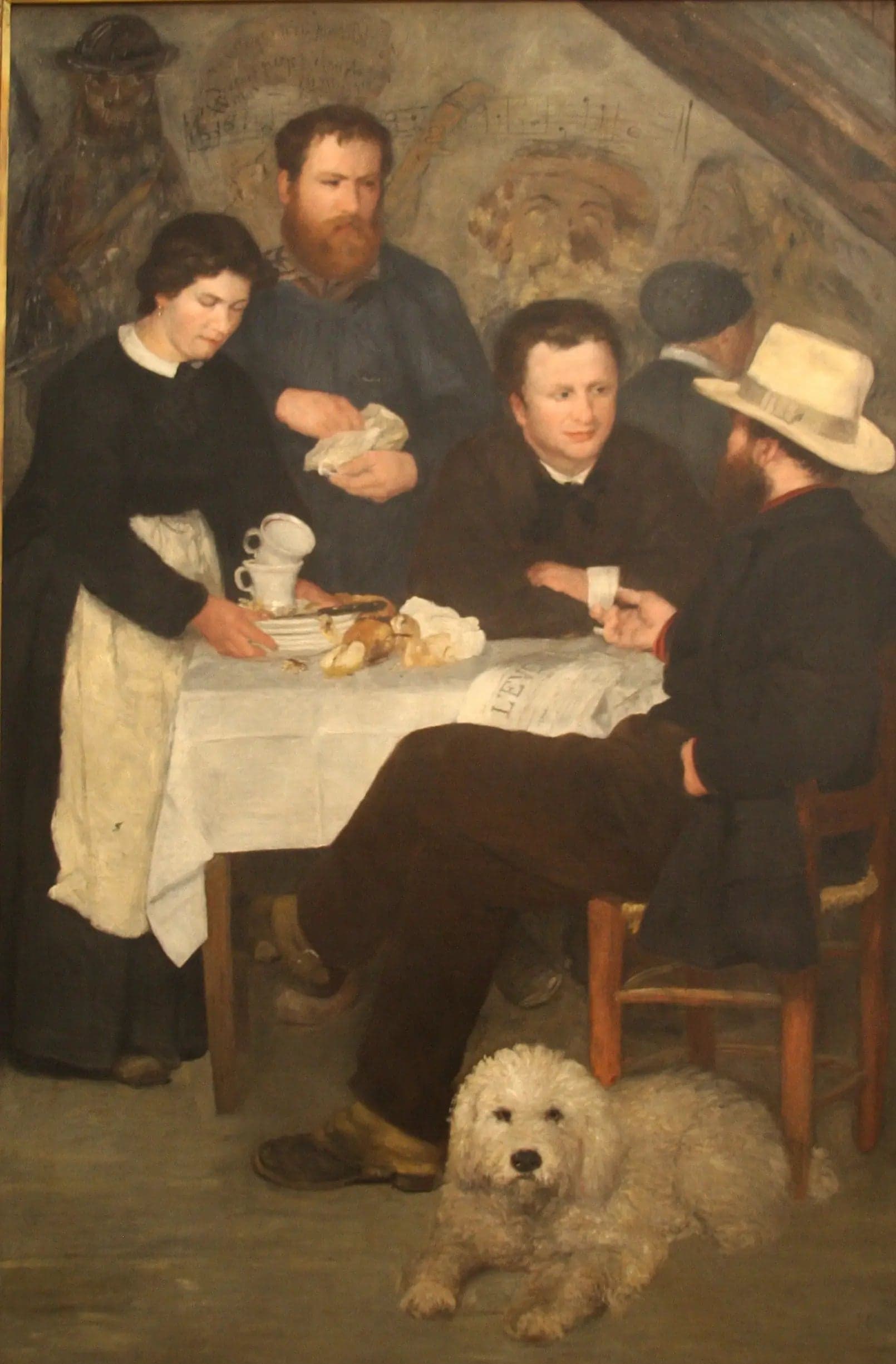
The Cabaret of Mother Antony - Pierre
- Original dimensions
- 131 x 194 cm
- Museum
- Nationalmuseum
- Year
- 1866
Scene depicted
This canvas depicts a lively evening in a Parisian cabaret, where typical characters of the era frolic in a joyful and animated atmosphere. Laughter resonates, conversations overlap, and human warmth manifests through the vibrant use of colors. Renoir, through this composition, immortalizes these moments of life, transforming the scene into a panorama of shared emotions.
Historical context
Created in 1866, this iconic painting by Auguste Renoir was born in the heart of the vibrant Montmartre district in Paris, full of excitement and creativity. It is part of the Impressionist movement, a trend that advocates capturing fleeting moments of everyday life through light and color. Currently, this exceptional painting is preserved at the Nationalmuseum , where it continues to enchant visitors with its delicacy and dynamism.
Place in the artist's career
The painting The Cabaret of Mother Antony is situated at a pivotal moment in Auguste Renoir 's career. As he evolves in his Impressionist style, this pictorial work reflects his transition to bolder compositions, as seen in The Starry Night and Ball at the Moulin de la Galette , where light and human interaction take a prominent place, thus testifying to his artistic maturation.
Anecdote
“In every face, I perceive a story to tell.” These words from Auguste Renoir awaken in us the very essence of his masterpiece , created after being inspired by a visit to the cabaret. One sweet spring morning, Renoir freezes on the canvas at the precise moment when laughter erupts, enveloping his mind in a golden light and a scent of exuberant joy. The warm imprint of this scene is found in the vitality of The Cabaret of Mother Antony .
Major exhibitions
Q109467244