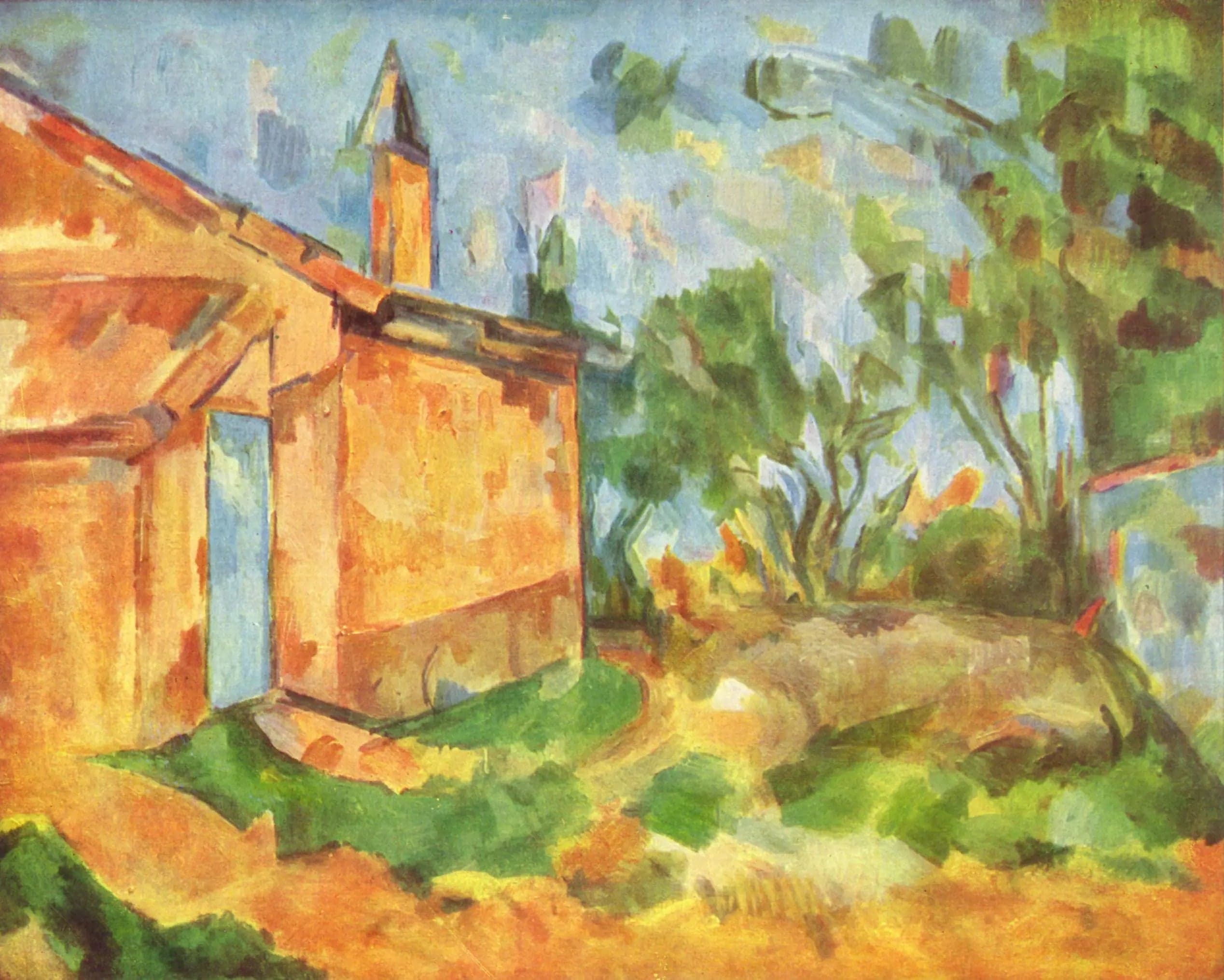
The Cabanon of Jourdan
- Original dimensions
- 81 x 65 cm
- Museum
- National Gallery of Modern and Contemporary Art
- Year
- 1906
Scene depicted
Le Cabanon de Jourdan, a true tribute to the simplicity and beauty of rural life, represents a garden shed under a clear sky, evoking the charm of provincial landscapes. The geometric shapes and powerful contrasts testify to Cézanne's sharp gaze on his environment, where light and shadow meet to create a palpable visual harmony. The peaceful atmosphere of this scene invites the viewer to serene contemplation, capturing the very soul of nature.
Historical context
Created in 1906, this painting emblematic of Paul Cézanne finds its roots in the charming landscape of Aix-en-Provence, in the heart of the Provence-Alpes-Côte d'Azur region. This canvas , like an open window onto the pictorial work of the time, marks the transition between post-impressionism and cubism , highlighting the genius of one of the masters of modern art. Currently exhibited at the National Gallery of Modern and Contemporary Art, this painting captures the depth of emotions and the beauty of the Provençal landscapes in its generous dimensions of 81 x 65 cm.
Place in the artist's career
Le Cabanon de Jourdan represents a turning point in the career of Paul Cézanne , marking a period of artistic maturity where he honed his technique and vision. At the crossroads between figurative and abstraction, this painting resonates with other major works such as Les Grandes Baigneuses and La Montagne Sainte-Victoire , symbols of a stylistic evolution where color and form enrich the visual narrative.
Anecdote
“I paint walls, roofs, and landscapes, but it is the emotion that invites me with every brushstroke.” This quote from Cézanne's thoughts resonates particularly when evoking the genesis of his masterpiece , Le Cabanon de Jourdan . Imagine a spring morning, amidst the summer floral scents, where the artist immerses himself in the serenity of another time, a fleeting moment forever frozen in this painting .