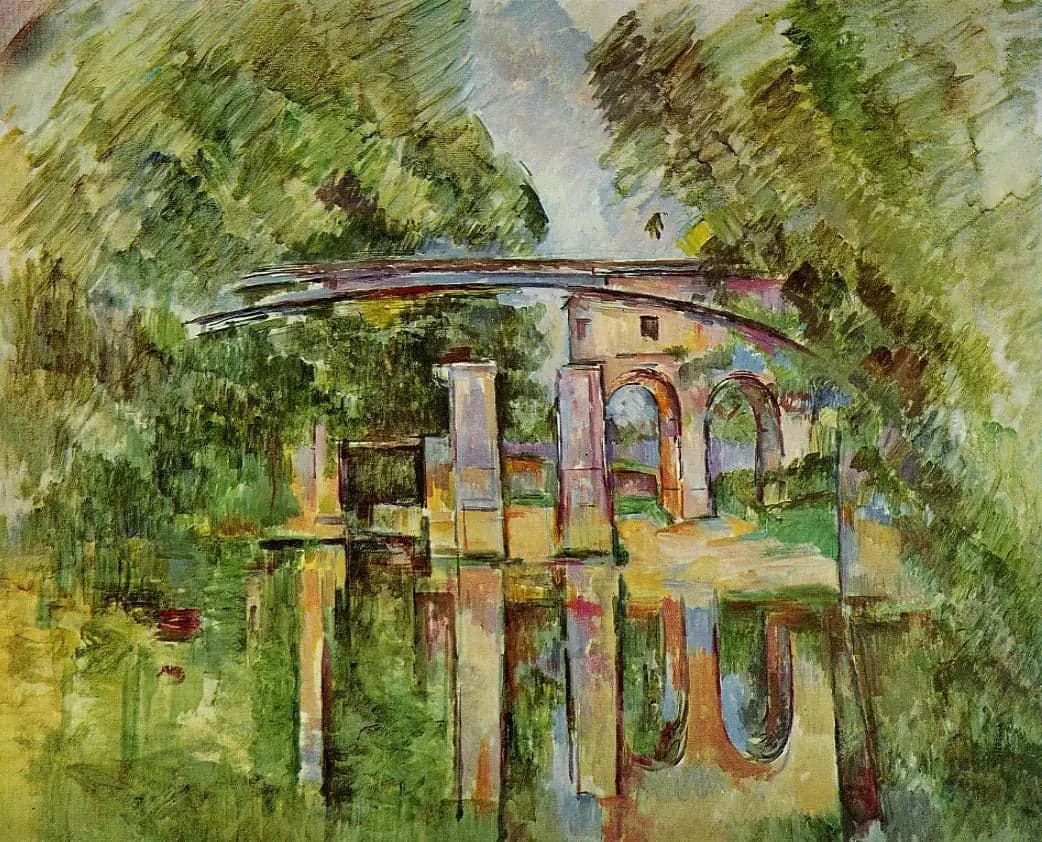
The Burnt Mill at Maisons-Alfort
- Original dimensions
- 65.4 x 81 cm
- Museum
- Israel Museum
- Year
- 1890
Scene depicted
This vibrant painting depicts a scene that is both simple and powerful, revealing the mill whose rustic architecture blends with the surrounding vegetation. Shadows and lights intertwine, creating a dialogue between the past and the present, while the sky seems to tell its own story. With an almost palpable atmosphere, this masterpiece transports the viewer into a realm of contemplation and serenity.
Historical context
Created in 1890, this painting is emblematic of a key moment in the evolution of the post-impressionist movement. Located in Maisons-Alfort, a city with a rich cultural heritage, this canvas is now housed in the Israel Museum . In an era when art began to move away from classical conventions, Cézanne reinvents light and form, inserting layers of emotions and sensations that compose the painting.
Place in the artist's career
The Burning Mill in Maisons-Alfort represents a pivotal period in Cézanne's career, revealing his artistic maturity. Prefiguring works such as The Large Bathers and Mont Sainte-Victoire , this painting stands as a banner of his unique style, marking an evolution towards bolder compositions and a finer exploration of color and perspective.
Anecdote
“True art lies in the ability to capture the essence of a moment,” said Cézanne. Imagine him, on a sunny morning, observing the Mill, a flickering flame of inspiration. Each brushstroke is an echo of his love for nature, a visual poetry found in The Burning Mill in Maisons-Alfort .