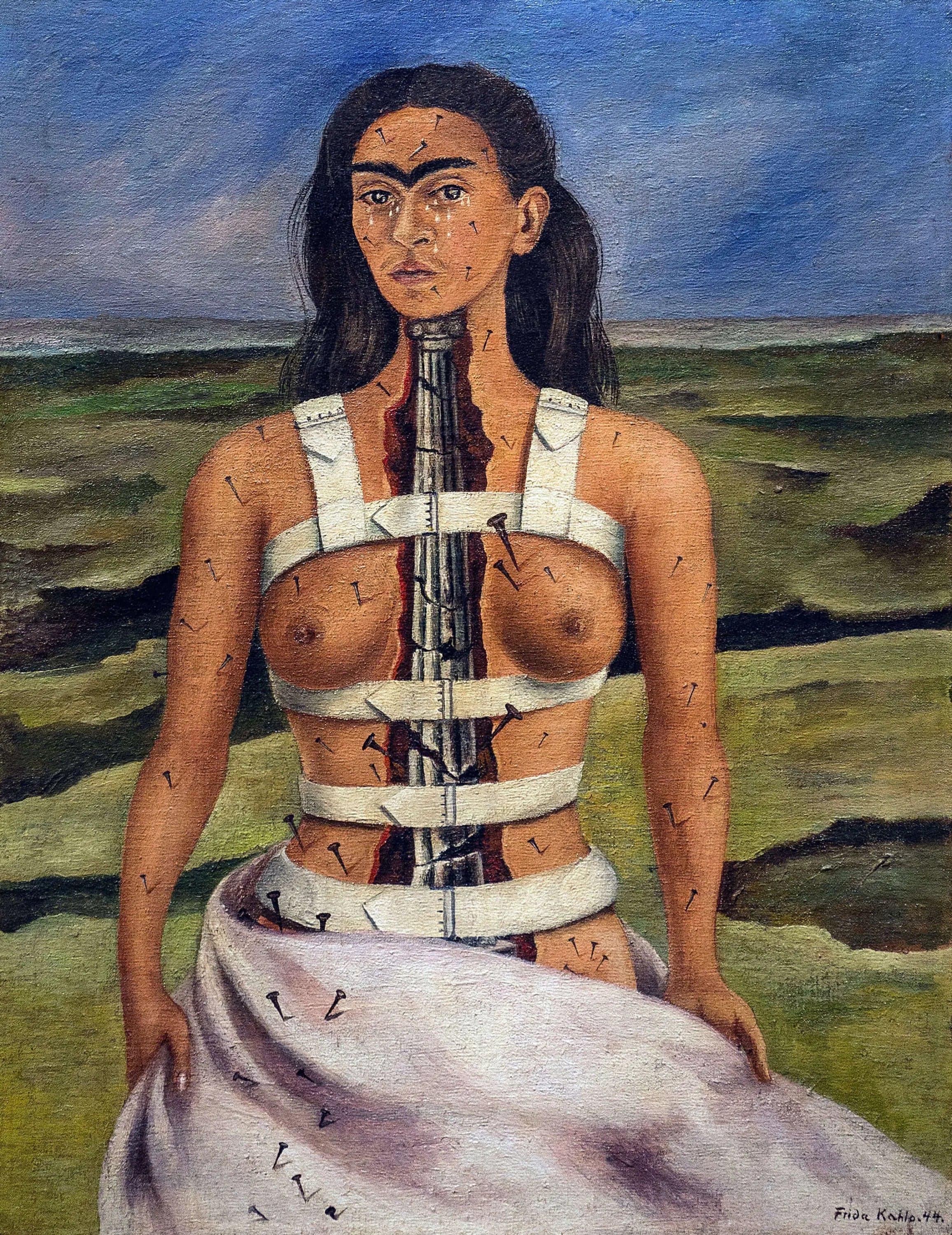
The Broken Column
- Original dimensions
- 30.8 x 40 cm
- Museum
- Dolores-Olmedo Museum
- Year
- 1944
Scene depicted
In "The Broken Column," Frida Kahlo explores the themes of physical and emotional suffering, revealing her own wounds through a gaunt body. The spine, facing the light, becomes a metaphor for the refusal to yield to fate, a silent cry of hope, brilliantly capturing the duality of human existence.
Historical context
Created in 1944 in the heart of Mexico, the painting "The Broken Column" is part of the naive art movement, a period where the artist Frida Kahlo expresses her emotions with a rare intensity. This painting , a monument to pain and hope, is currently exhibited at the Dolores-Olmedo Museum. Its dimensions of 30.8 by 40 centimeters reveal a visual feat in an intimate format.
Place in the artist's career
Positioning this painting as a milestone in Kahlo's career, "The Broken Column" represents a turn towards unprecedented emotional sincerity. In contrast to "The Two Fridas" and "Self-Portrait with Cropped Hair," this painting testifies to her quest for identity and her constant journey through pain.
Anecdote
Frida Kahlo , who said: "I paint my reality, not my dream," found the spark of inspiration in her own suffering. On a cloudy spring morning, she captured the essence of her tormented existence by bringing this masterpiece to life, a vibrant composition that breathes her selflessness and resilience.