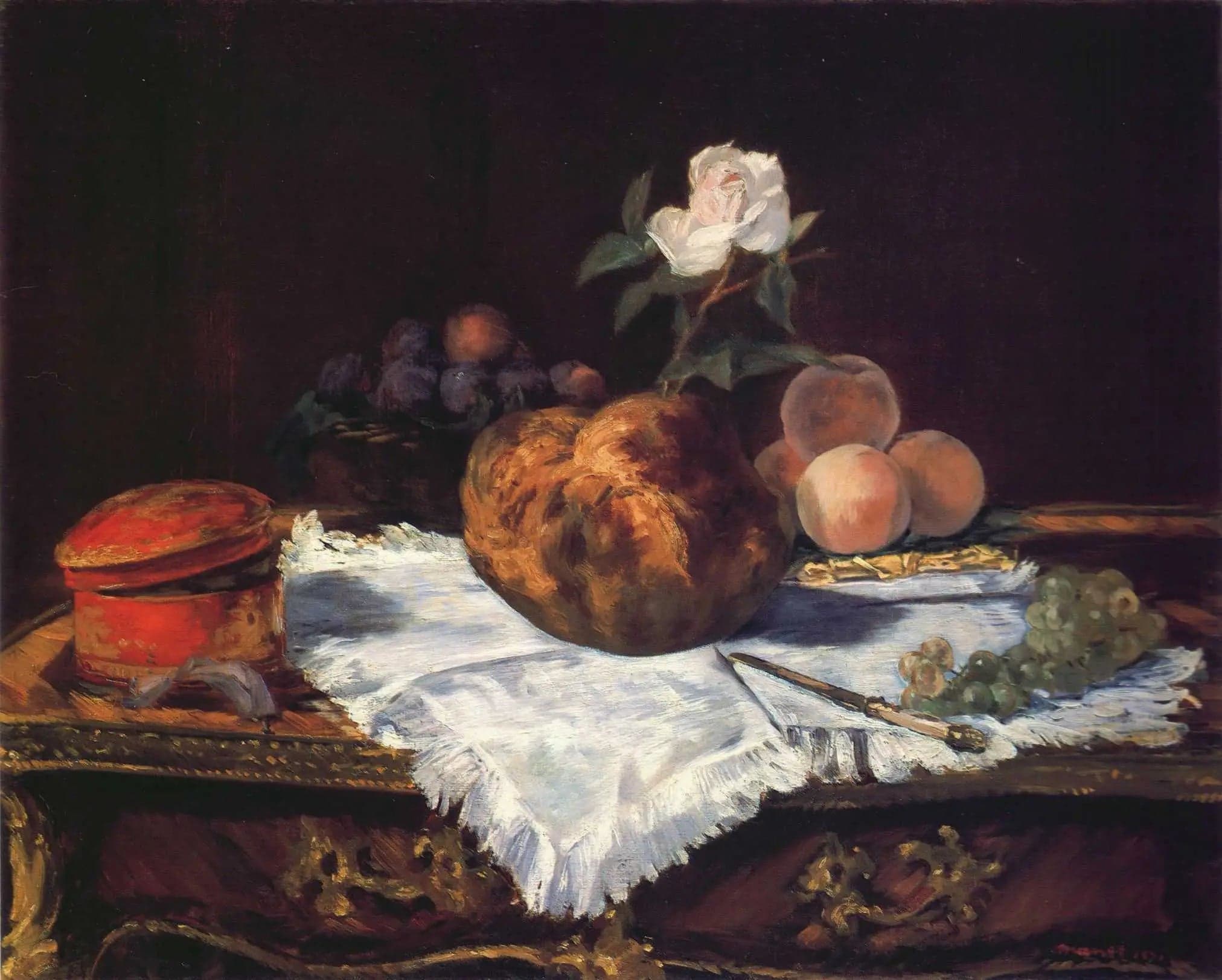
The Brioche
- Original dimensions
- 81 x 65 cm
- Museum
- Metropolitan Museum of Art
- Year
- 1870
Scene depicted
The Brioche evokes through its painting an intimate scene of the Parisian bourgeoisie. The composition highlights a young child taking evident joy in savoring a brioche, a symbol of a joyful and carefree world, against the backdrop of the modern era's excitement. This canvas stands out for its softness and lightness, enveloping the viewer in a warm and delicate atmosphere.
Historical context
Created in 1870, The Brioche is an iconic painting of the Impressionist movement, from a time when art sought to capture the ephemeral. This canvas, now displayed at the Metropolitan Museum of Art in New York, reveals not only the talent of Édouard Manet but also the artistic trends of the French capital during the 19th century, where innovation and tradition intertwined. Dimensions: 81 x 65 cm, this work finds its place among the treasures of world art.
Place in the artist's career
This painting is situated at a turning point in Édouard Manet 's career, marking a period of maturity. Through works like Luncheon on the Grass and Olympia, Manet charted a notable stylistic evolution, blending boldness and innovation. The Brioche, as a painting, is a focal point that testifies to reflections on daily life and ephemeral beauty, thus consolidating his status as a revolutionary artist.
Anecdote
“Every painting is a suspended moment, a gentle breeze on memories.” Manet might have said as he sketched his masterpiece. Imagine him that morning, in its golden light, passionately and precisely capturing the innocence of a brioche, a simple pleasure of daily life. This moment of inspiration is intrinsically linked to the evocative power of The Brioche.