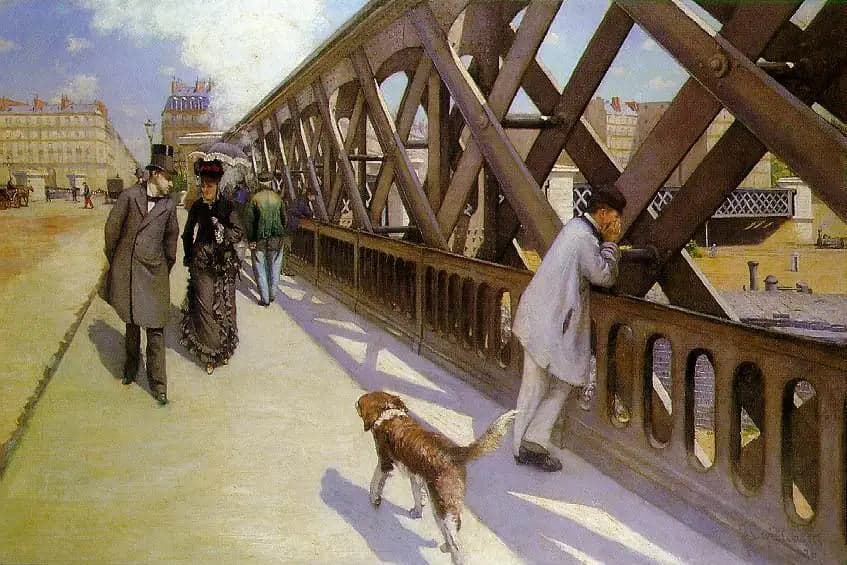
The Bridge of Europe
- Original dimensions
- 181 x 125 cm
- Museum
- Petit Palais / Museum of Modern Art
- Year
- 1900
Scene depicted
In this painting , the iconic bridge becomes a witness to a meeting between modernity and intimacy. We see pedestrians walking across the bridge, absorbed in their own world, while the shades of shadow and light dance on the water's surface, creating a living tableau of urban animation.
Historical context
Created in Paris in 1900, at the heart of the Belle Époque, The Bridge of Europe is part of the Impressionist movement. This painting was shaped during a period when art was moving away from academic conventions to explore the dynamics of light and form. Currently, this dazzling canvas is located at the Petit Palais in Paris, an elegant setting for this masterful work, offering everyone a window into a time of artistic innovation.
Place in the artist's career
The Bridge of Europe represents a turning point in Caillebotte's career, encapsulating his visionary spirit. It resonates deeply with two other iconic canvases : The Floor Scrapers and The Beach at Trouville , highlighting his static yet evocative approach, marking the evolution of an already established artist into a master of movement.
Anecdote
“Every brushstroke must evoke the light of the world,” could have said Gustave Caillebotte while being inspired by a spring morning on the Parisian quays. It is in this quest for brilliance and visual truth that he brought his masterpiece to life, capturing the ephemeral magic of the city and its inhabitants.
Major exhibitions
third Impressionist exhibition