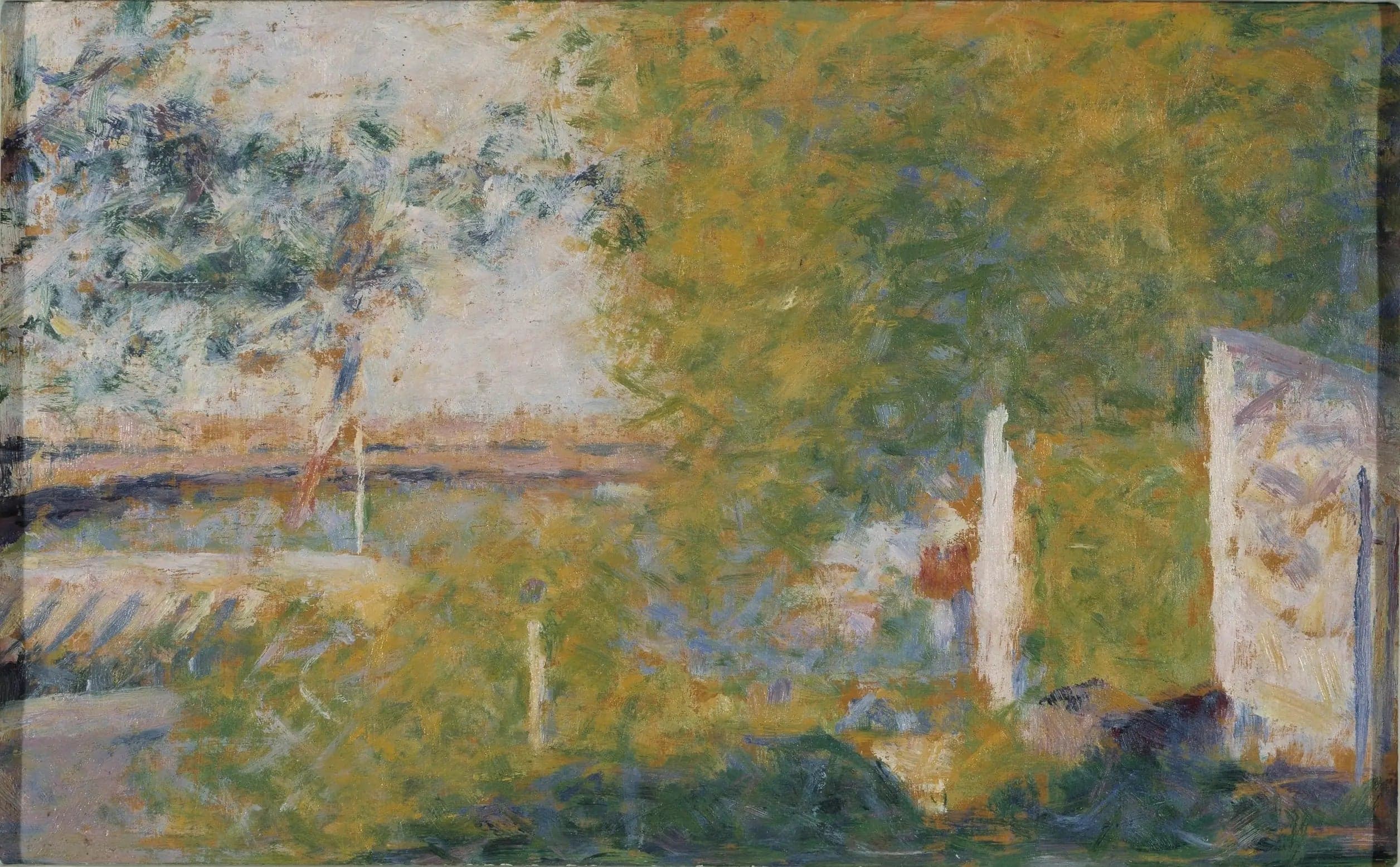
The Bridge of Bineau
- Original dimensions
- 24 x 14.5 cm
- Museum
- Nationalmuseum
Scene depicted
The painting transports us to a peaceful atmosphere, where discreet silhouettes flourish near the shimmering waters. The nuances of light play with the texture of the surrounding trees, creating a sensory ballet. Through this canvas , Seurat offers an intimate vision of a moment suspended in time.
Historical context
Created in 1889, this canvas is emblematic of the neo- impressionist movement, reflecting an era marked by innovation and change. Although conceived in Paris, the painting depicts a bridge at Bineau, an area along the Seine. Capturing a scene of daily life, this artwork beautifully summarizes the subtle elegance of its time.
Place in the artist's career
The Bridge at Bineau stands as a key work in the career of Georges Seurat , illustrating his transition to undisputed mastery. Like his previous achievements such as A Sunday Afternoon on the Island of La Grande Jatte and La Grande Jatte , this painting reflects both a technical and emotional evolution in his representation of everyday moments.
Anecdote
Georges Seurat , in a moment of contemplation by the Seine, reportedly stated: “Light and shadow exist only through our perception.” It is precisely this poetic vision that inspired his masterpiece titled The Bridge at Bineau . A reflection of summer tranquility, this scene invites serenity.
Major exhibitions
Q109467244