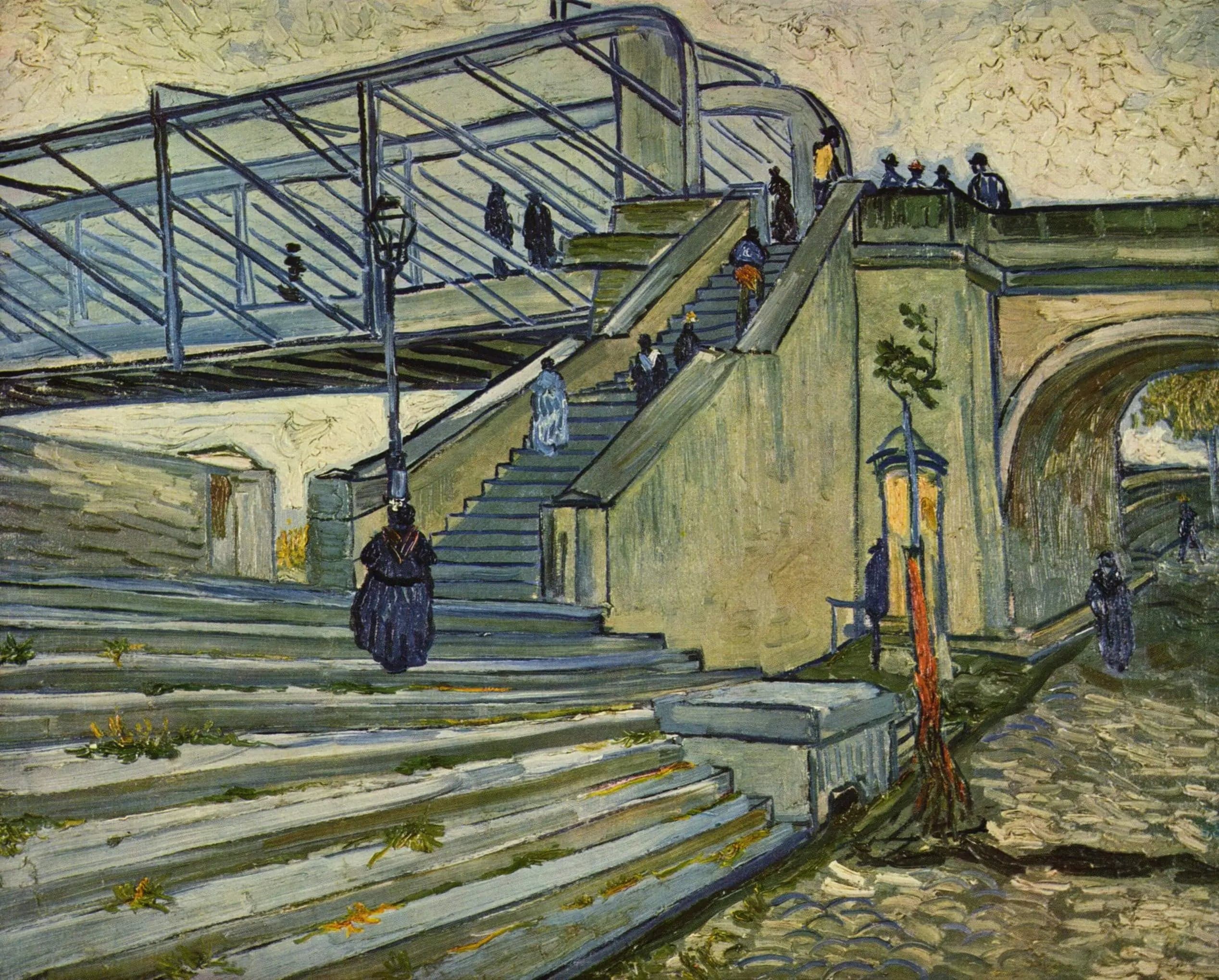
The Bridge at Trinquetaille
Scene depicted
This pictorial work revolves around an immersive landscape, where the bridge at Trinquetaille elegantly outlines the foreground, while lush vegetation and a calm river extend at its feet. The golden and bluish hues emanate an atmosphere of serenity, cradled by the murmur of the waters. A living spectacle where the sky mingles with natural elements unfolds, thus offering an invitation to travel.
Historical context
Precisely created in 1888 in Arles , France, The Bridge at Trinquetaille is part of the post-impressionist movement, alongside masterpieces that reinvent the perception of color and light. At that time, Van Gogh, drawn to landscapes and scenes of daily life, expresses a nostalgic and vibrant vision of the world. This painting is currently housed in an unspecified museum, but its artistic rise continues to ignite the imagination of art lovers. Its dimensions, 91.5 x 72.5 cm, testify to the powerful presence of this canvas.
Place in the artist's career
The Bridge at Trinquetaille marks a turning point in Van Gogh's career. This painting illustrates a period of maturity where he masters the expression of emotions through color. Compared to Starry Night and Sunflowers , this work testifies to Van Gogh's stylistic evolution, where the fluidity of brush strokes and vibrant light converge into a masterful composition.
Anecdote
“My painting is the window through which I look at the world.” This phrase resonates deeply when exploring the genesis of The Bridge at Trinquetaille . It was at the dawn of a spring morning, as the light danced on the wings of a boat, that Van Gogh was struck by the tranquil beauty of the bridge that connected man to nature, instilling in him a burning desire to capture this fleeting moment.