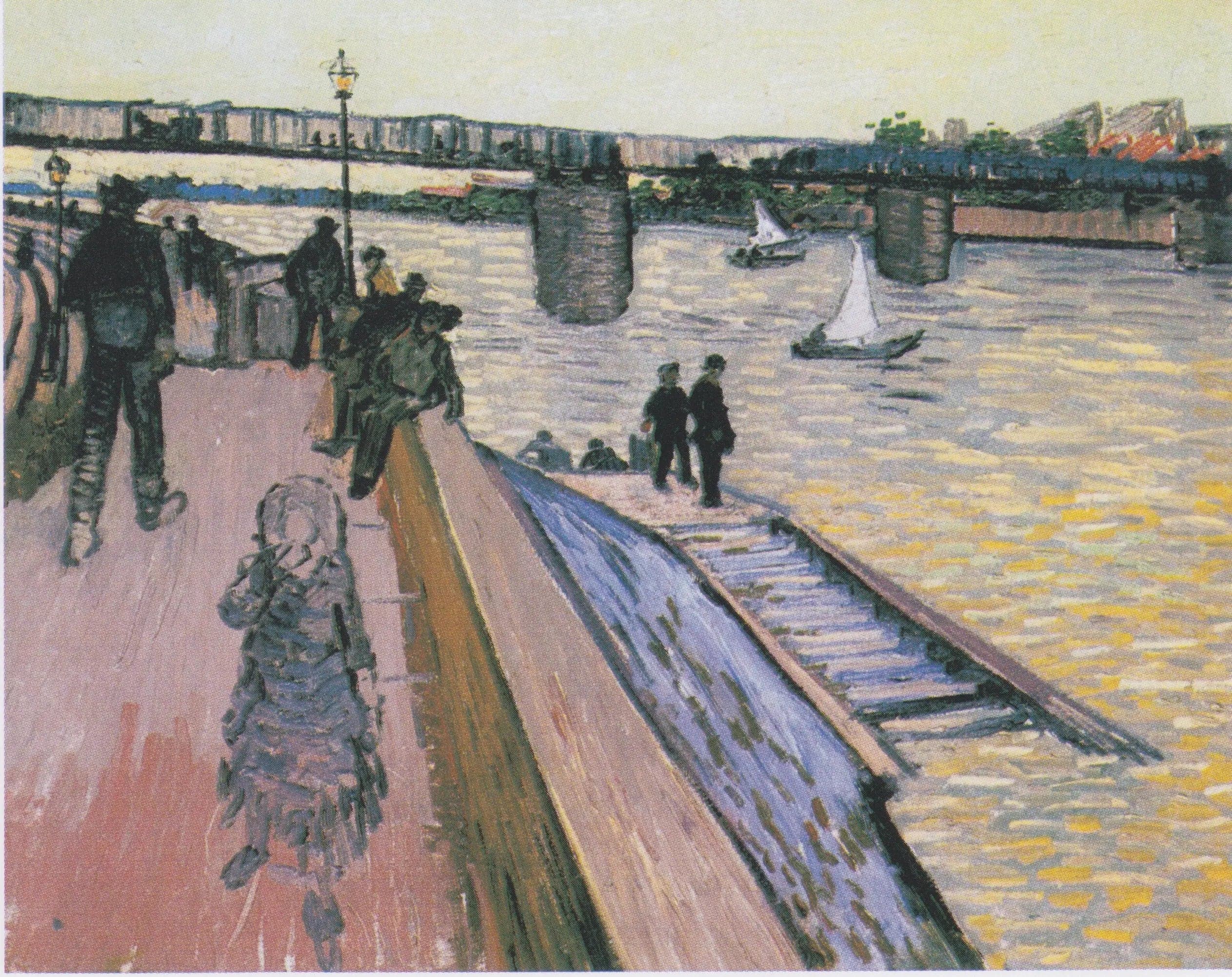
The Bridge at Trinquetaille
Scene depicted
In this canvas , the Bridge at Trinquetaille rises proudly, connected to the banks of the Rhône, caught in a picturesque dance between shadow and light. The iron structure symbolizes the industrial era, while the vibrant sky evokes a sense of freedom. Shades of blue and orange intertwine, illustrating the contrasts of nature and urbanity. It is a scene of tranquility, imbued with a gentle melancholy.
Historical context
Created in 1888, this painting emblematic finds its roots in Arles , a city bathed in the sunlight of southern France. The canvas belongs to the post-impressionist movement, an artistic current that expresses vibrant emotions through color and form. Although this masterpiece is now preserved in a private collection, its impressive dimensions of 81 x 65 cm make it an object of unavoidable admiration.
Place in the artist's career
The Bridge at Trinquetaille stands out as an essential work in Van Gogh's career, symbolizing his colorful exploration and emotive approach to painting. Next to his famous canvas Sunflowers and the Starry Night , this masterpiece represents a phase where the artist frees himself from conventions to express his revolutionary personal vision and love for his environment.
Anecdote
“The light of Provence intoxicates me.” These words, though simple, capture the essence that inspired this canvas . On a summer morning, Vincent stood near this bridge, surrounded by the gentle murmur of the Rhône and the scents of blooming fields. It is here that he captured the magic of this landscape , a pictorial work that still resonates today with the ephemeral beauty of nature.