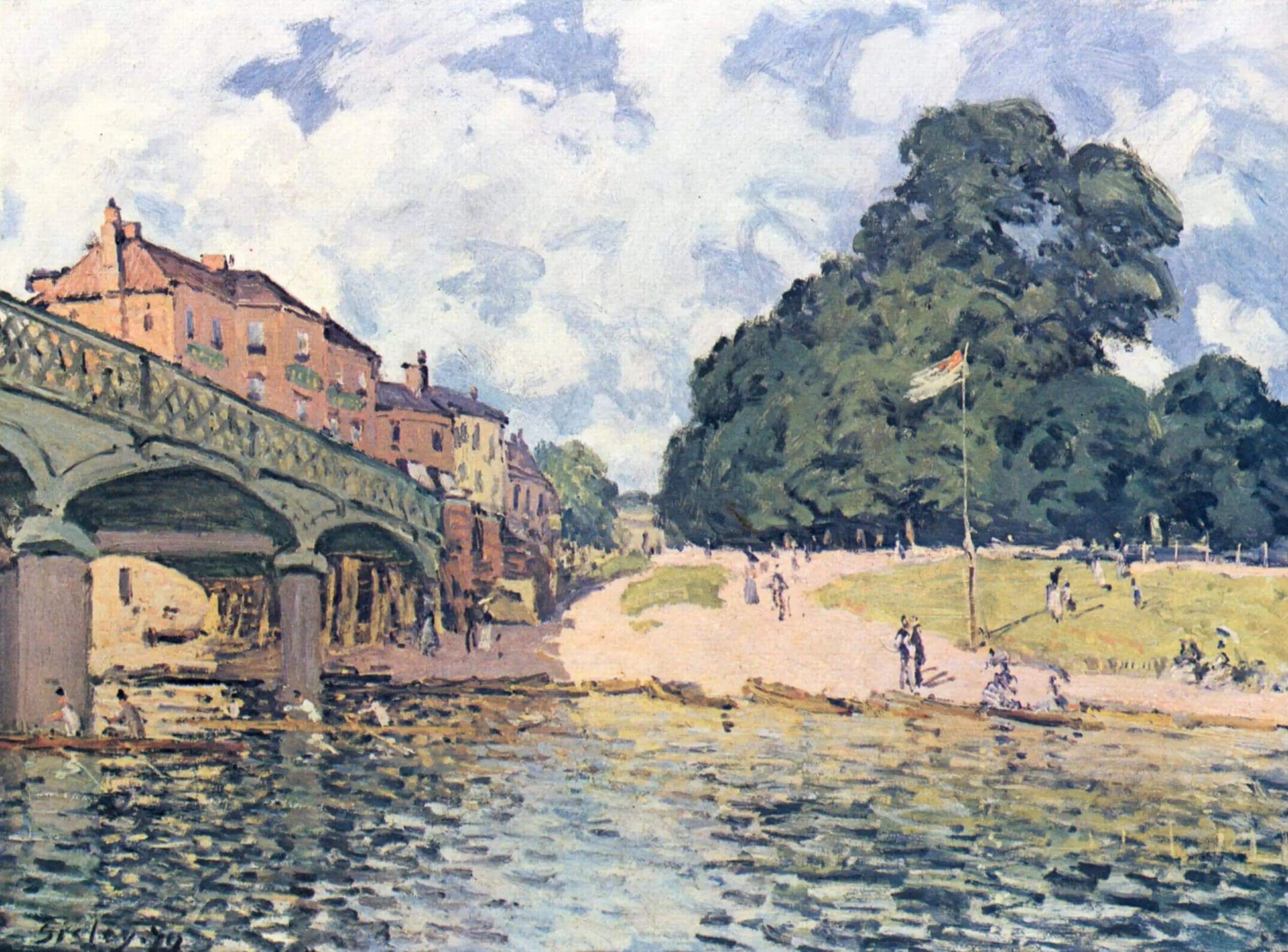
The Bridge at Hampton Court
- Original dimensions
- 61.2 x 45.7 cm
- Museum
- Wallraf-Richartz Museum
- Year
- 1874
Scene depicted
This painting illustrates the harmony between the architecture of the bridge and the natural ballet that surrounds it. Boats glide slowly on the water, while the foliage offers a gentle shelter for contemplation. The light dances on the reflective surfaces, revealing a serene and poetic atmosphere, where time seems suspended. Sisley, through his mastery of composition , manages to freeze this moment of escape in nature.
Historical context
Created in the heart of the 19th century, at a time when the Impressionist movement abolished the conventions of academic painting, The Bridge at Hampton Court finds its origin in London, near this iconic structure that spans the Thames. This painting owes its fame to the poetic vision of Alfred Sisley , one of the major figures of this movement, who captures here the fleeting light and the vibrant atmosphere of English landscapes. Today, this canvas resides in the Wallraf-Richartz Museum , where its legacy continues through the admiring gaze of visitors.
Place in the artist's career
The Bridge at Hampton Court is situated at a decisive turning point in Alfred Sisley's career, marking both a period of stylistic affirmation and a peak of his creativity. At this time, he begins to master light perfectly, as evidenced by his previous painting, The Path at Moret, and his subsequent work, The Canal of Ourcq. These paintings , while revealing a technical evolution, highlight Sisley's emotional blossoming within his Impressionist palette.
Anecdote
“Art is the reflection of nature, and the moments spent capturing its beauty are the most precious.” This phrase by Alfred Sisley perfectly summarizes the awakening of a spring morning, when he stood facing the Bridge at Hampton Court. The gentle murmur of the river, accompanied by the song of birds, then infused unprecedented inspiration into the artist, bringing to life this masterpiece where each brushstroke conveyed a profound emotion.