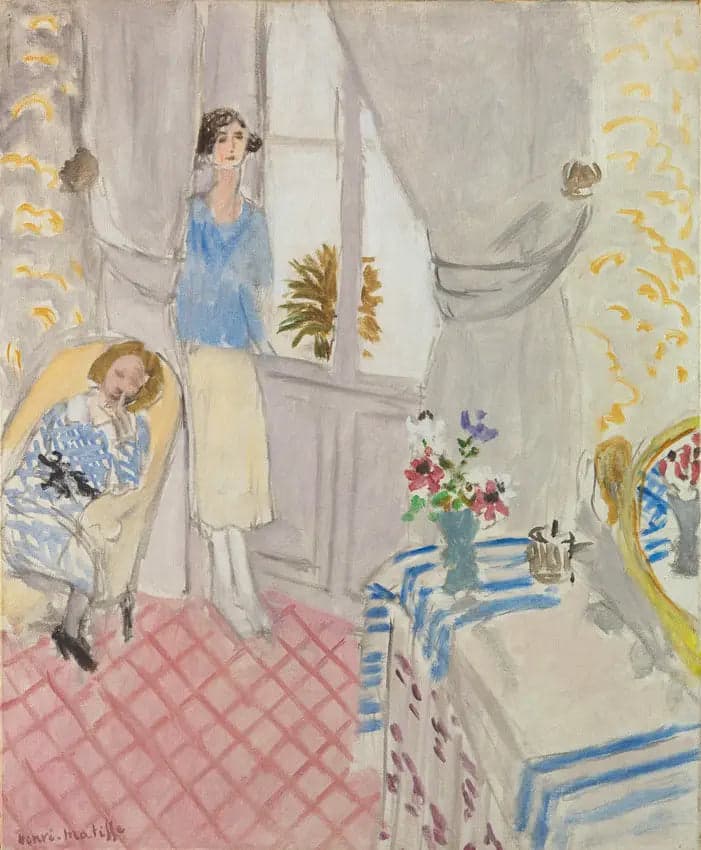
The Boudoir
- Original dimensions
- 60 x 73 cm
- Museum
- Orangerie Museum
- Year
- 1921
Scene depicted
In The Boudoir , Matisse offers a penetrating look at a partitioned space blending intimacy and contemplation. The figures depicted, transfigured by shimmering colors, evoke an atmosphere of peace and tranquility, where each shade invites the viewer to dive into this muffled universe. The composition plays on the juxtaposition of forms, revealing the beauty of the subtleties that flourish in everyday life.
Historical context
Created in 1921 in the sunny city of Nice, The Boudoir is part of the Fauvist movement, characterized by a bold use of colors and a radically new approach to representation. At this time, Matisse explores shapes and shades, playing with light and composition to create an atmosphere that is both intimate and vibrant. Today, this painting emblematic rests at the Orangerie Museum in Paris, with an aesthetic class perfectly measured in dimensions 60 x 73 cm.
Place in the artist's career
The Boudoir is situated at a turning point in Matisse's career, marking a period of stylistic flourishing. Alongside other masterpieces such as The Dance and The Joy of Life , this pictorial work testifies to his technical evolution; a superb momentum towards an increasingly assertive abstraction and a harmonization of emotions through color.
Anecdote
“Color must be a light, a life,” Matisse is said to have remarked while contemplating the scenes of this creative period. Every morning, inspired by the beauty of the Nice landscapes and the suspended moments of intimacy, he managed to capture a unique essence, aiming to transcribe the experience of everyday life with depth and poetry, as evidenced by the evocative power of The Boudoir .