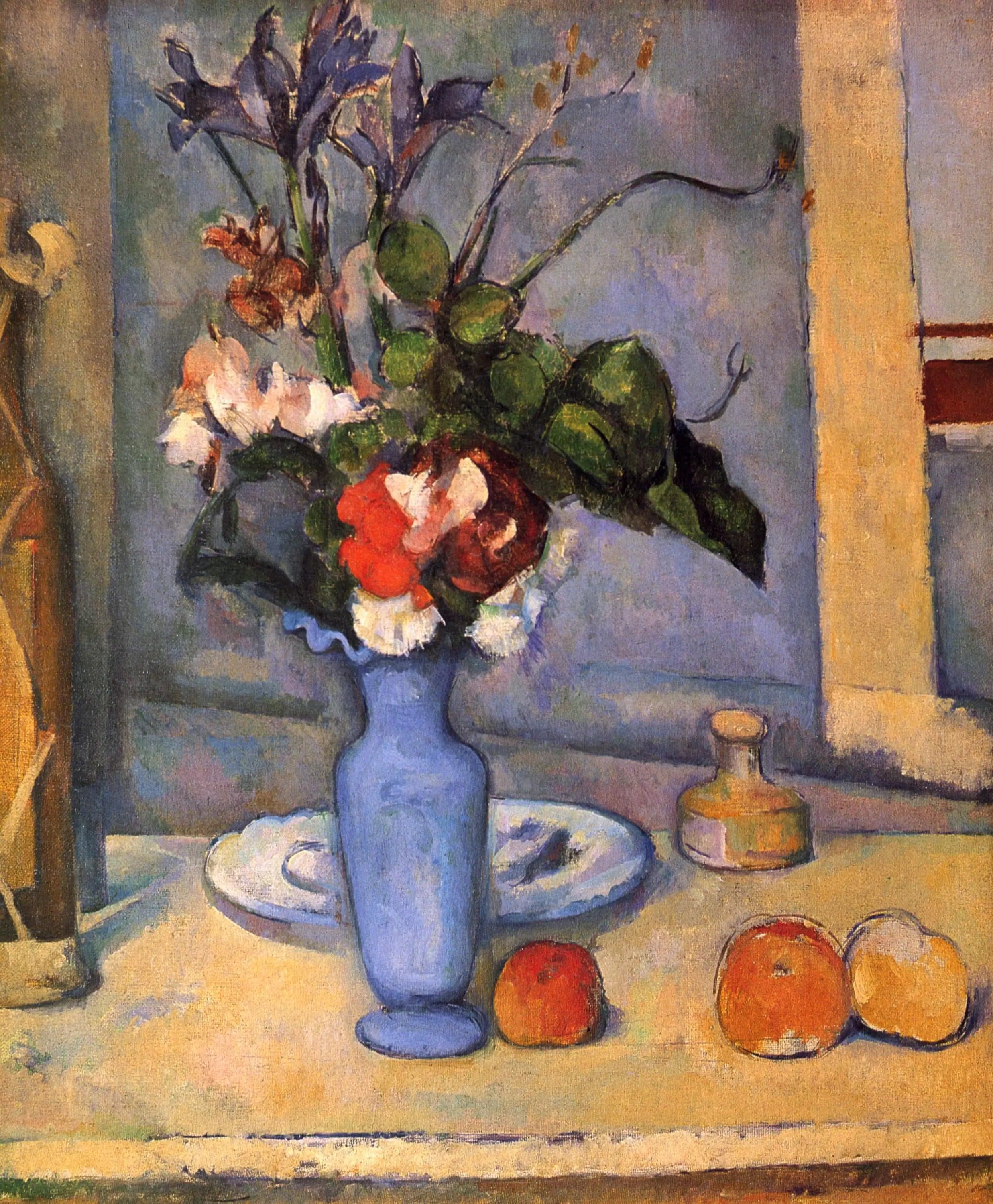
The Blue Vase
- Original dimensions
- 51 x 61 cm
- Museum
- Orsay Museum
- Year
- 1890
Scene depicted
This canvas highlights a vibrant blue vase, surrounded by colorful fruits and lush leaves. It is an ode to nature, evoking moments of tranquility and harmony. The careful arrangement of objects invites us to dive into a moment of full presence, where each element acts to create a dynamic balance between color and form.
Historical context
Created at the end of the 19th century in Paris, The Blue Vase is part of the post-impressionist movement, fresh with its colorful emotions and innovative compositions. In this vibrant artistic context, Paul Cézanne explores unprecedented perspectives, blending light with the shadow of a ceramic vase, until the walls of the Orsay Museum vibrate, where the painting awakens the admiration of visitors.
Place in the artist's career
The Blue Vase represents one of the key stages in Cézanne's career, marking an evolution towards the search for forms rather than realistic representations. By placing it alongside works such as The Apples and Mont Sainte-Victoire , one can observe a maturation in his technique, where simplicity becomes incredible complexity. The emotional depth of this painting then becomes a testament to the artist's transformation.
Anecdote
“Nature is my true mistress.” These words spoken by Cézanne evoke the magic of a spring morning in Provence, as he encounters the light playing on a blue vase placed on a simple wooden table. This vision, a source of inspiration, crystallizes in the evocative power of The Blue Vase , a masterpiece where every nuance resonates like an echo of nature.