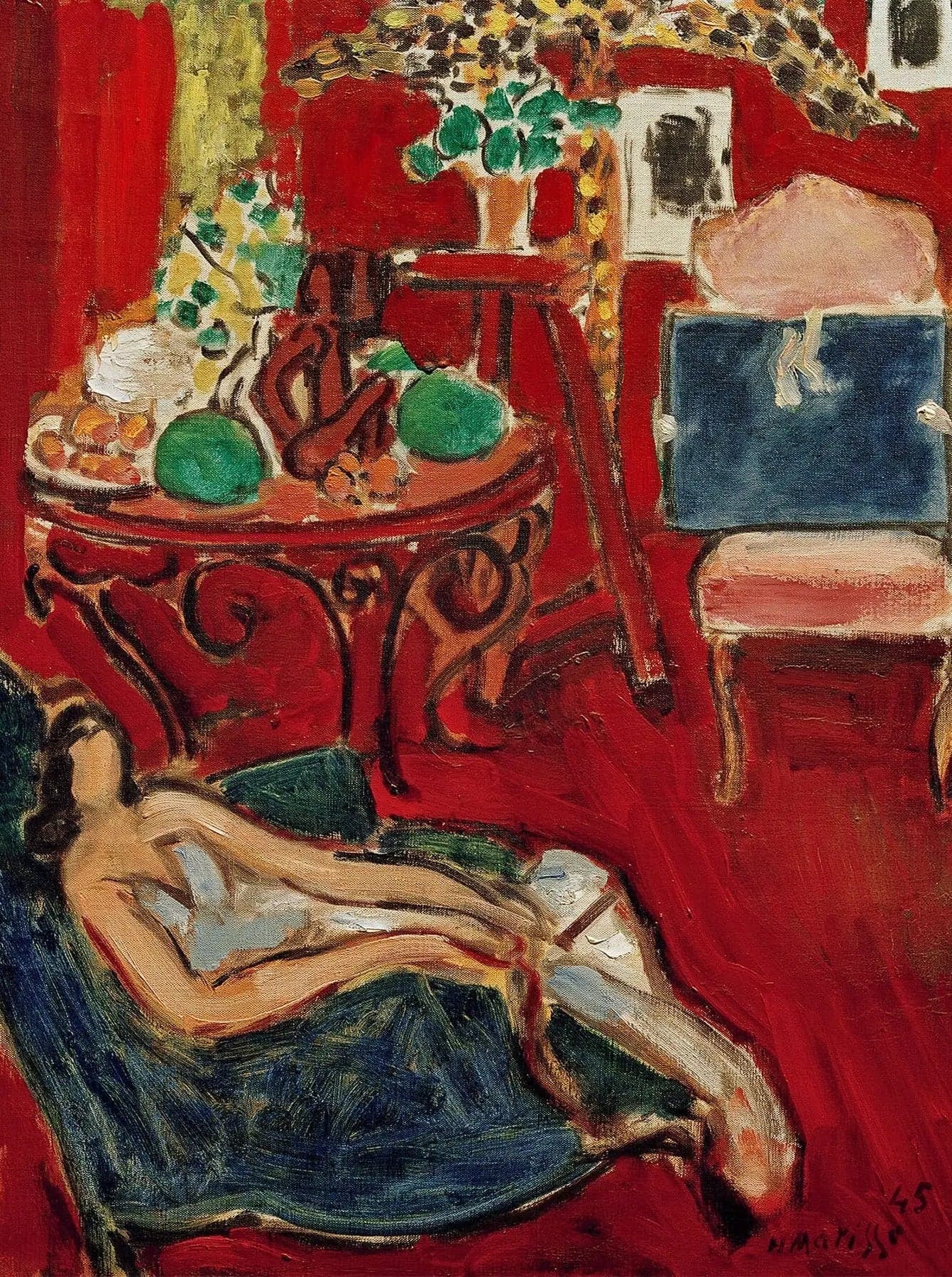
The Blue Notebook
- Original dimensions
- 46.7 x 55.3 cm
- Museum
- Berggruen Museum
- Year
- 1945
Scene depicted
In The Blue Notebook , Matisse organizes a visual symphony where the simplicity of a notebook intertwines with dynamic shapes and a bold palette. Through this composition, the artist manages to capture a light and intellectual essence, creating a space for experimentation in his relationship with painting. The canvas thus becomes a metaphor for artistic writing, writing being both a process of thought and imagination.
Historical context
Created in 1945 within the vibrant framework of the Fauvist movement, the painting The Blue Notebook by Henri Matisse evokes a period of deep introspection and experimentation. It was in Paris, the artistic metropolis par excellence, that this iconic work was born, illustrating the tensions and creativity of an era marked by war but also by a burning desire for renewal. Today, this canvas is preserved at the Berggruen Museum, where its brilliance reveals a unique vision of color and movement.
Place in the artist's career
The Blue Notebook marks a significant milestone in Matisse's career, revealing a balance between instinct and mastery. In his earlier works such as The Dance and The Music , there is already a celebration of color and form, but this painting, more introspective, points towards an artistic maturity at its peak, where each brushstroke tells an original story.
Anecdote
Matisse once spoke of the inspiration behind his works: "Color speaks to me like an SOS to the quick flashes of light," a quote that resonates particularly for The Blue Notebook . This painting was born from a sweet and bright moment, one spring morning when light filtered through the curtains of his studio, offering a palpable serenity to the artist.