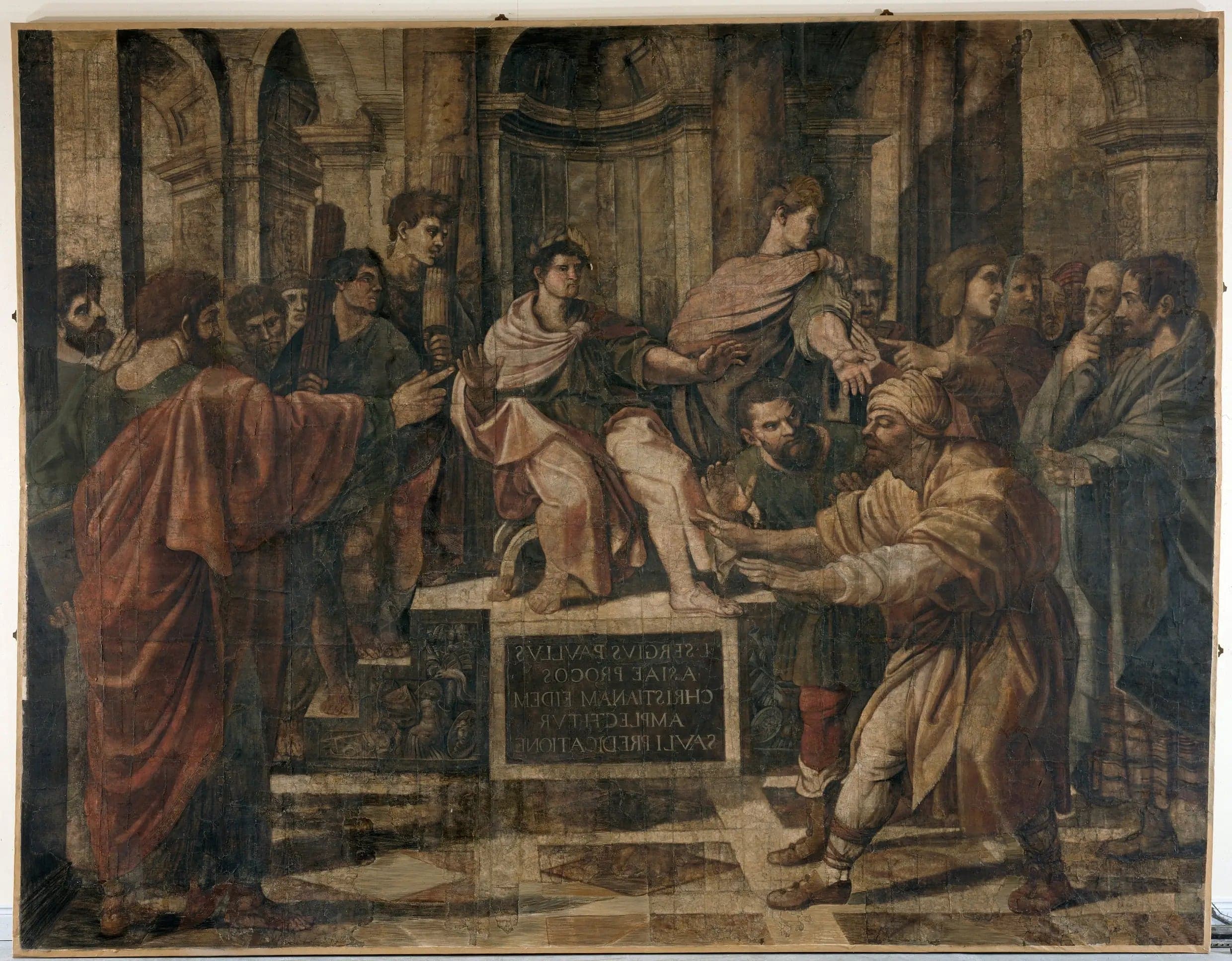
The Blindness of Elymas
- Original dimensions
- 452 x 376 cm
- Museum
- National Gallery of Ireland
Scene depicted
This painting illustrating an episode from the Book of Acts presents the blinding of Elymas, a magician who opposes faith. In a composition rich in tension, Raphael captures the critical moment when divine light pierces the darkness, revealing both physical and spiritual blindness. The characters, players in the human drama, are skillfully combined to intensify the narrative impact of the pictorial work.
Historical context
Created in the early 16th century, this painting is emblematic of the artistic context of the Italian Renaissance , in Urbino, a true melting pot of ideas and styles. A marvel of its period, the work shows a strong influence of the humanist movement, which celebrates man and his environment. Currently on display at the National Gallery of Ireland , this canvas impressive in its dimensions reflects an era where light and shadows intertwine in unprecedented ways, revealing the complexity of human emotions.
Place in the artist's career
The Blinding of Elymas stands as a pinnacle within Raphael's career, illustrating his technical and emotional mastery. In reference to other paintings such as The Madonna of the Chair and The Transfiguration, one observes a marked evolution in the artist's use of light and human interactions, testifying to his unparalleled ability to translate the beauty of the human soul.
Anecdote
“Light is the soul of every painting ,” said Raphael, imagining the scene of a radiant morning where the blinding of Elymas takes place. This moment, suspended in time, testifies to the power of the canvas and the dramatic intensity that emanates from it. The artist, in search of transcendence, draws inspiration from the whispers of the Roman alleys where dawn gently caresses the walls of the facades.