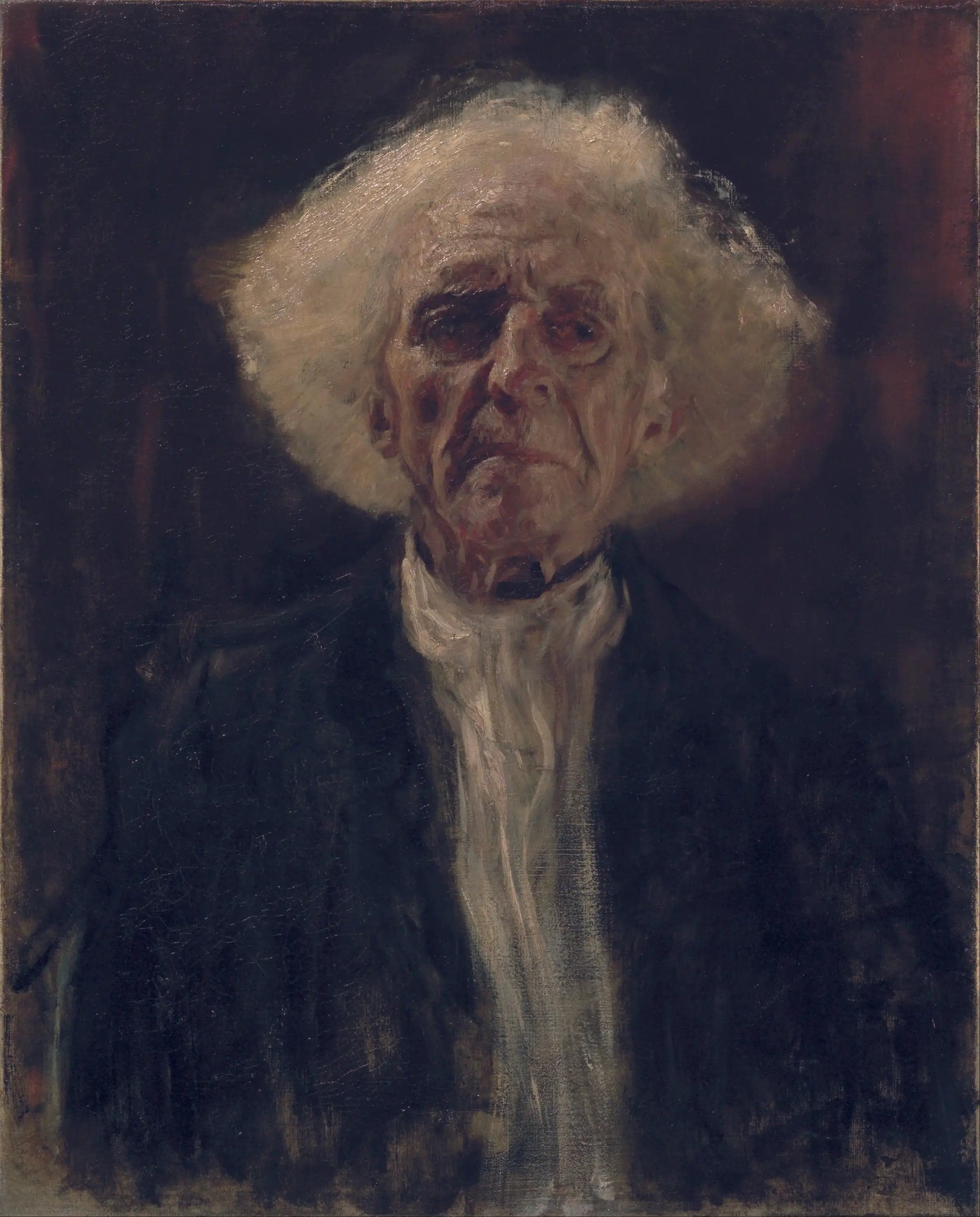
The Blind Man
- Original dimensions
- 532 x 660 cm
- Museum
- Leopold Museum
- Year
- 1896
Scene depicted
The painting "The Blind Man" features a wandering man, symbolizing solitude and isolation, immersed in a silent quest. This painting, with its blend of despair and hope, critiques the limited vision of a world sometimes blind to human suffering. Klimt succeeds in capturing the essence of this suffering, transforming a simple scene into a powerful universal message.
Historical context
Year: 1896 |BRK| Museum: Leopold Museum |BRK| Dimensions: 532 x 660 cm
Place in the artist's career
The Blind Man stands as a poignant milestone in Klimt's career, reflecting a period of artistic maturity. This pictorial work lies at the crossroads between his promising beginnings and his more elaborate creations, such as The Kiss and The Lady in Gold , illustrating his stylistic and emotional evolution.
Anecdote
Gustav Klimt once said: "Painting, for me, is a language that goes beyond words." It is in the bustling streets of Vienna that he drew his inspiration, where light slipped between shadows and revealed the depth of the human soul. This vibrant atmosphere resonates in the evocative power of The Blind Man .