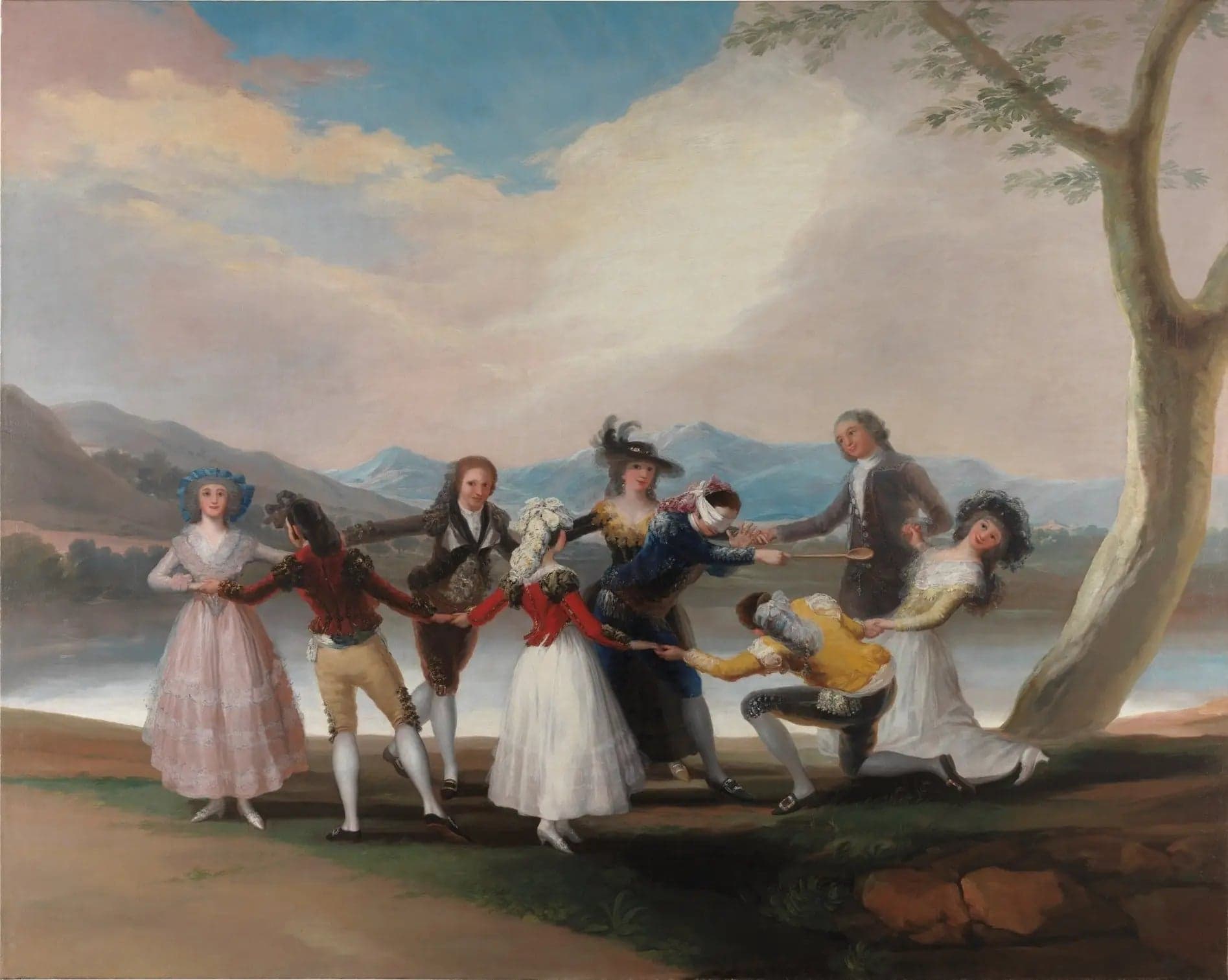
The Blind Hen
- Original dimensions
- 350 x 269 cm
- Museum
- Prado Museum
- Year
- 1788
Scene depicted
This powerful painting depicts a scene rich in symbolism . In a vibrant environment, a blind hen struggles to move forward, surrounded by a group of beggars. Like a beacon in the darkness, Goya reveals the complexity of the human condition, oscillating between biting irony and tragic reflection. The dark and heavy background accentuates the persistent melancholy, with each element of the painting serving to reinforce the poignant message of survival and social interaction.
Historical context
Created in Madrid in 1788, during a time when the Enlightenment illuminates minds, this painting emblematic of Francisco de Goya embodies a profound artistic reflection. From the heart of Spain, this masterpiece, now preserved in the Prado Museum, is masterfully inscribed in the romantic movement. The imposing composition of 350 x 269 cm fuses visual strength with emotional depth, elevating this canvas to the rank of an essential icon of its time.
Place in the artist's career
The Blind Hen stands as a pivotal work in Goya's artistic chronology, symbolizing his full maturity. Compared to works like The Maids of Honor and The Executions of May 3, 1808, this painting testifies to both technical and emotional advancement. It highlights the fragility of existence while elevating it as an artistic voice conveying authentic emotional resonance.
Anecdote
“Art is an illusion that resonates with souls.” said Goya, inspired by a morning bathed in light at the turn of his house. This fleeting moment of connection with nature nourishes the creation of this painting , The Blind Hen, a clever blend of humor and social critique, resonating even today with a rare intensity.