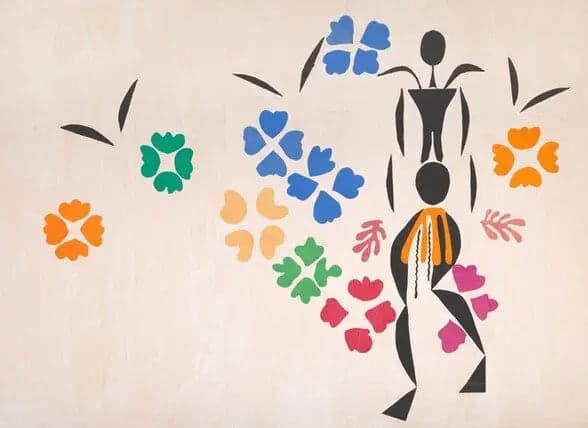
The Black Woman
- Original dimensions
- 623.3 x 453.9 cm
- Museum
- National Gallery of Art
- Year
- 1952
Scene depicted
The painting “The Negress” finely represents a woman with ebony skin, a symbol of multi-ethnic beauty. Matisse deploys a bold color palette to accentuate the warmth and depth of his subject. The composition, fluid and harmonious, reveals elements of African inspiration, while celebrating femininity, dignity, and identity. This masterpiece transcends the simple portrait to become an ode to humanity.
Historical context
The Negress, painted in 1952, emerges at the heart of the post-war period, in a world still marked by the quest for identity and artistic expression. Located in Washington, D.C., within the National Gallery of Art , this iconic canvas is part of the Fauvist movement, known for its freedom of color and dynamism. Matisse, a central figure of this movement, was able, through this painting, to capture the vibrant essence of life. Its imposing dimensions enrich the visual spectacle, transforming each interaction into a journey into the heart of the work.
Place in the artist's career
The Negress stands out as one of the highlights of Matisse's career, painted at a time when the artist explored more universal themes. It can be juxtaposed with other major works, such as “The Dance” and “The Music,” which also present emotional richness and technical mastery. This painting testifies to the evolution towards poetic abstraction, while retaining the characteristic sensitivity of the artist.
Anecdote
“Color comes to life. It sings, it dances,” Matisse asserted during his creative sessions. It was while strolling through the streets of Paris on a sunny morning that the idea for The Negress sprang forth. The artist, dazzled by the beauty of a face he encountered, was swept away by the energy of this fleeting meeting, infusing the canvas with an unforgettable evocative force.