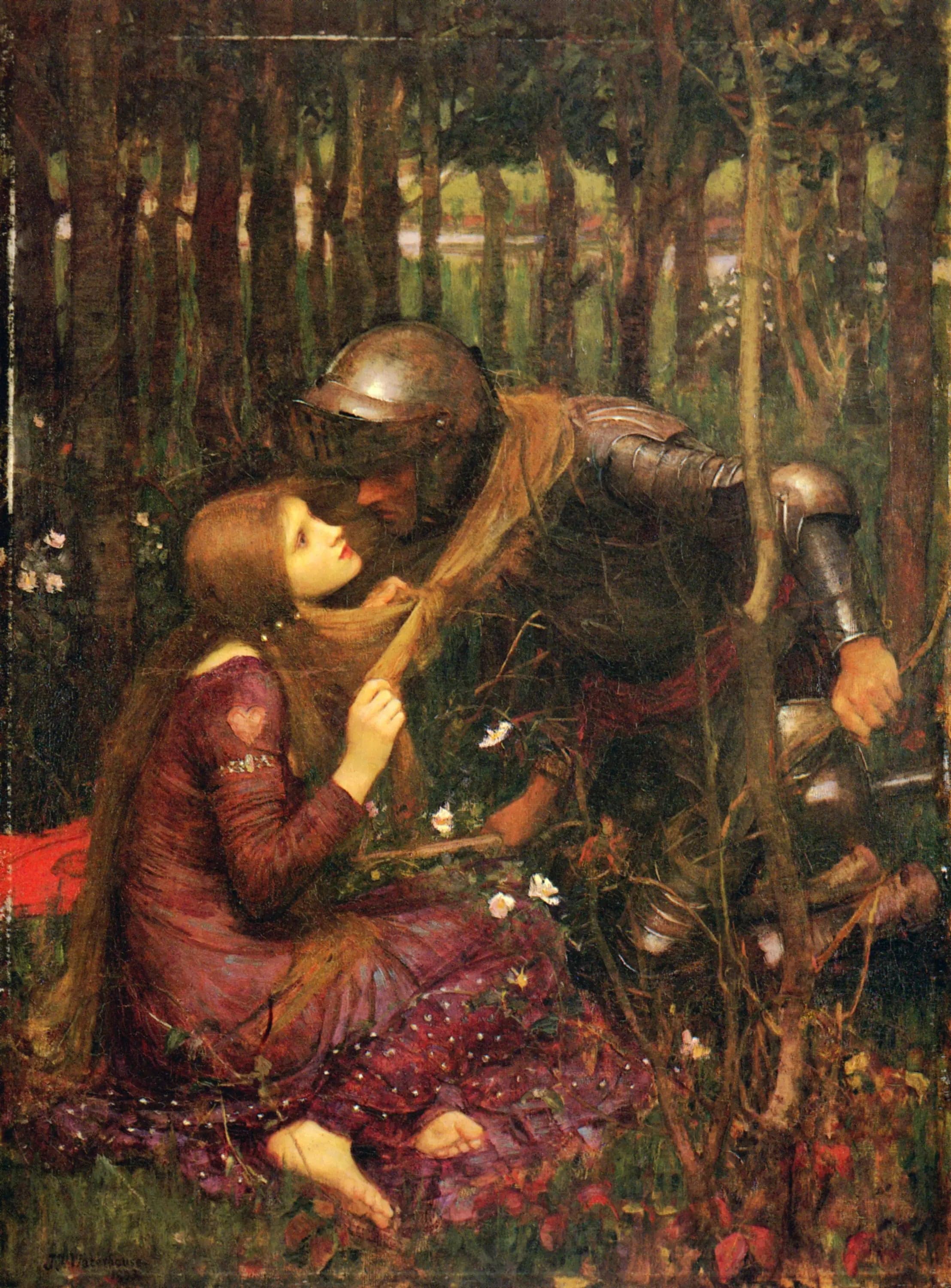
The Beautiful Lady Without Mercy
Scene depicted
This painting explores the legend of a knight, enchanted by the beauty of a mysterious woman. She, the beautiful lady, embodies love and passion, but also death, as evidenced by her enigmatic gaze. Through her languorous posture and the expression on her face, Waterhouse invites the viewer to an introspective reflection on desire and danger. A silent dialogue establishes itself between the characters and the observer.
Historical context
Created in 1893, this painting emblematic of John William Waterhouse comes to life in London, the vibrant capital of British culture. This artwork highlights the Pre-Raphaelite movement, which aimed to rediscover the beauty and authenticity of artists before Raphael. Today, the canvas resides in the collection of the Tate Britain , where its brilliance continues to dazzle visitors. Its dimensions, 101.6 cm × 61 cm, testify to a delicacy that captivates the eye.
Place in the artist's career
The Lady of Shalott stands out in Waterhouse's career as a flagship work, revealing the peak of his talent. By paralleling it with Life and Death and Echo and Narcissus , one can see a common thread: an evolution in luminous mastery and emotional depth. Each canvas testifies to a parallel deepening of his gaze on ephemeral beauty.
Anecdote
“Inspiration comes from the fairy tales I cherished, the mystery of a sweet face like a forgotten promise,” Waterhouse might have said while evoking this composition . It is on an April morning, in soft light, that he glimpses an ethereal silhouette, a muse who inspires him to capture the soul in this canvas .