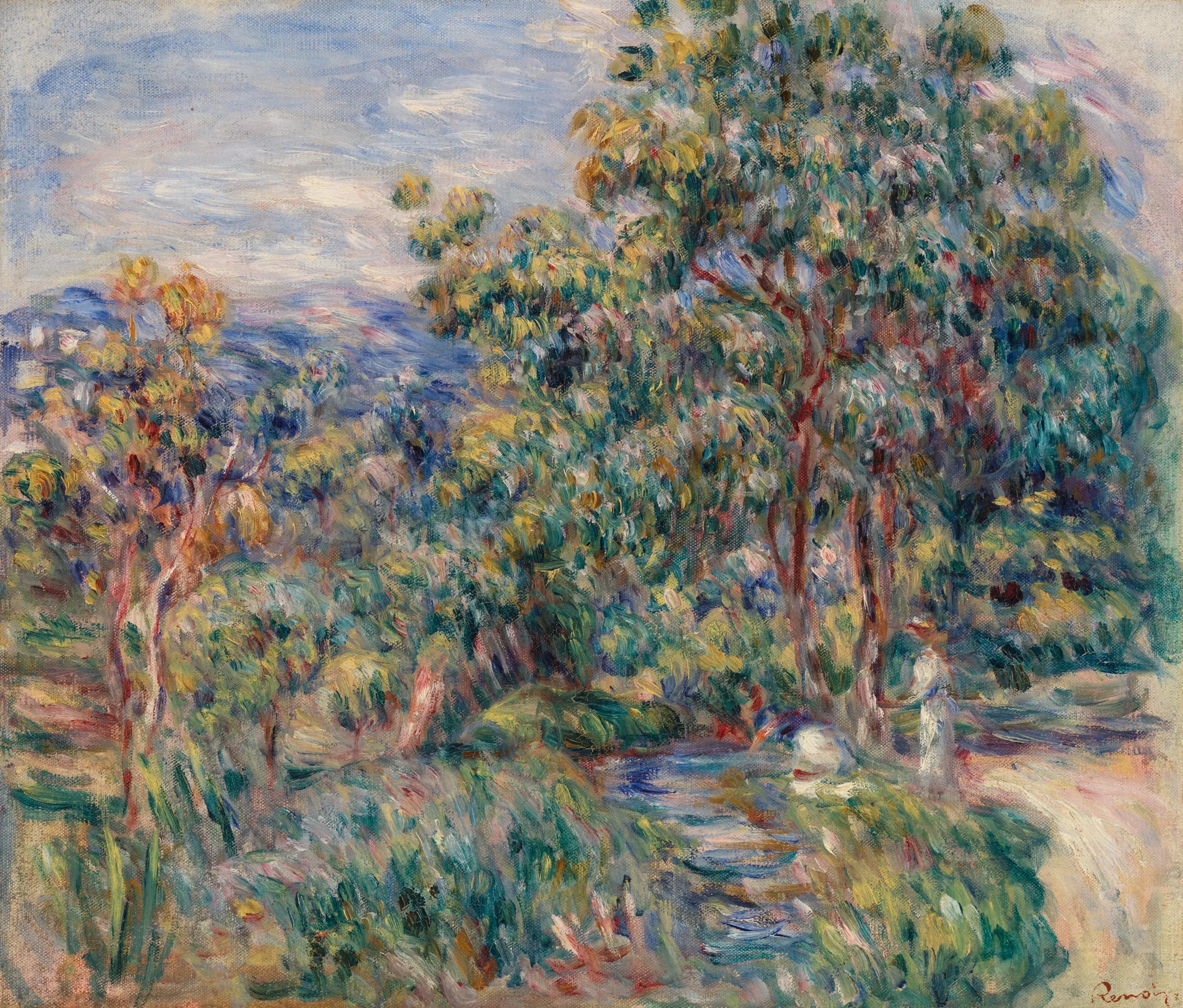
The Béal - Pierre
- Original dimensions
- 50 x 43 cm
- Museum
- Barnes Foundation
- Year
- 1912
Scene depicted
Le Béal depicts a bucolic scene of flourishing nature, highlighting characters immersed in an atmosphere of gentle serenity. This pictorial work immortalizes a moment of harmony between humanity and nature, revealing Renoir's talent for capturing light and emotion through delicate painting strokes.
Historical context
Created in 1912, this painting is part of the Impressionist movement, which flourished in 19th century France, in the shadow of industrial revolutions and social changes. The canvas is currently part of the collection of the Barnes Foundation , located in Philadelphia, a place that honors and preserves the artistic heritage of the time, conducive to contemplation and admiration.
Place in the artist's career
This canvas represents a pivotal period in Renoir's career, marked by a blossoming artistic maturity. Like Bal du Moulin de la Galette and Les Grandes Baigneuses , Le Béal shows a stylistic evolution towards a more personal quest for light and fleeting moments, which characterizes his masterpiece.
Anecdote
“I have only ever painted happy men and women,” Renoir is said to have declared once, speaking of his art. His inspiration for Le Béal came on a gentle spring morning, by the bank of a tranquil river, where the light played on the water, blending brilliance and shadow, capturing the essence of life in full bloom.