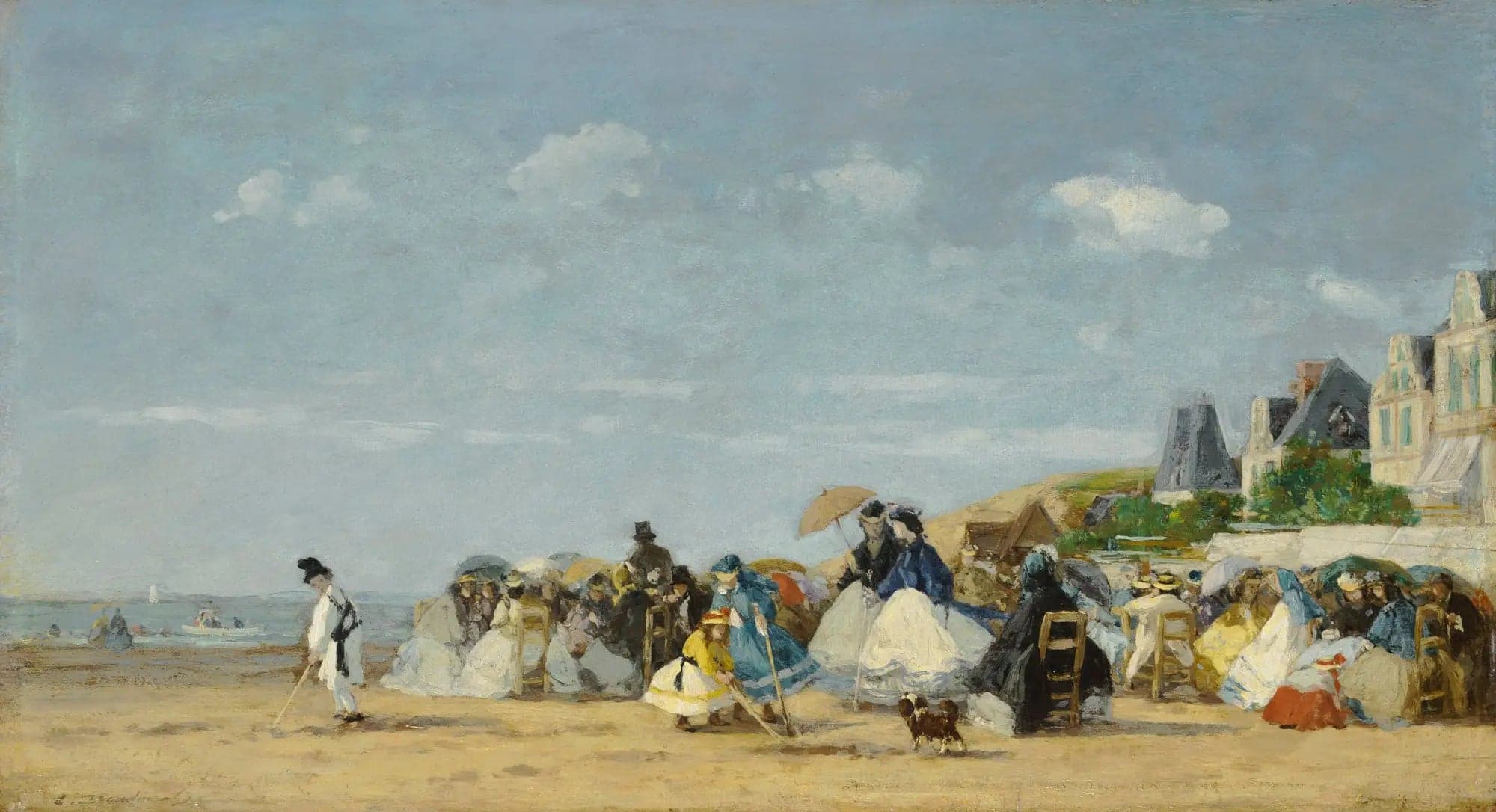
The Beach at Trouville
- Original dimensions
- 36.5 x 22.5 cm
- Museum
- Saint Louis Art Museum
- Year
- 1869
Scene depicted
The composition of The Beach at Trouville depicts a lively scene of seaside life in the 19th century. The bathers, painted with a fluid lightness, flourish on the warm sand. The white sails sway in the wind, while the vibrant colors evoke the joy and freedom of that era, capturing a nostalgic essence of summer days at the beach.
Historical context
Created in 1869 in Trouville-sur-Mer, this iconic painting is part of the Impressionist movement, at a time when the representation of light and nature became masterful in European art. The painting is now housed in the Saint Louis Art Museum , where it continues to amaze visitors with its vibrant atmosphere and elegant composition.
Place in the artist's career
This painting marks an essential phase in Boudin's artistic journey, revealing his growing interest in light and marine landscapes. In parallel, works like The Port of Honfleur and The Sails of Fécamp highlight his evolution. The Beach at Trouville represents a turning point, where mastery of tones and aquatic movements begins to assert itself fully.
Anecdote
As he often said: "My soul awakens at the touch of the sea." It was on the shores of Normandy, on a sunny morning, that Boudin captured this inspiration, combining spontaneity and emotion. The canvas absorbs this simple yet profound moment, masterfully translating the brilliance of light on the waves and the liveliness of bathers.