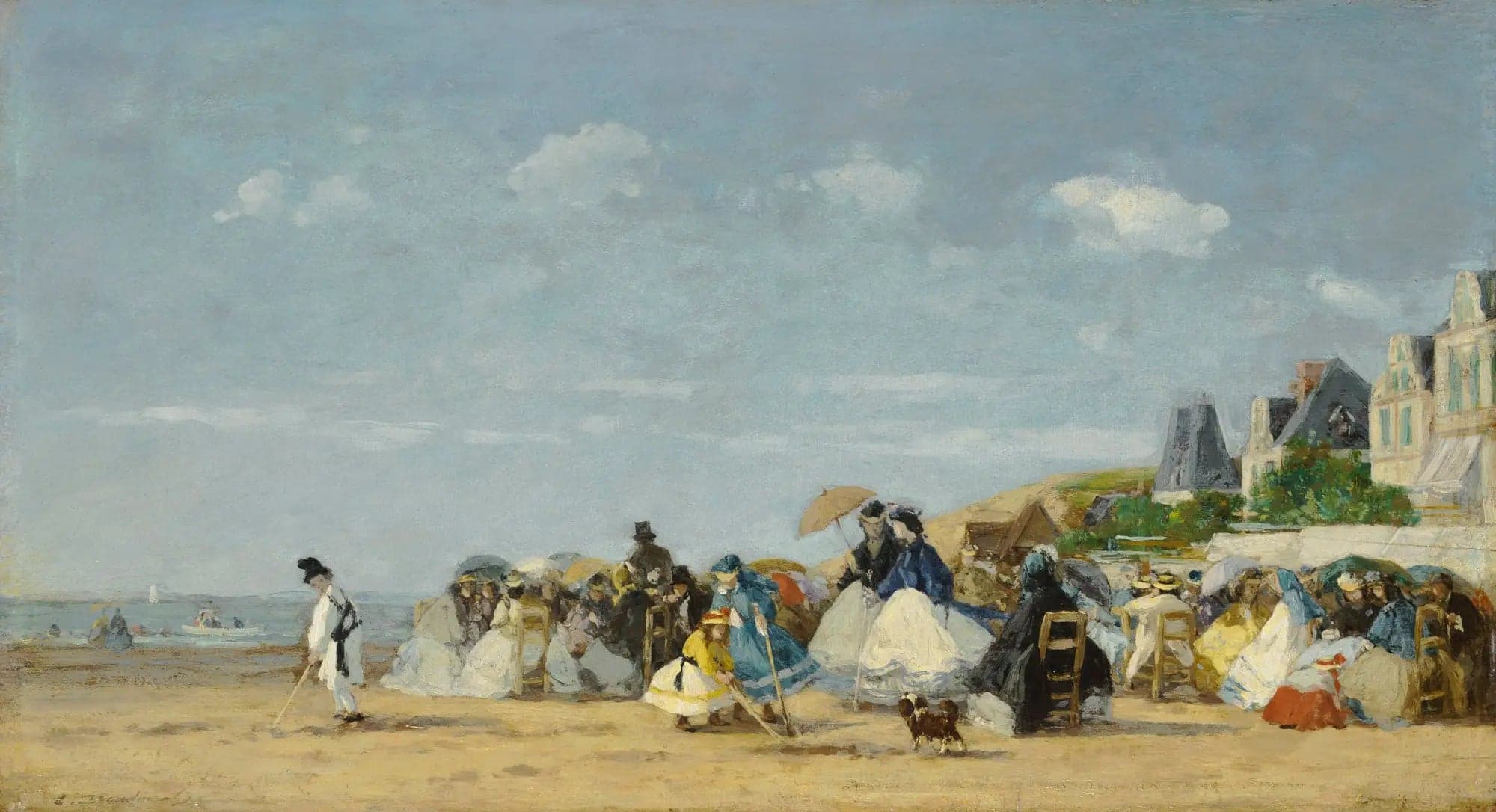
The Beach at Trouville
- Original dimensions
- 23.4 x 13.7 cm
- Museum
- National Gallery of Scotland
- Year
- 1884
Scene depicted
The painting “The Beach of Trouville” depicts a vibrant seaside scene, where bathers come alive under the blue sky. Colorful kites float in the air, and the silhouettes of walkers create a living picture on the canvas, expressing both the joy of life and the beauty of the coastal landscape.
Historical context
Painted in 1884 on the lively shores of Trouville, this painting is part of the Impressionist movement, to which Eugène Boudin greatly contributed. The canvas is now displayed at the National Gallery of Scotland, where it continues to evoke the vibrant atmosphere of its time, capturing the very essence of a summer day on the Normandy coast.
Place in the artist's career
“The Beach of Trouville” represents a turning point in Boudin's career, consolidating his status as an innovator within the Impressionist movement. Alongside “The Beach of Honfleur” and “The Port of Honfleur,” it illustrates the evolution of his style towards an increased mastery of light and color.
Anecdote
“The striking beauty of the Norman skies never ceases to awaken my soul,” Boudin might have said while contemplating the inspiring view of Trouville. It is on a gentle morning where the golden light mingles with the salty scent of the sea that this canvas came to life, evoking shimmering memories of a summer past.