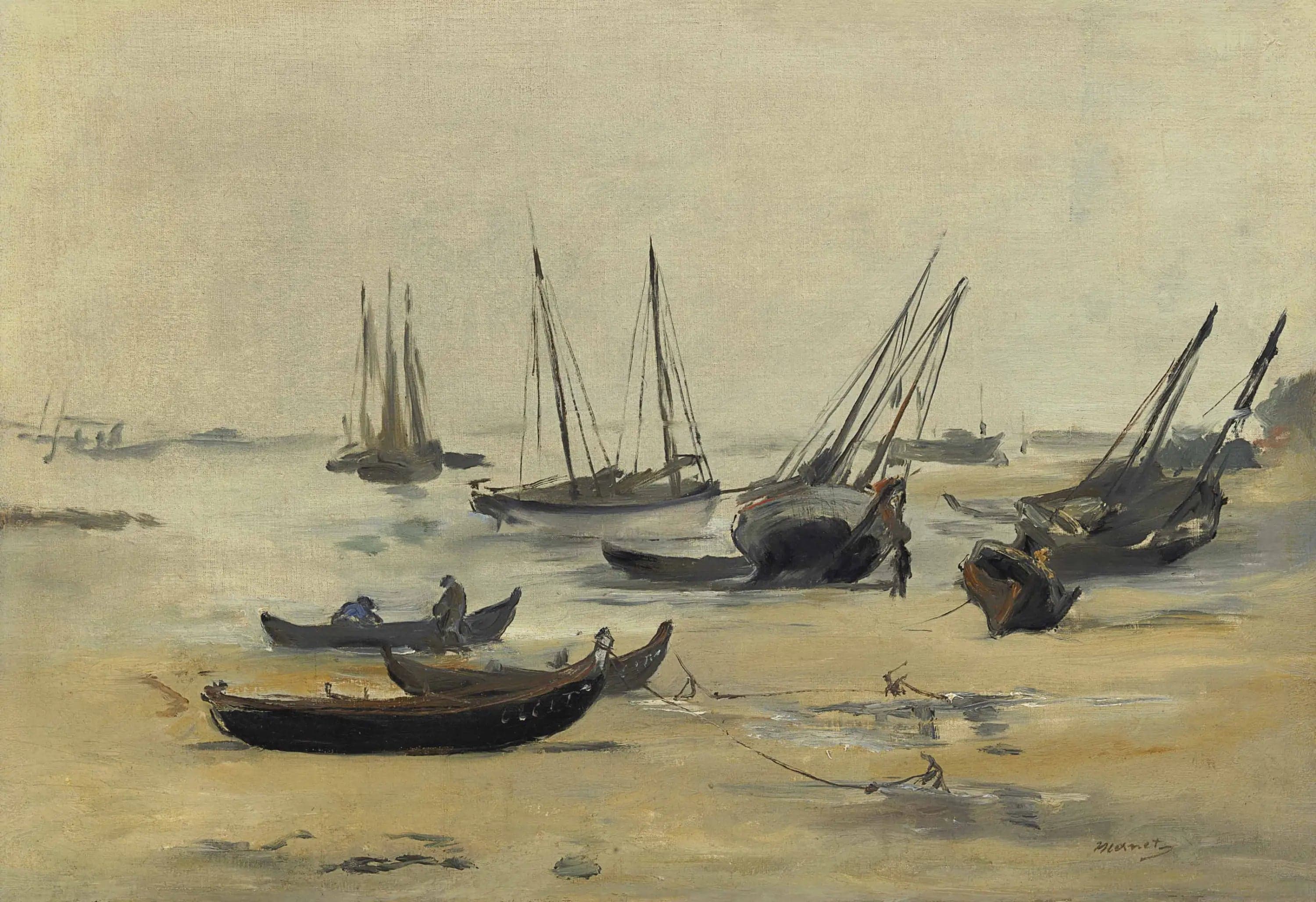
The Beach at Low Tide
- Original dimensions
- 51 x 37 cm
- Museum
- Not specified
- Year
- 1871
Scene depicted
In this canvas , Manet depicts a fleeting moment, where bathers lounge on the sand, creating an atmosphere of relaxation. The dancing shadows play with the light as well as the water reflections, while the horizon stretches distantly, inviting the observer to feel the vastness of the surrounding nature. This painting is a celebration of the simplicity of everyday life, elevated to the status of art by the master's vision.
Historical context
Created in 1871, this painting is emblematic of the Impressionist era, during which Édouard Manet , one of the masters of the movement, explores light and scenes of modern life. Located on the Normandy coast, the canvas captures a beach bathed by a gentle tide, where one can still sense the contemporary influences that mark his work. The painting is an open window to a vibrant era, while being preserved in private collections, forgotten by the general public.
Place in the artist's career
The Beach at Low Tide stands as a significant milestone in Manet's career. This work, from his mature period, reveals his distinctive style, while offering a counterpoint to major pieces such as “Luncheon on the Grass” and “Olympia.” It is in this painting that one perceives the evolution of his technique, now imbued with light and color.
Anecdote
Manet once declared: “Nature is a great master, it never deceives us.” This moment, likely inspired by a tranquil morning spent on the beach, reveals the fertile inspiration drawn from the ephemeral beauty of coastal life. The evocative power of The Beach at Low Tide testifies to this endless artistic quest.