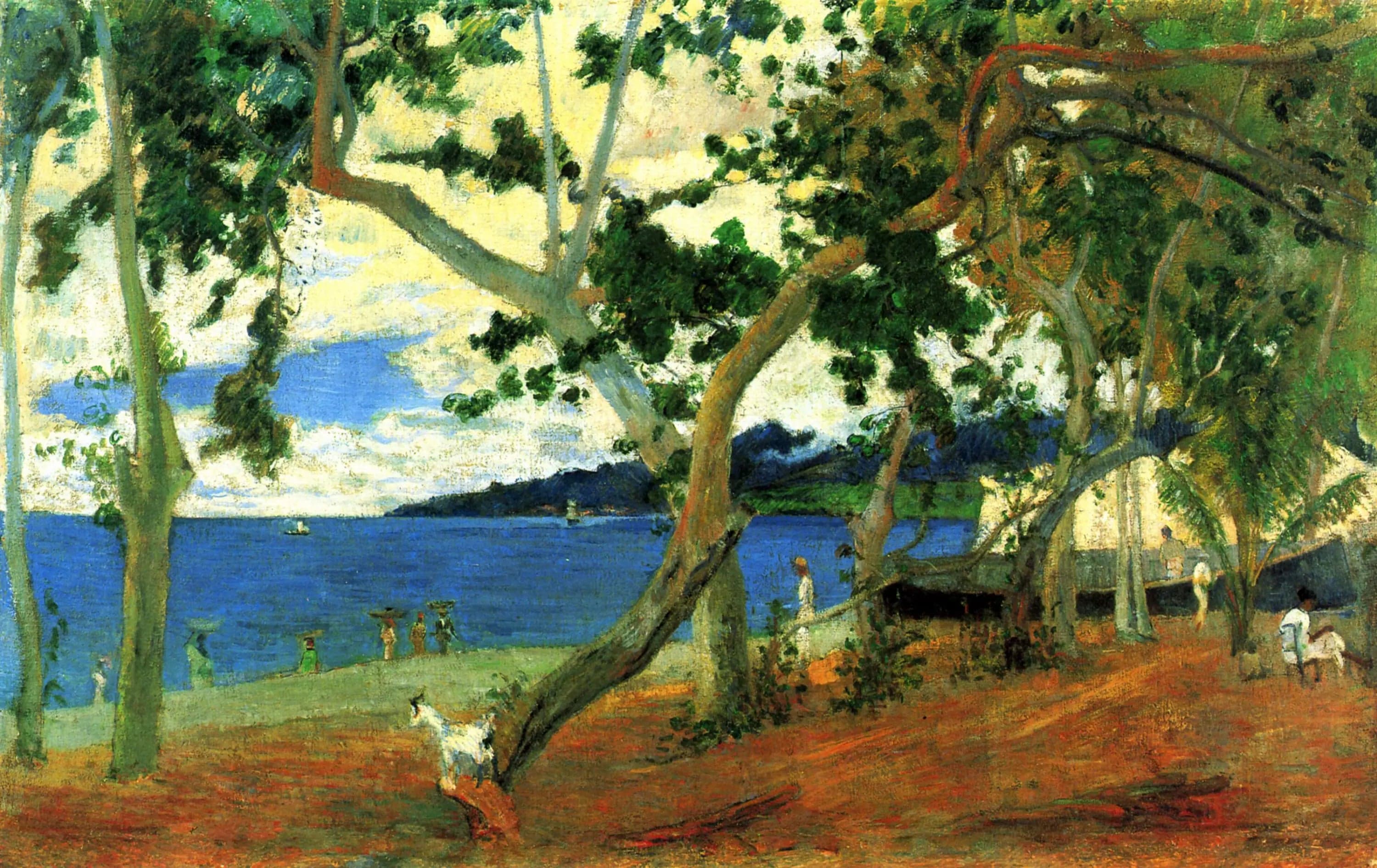
The Bay of Saint-Pierre seen from the Turin Cove
- Original dimensions
- 90 x 54 cm
- Museum
- Ny Carlsberg Glyptotek
- Year
- 1887
Scene depicted
In his painting , Gauguin immortalizes the wild beauty of Saint-Pierre, capturing the essence of the calm waters and misty mountains in the background. The pictorial work evokes a place where time seems suspended, allowing viewers to feel the serenity and majesty of a peaceful spot, cradled by the whispers of nature and the comings and goings of fishermen's boats.
Historical context
Created in 1887, this painting is in the spirit of Impressionism that characterizes the end of the 19th century. Located in Saint-Pierre, in the Caribbean region, this canvas reflects Gauguin's enthusiasm for the exotic landscapes of the islands. Today, the painting is preserved at the Ny Carlsberg Glyptotek , a reference museum in Copenhagen, where art lovers can admire its striking dimensions of 90 x 54 cm.
Place in the artist's career
This painting invites you to explore a key period in Gauguin's career, marking a turning point towards a more personal and colorful expression. At this time, the artist begins to turn away from his Impressionist influences to embrace a bolder style, as evidenced by his painting titled "Vision after the Sermon" or "Starry Night." Each masterpiece reveals an emotional quest while sharing his unique perspective on the world.
Anecdote
Paul Gauguin once stated: "I prefer color to shadow." This phrase resonates strongly when considering the genesis of his masterpiece . Imagine a radiant morning in Saint-Pierre, where the vibrant hues of the sea create a colorful symphony, and where each brushstroke is inspired by the song of the waves and the scent of tropical flowers. This painting expresses all the energy experienced by the artist during his stay on this enchanting island.