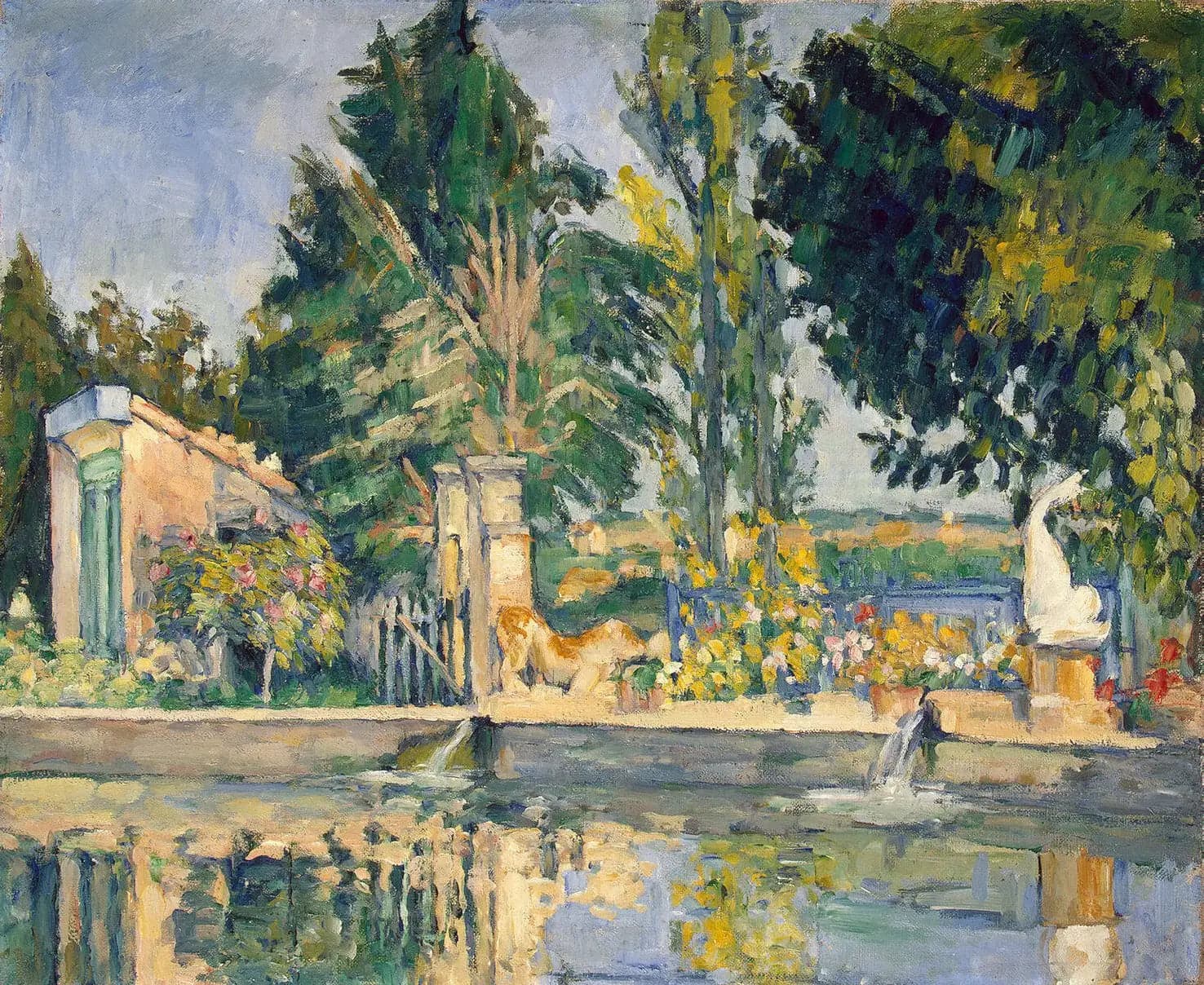
The Basin of Jas de Bouffan
- Original dimensions
- 56.3 x 46.1 cm
- Museum
- Hermitage Museum
- Year
- 1876
Scene depicted
The painting “The Basin of Jas de Bouffan” captures a tranquil scene of Provençal daily life. The reflections in the crystalline water of the basin, surrounded by lush greenery, evoke a palpable serenity. The delicate hues of the canvas reveal a dialogue between nature and man, an unprecedented harmony that characterizes Cézanne's genius.
Historical context
Created in 1876, this iconic painting was born in the idyllic setting of Provence, the cradle of Impressionism , where the shimmering colors of the landscapes inspire creativity. Paul Cézanne , a key figure of the movement, immortalizes this peaceful scene that is now housed in the Hermitage Museum . The canvas, measuring 56.3 x 46.1 cm, is a true symbol of French pictorial art.
Place in the artist's career
This work represents a turning point in Cézanne's career, a bold exploration of light and color. Alongside “Montagne Sainte-Victoire,” his iconic masterpiece, and “The Card Players,” we perceive an evolution towards progressive abstraction and a quest for emotional depth.
Anecdote
“Nature is my only muse,” said Cézanne, evoking the gentle atmosphere of a spring morning, where the magic of a landscape slowly reveals itself. Imagine the subtle light caressing the leaves and the murmur of water, these elements having inspired the artist's creative passion and brought this work to life.