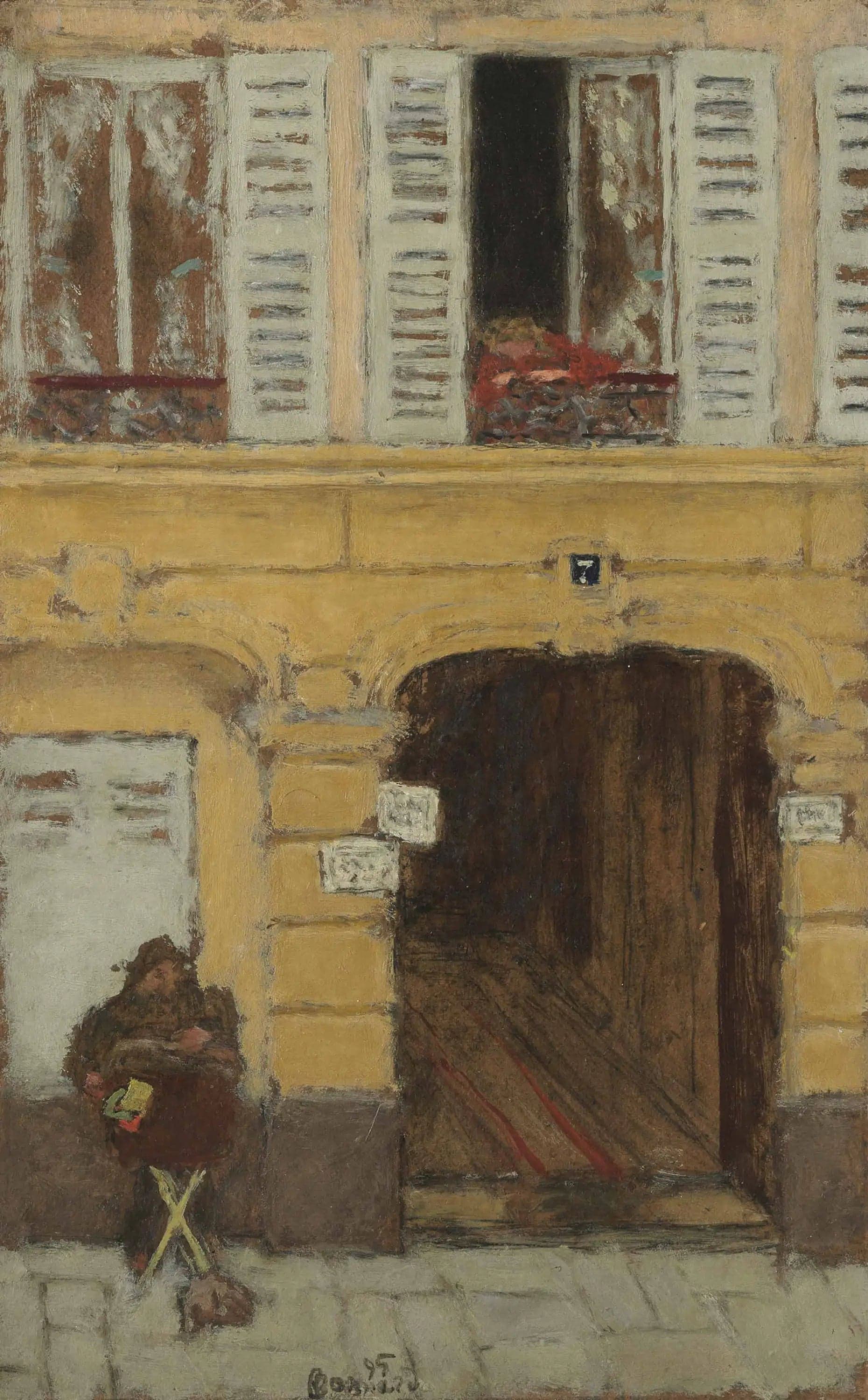
The Barrel Organ
- Original dimensions
- 26.3 x 40.9 cm
- Museum
- Not specified
- Year
- 1895
Scene depicted
In this painting , Bonnard invites us to enter a fleeting moment, where social life reveals itself in the form of an organ grinder. By playing with light and shadow, the artist represents human figures combining joy and melancholy. The vibrant colors evoke human interrelations, creating a living tableau, full of humanity.
Historical context
Created in 1895, this painting emblematic of Pierre Bonnard is set against the vibrant backdrop of the late 19th century, a period marked by the rise of the post-impressionist movement in France. This canvas , sharing its roots with the fauvist movement that values intense color and light, evokes the lively streets of the Belle Époque, where urban life unfolds in vibrant hues. Although the work is not displayed in a specific museum, its history is woven with that of Paris, where Bonnard was able to capture the fleeting moments of daily life.
Place in the artist's career
The Organ Grinder is a crucial step in Bonnard's artistic evolution, highlighting his transition from a promising young painter to an essential figure of the post-impressionist movement. Through works such as The Toilet (1896) and The Great Nude (1900), the artist explores new techniques, addressing intimacy and human psychology. This painting represents a synthesis of his ability to play with light and color, heralding the beginnings of a fascinating career.
Anecdote
“Painting is the silence of movement, the light of memories.” Bonnard, observing the magic of a spring day in the streets of Paris, drew his inspiration from the melody of surrounding sounds — the clinking of coins in the organ grinder, the smell of warm bread, and the laughter of children playing. It is this lively atmosphere that he managed to capture in his canvas , transforming these memories into a timeless masterpiece .