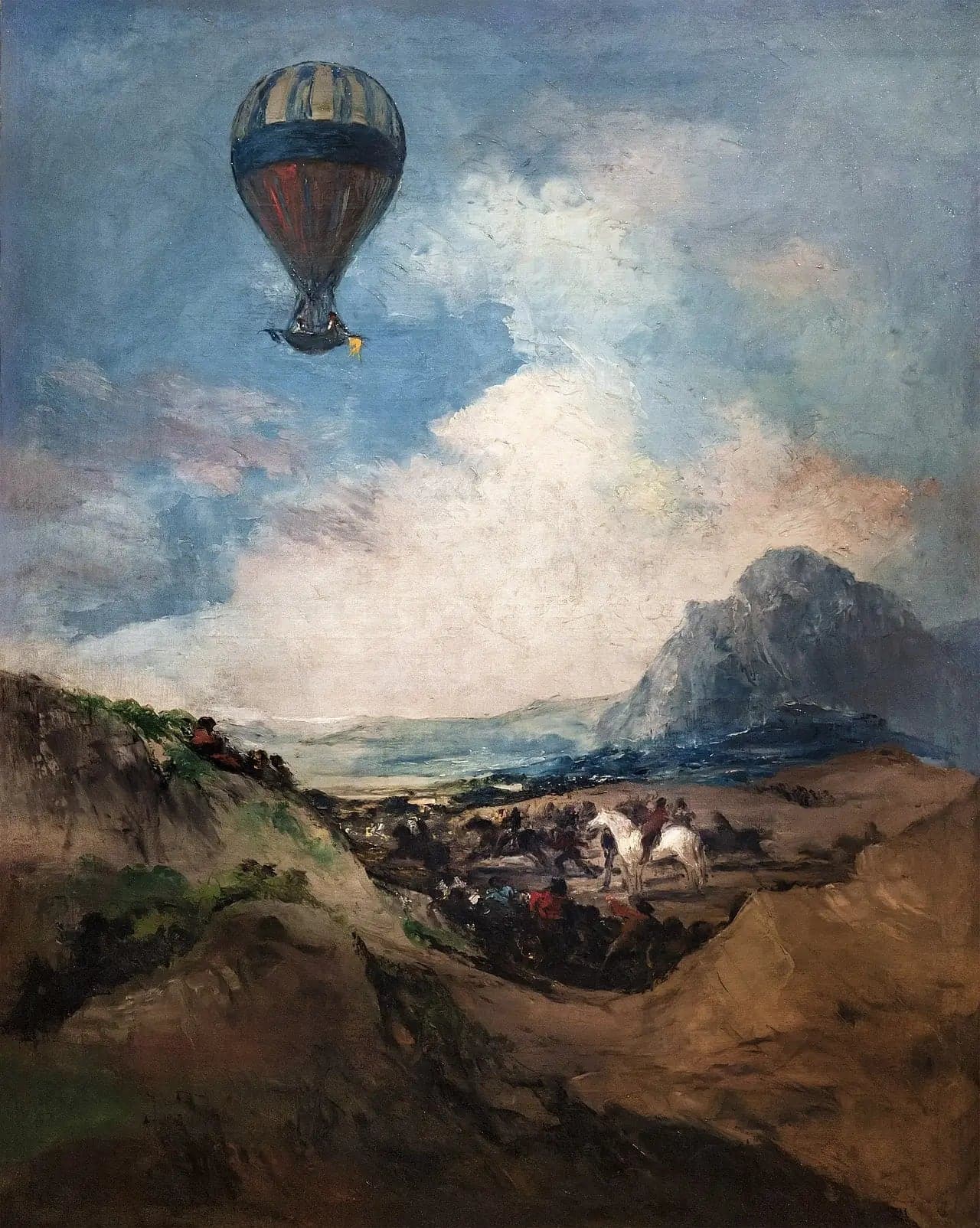
The Balloon
- Original dimensions
- 84 x 105 cm
- Museum
- Museum of Fine Arts of Agen
- Year
- 1812
Scene depicted
In The Balloon , Goya immerses us in the heart of an enchanted scene where children, in awe, indulge in the simple pleasures of childhood. The balloon, a symbol of lightness and freedom, rises into the sky, while laughter and cries of exultation resonate around this pictorial work. This canvas evokes not only joy but also a sweet nostalgia, representing a carefree and innocent time.
Historical context
Created in the heart of Spanish artistic effervescence, in 1812, The Balloon is an iconic painting by Francisco de Goya , one of the masters of Romanticism . In the charming Museum of Fine Arts of Agen, this captivating canvas is rooted in a time when sociopolitical turmoil resonated in art. This painting , measuring 84 x 105 cm, bears witness to a period when Goya asserted his unique style, leaving an indelible mark within the artistic movement.
Place in the artist's career
The painting The Balloon stands at a turning point in Goya's career, characterized by a desire to capture the human soul through his works. In parallel with his other masterpieces like The Colossus and The Naked Maja , it illustrates a technical-emotional evolution, moving from social critique to the exploration of childhood joy. Goya, during this period, achieves a balance between gravity and lightness, tracing universal emotions in his compositions.
Anecdote
“Art is a reflection of human emotions,” said Goya, inspired by a fleeting moment of wonder. Imagine him, one spring morning, walking through the bustling streets, observing this joyful scene of children playing with a balloon. This painting captures that fleeting lightness, immortalizing a moment of pure happiness in a vibrant composition.