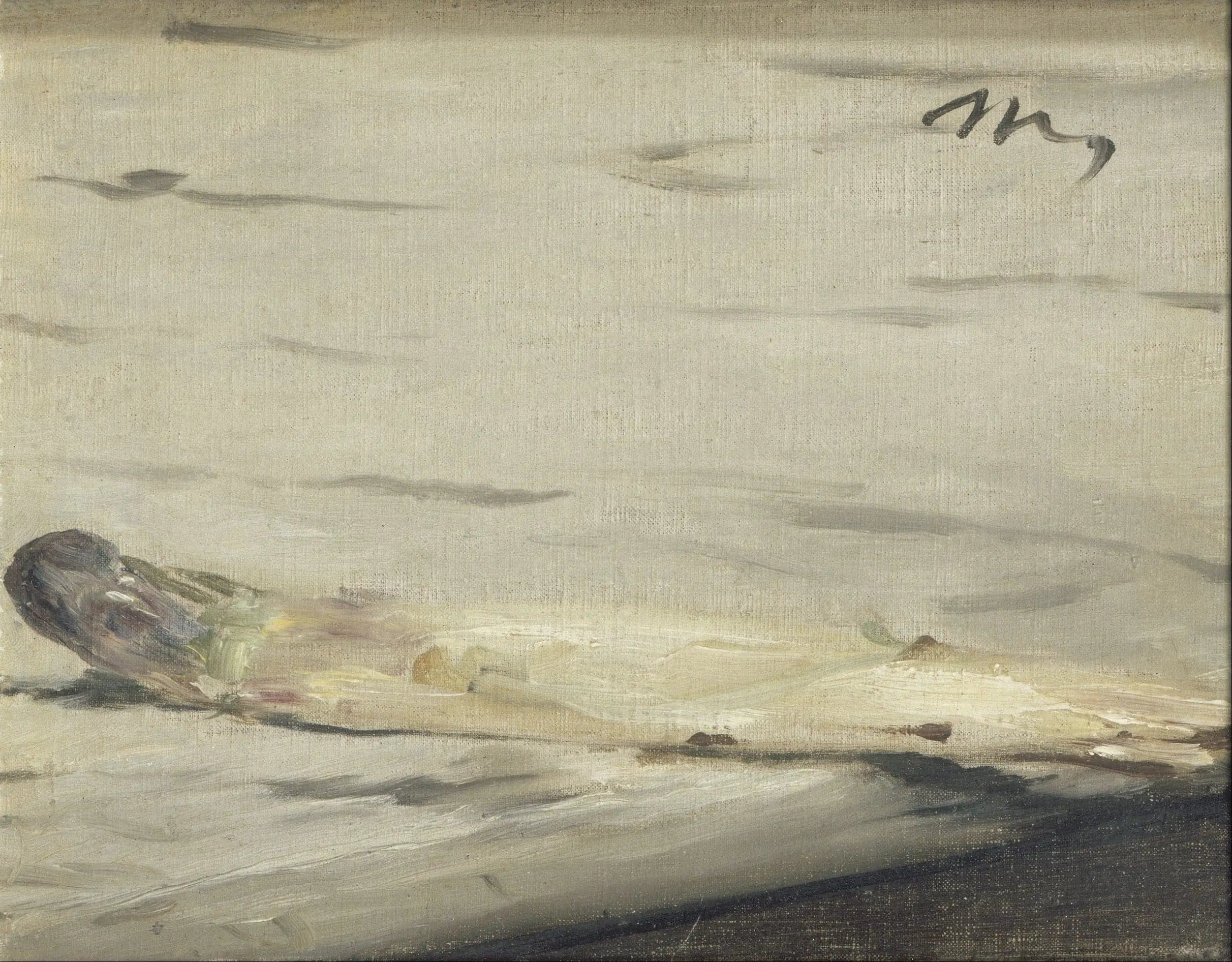
The Asparagus
- Original dimensions
- 210 x 160 cm
- Museum
- Musée d'Orsay
- Year
- 1880
Scene depicted
This canvas is a celebration of nature and indulgence. Manet chooses to depict a basket of asparagus, symbolizing the simple pleasures of life. The soft light that caresses the vegetables evokes a feeling of freshness and authenticity, transporting the viewer to the heart of a vibrant Parisian market.
Historical context
This painting , created in 1880, is located in Paris, the artistic capital of France, at a time when the Impressionist movement is flourishing and redefining the norms of art. Manet, a pioneer of this era, captures a scene that is both simple and rich in details. Currently, the canvas is displayed at the Musée d'Orsay, the cradle of masterpieces from the 19th and 20th centuries.
Place in the artist's career
With The Asparagus, Manet offers us a glimpse of his artistic maturity. This canvas stands alongside iconic works such as “Luncheon on the Grass” and “Olympia,” illustrating his technical and emotional evolution. Here, he juggles between realism and impressionism , offering a composition that is both modern and timeless.
Anecdote
Édouard Manet once declared: “The magic of art lies in the evanescence of a moment immortalized on canvas.” Imagine him, a sweet spring morning, observing fresh asparagus at a bustling market, inspiring this masterpiece so evocative. It is this moment of simplicity and beauty that the painting beautifully renders.