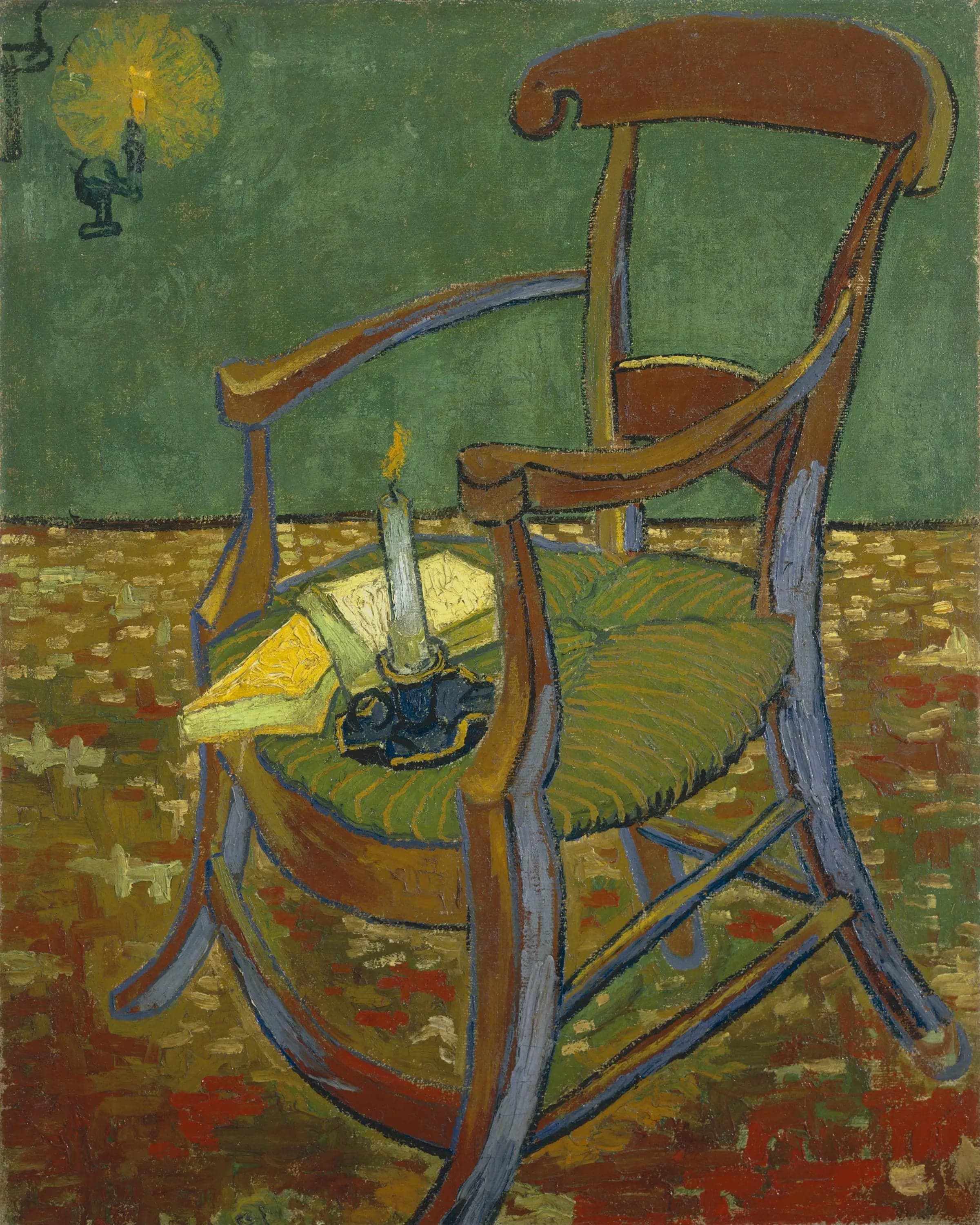
The Armchair of Paul Gauguin
- Original dimensions
- 72.7 x 90.5 cm
- Museum
- Van Gogh museum
- Year
- 1888
Scene depicted
The canvas “Le Fauteuil de Paul Gauguin” depicts a simple yet emblematic chair, a symbol of Gauguin's presence, witness to moments of creativity and contemplation. It is a poignant composition that evokes absence and introspection, questioning the viewer about materiality and spirituality.
Historical context
Created in the south of France, in Arles , in 1888, this painting is emblematic of the Impressionist movement. It immortalizes a moment of intimacy and reflection, characteristic of the period when Van Gogh sought to express emotion through color and texture. Today, this canvas is located at the Van Gogh museum , a treasure in the heart of Amsterdam.
Place in the artist's career
This painting is part of a major transitional period in Van Gogh's career, reflecting an impressive development of his style. It juxtaposes with other masterpieces such as “ Starry Night ” and “The Sunflowers ,” where the play of color and emotional intensity take a prominent place, marking his artistic evolution.
Anecdote
“I aspire to see the soul of things, even in a simple chair,” Van Gogh might have said as he gazed passionately at this masterpiece . It was a spring morning when the soft lights of Arles danced on the canvas, inspiring the artist to create this pictorial work full of warmth and color. This quote perfectly illustrates the depth of his commitment to his art.