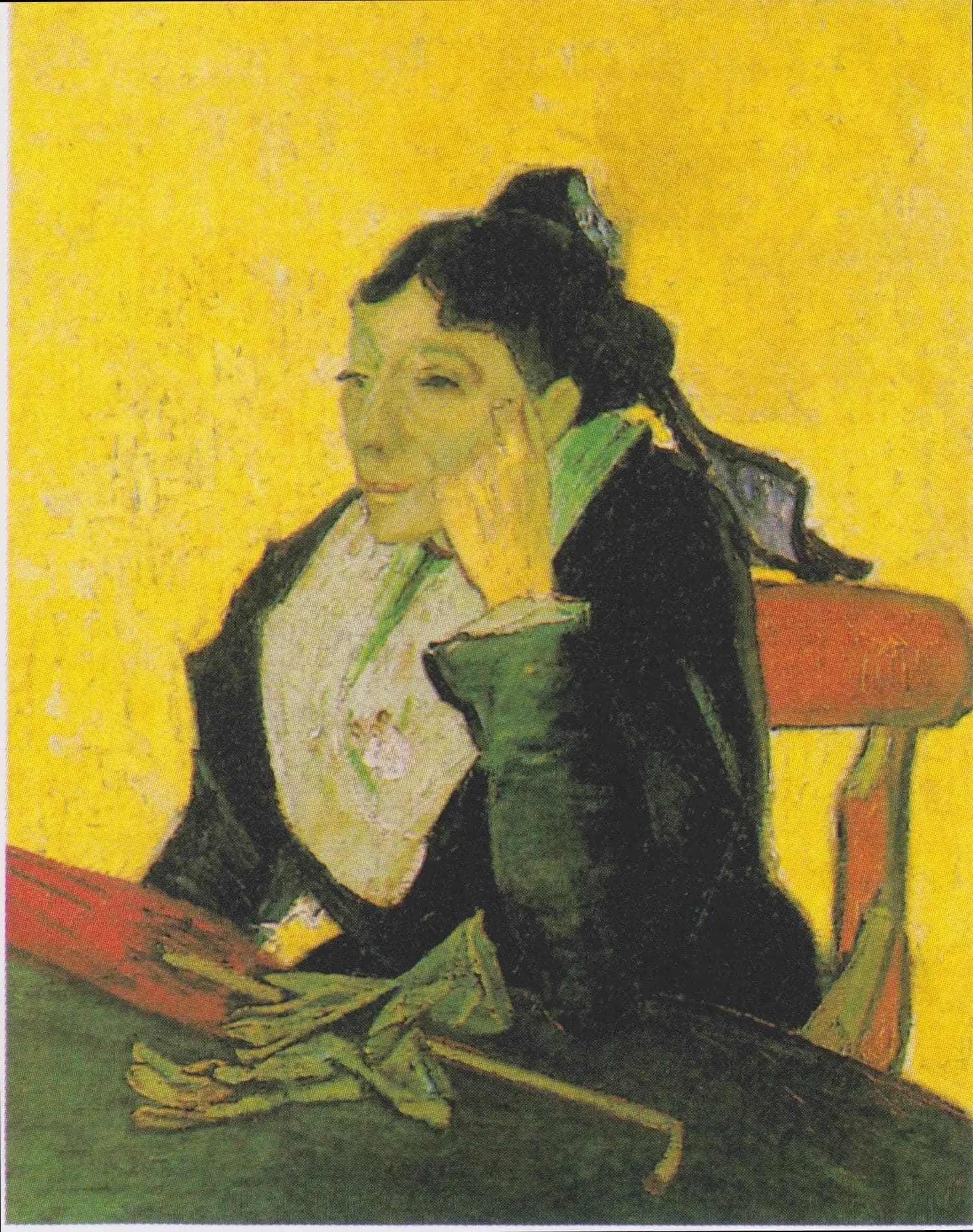
The Arlesienne
Scene depicted
In L'Arlésienne , Van Gogh captures the essence of a woman, a metaphor for the beauty and tensions of life. Her posture and expression convey a mix of melancholy and inner strength. This painting reflects not only a physical portrait but also an unprecedented emotional dive, revealing the delicate interconnections between art and the human soul.
Historical context
Created with passion in 1888 in Arles , this iconic canvas belongs to the post-impressionist movement. L'Arlésienne delicately depicts the contrasts of an era where the light of southern France endlessly fascinated artists. Currently exhibited at the Orsay Museum , this painting measures 74 x 93 cm.
Place in the artist's career
Situated in a pivotal period for the artist, L'Arlésienne represents a milestone of creativity. It lies between The Sunflowers , showcasing colorful exaltation, and The Starry Night , where one perceives the culmination of a profound existential questioning. This painting thus serves as a bridge between the various emotions that inhabit Van Gogh throughout his work.
Anecdote
Vincent van Gogh , in his creative surge, once declared: “True art is the reflection of the soul.” Perhaps on a sunny morning, where the melodious song of birds resonated in the alleys of Arles , the idea for this painting sprouted in his mind. Each brushstroke on this canvas then evokes the strength and depth of the life surrounding him.