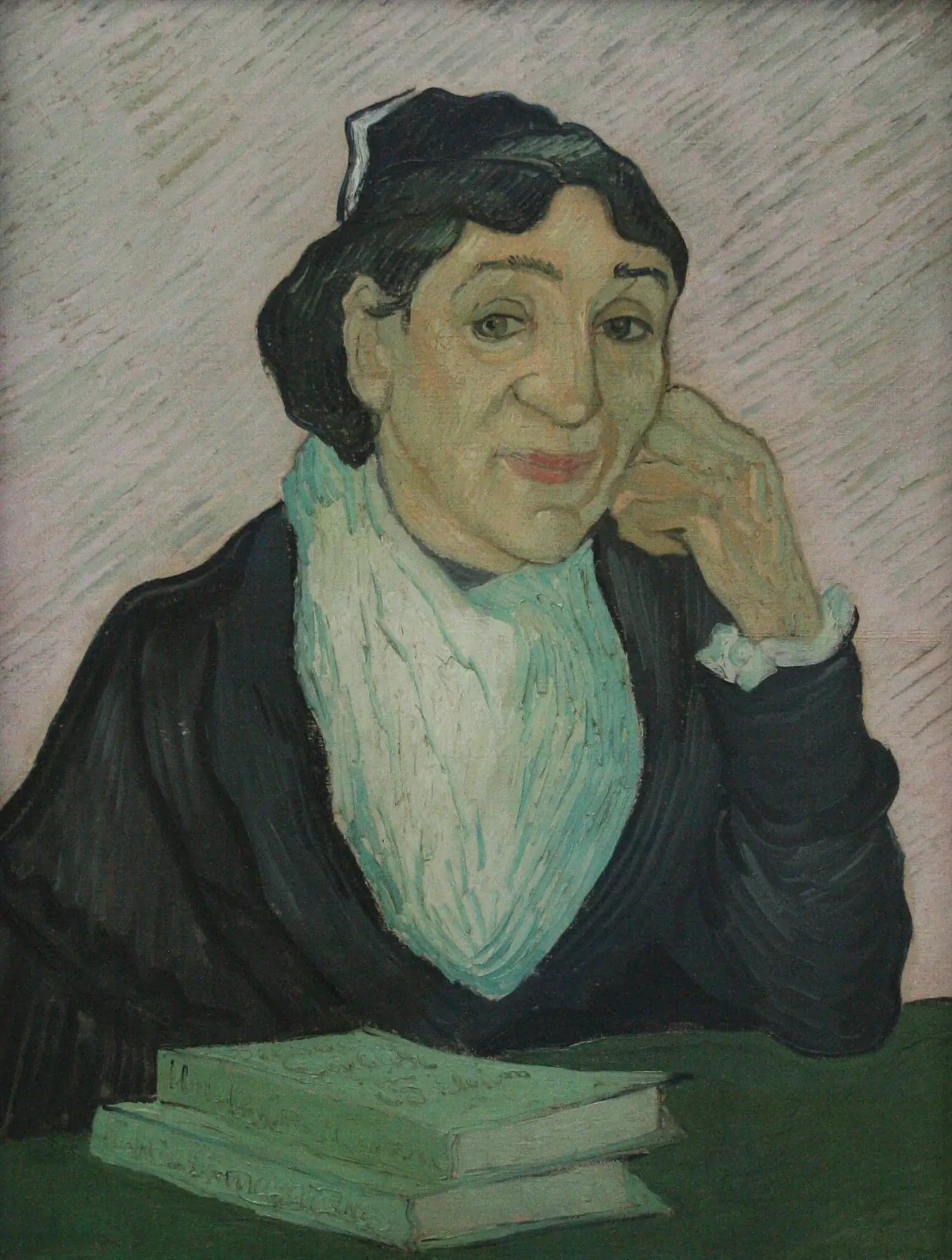
The Arlesienne
Scene depicted
In this composition, Van Gogh presents us with a woman in traditional costume, immersed in her thoughts, as if she were the very symbol of the Provençal soul. The work conveys a gentle melancholy, a luminous introspection, reflecting the experiences and aspirations of her contemporaries.
Historical context
Created in 1890 in Saint-Rémy-de-Provence , L'Arlésienne is an emblematic work of the post-impressionist movement. This painting finds its roots in the heart of Provence, a region where Van Gogh was able to capture the light and warmth of a vibrant era. Currently, this masterpiece is preserved at the Kröller-Müller Museum , and its dimensions are 47 x 63 cm.
Place in the artist's career
L'Arlésienne is part of Van Gogh's artistic maturity, illustrating an evolution marked by his chromatic and emotional quest. Alongside it, paintings like The Sunflowers and The Starry Night testify to this evolution, oscillating between passion and turmoil, but always enveloped in that unique light.
Anecdote
“Painting is the echo of my thought,” said Van Gogh, thus evoking the genesis of L'Arlésienne . Inspired by a chance encounter in an alley in Arles , the artist was able to transcribe the emotion of a fleeting moment, a spring morning, where the light gently caressed the faces and surrounding landscapes.