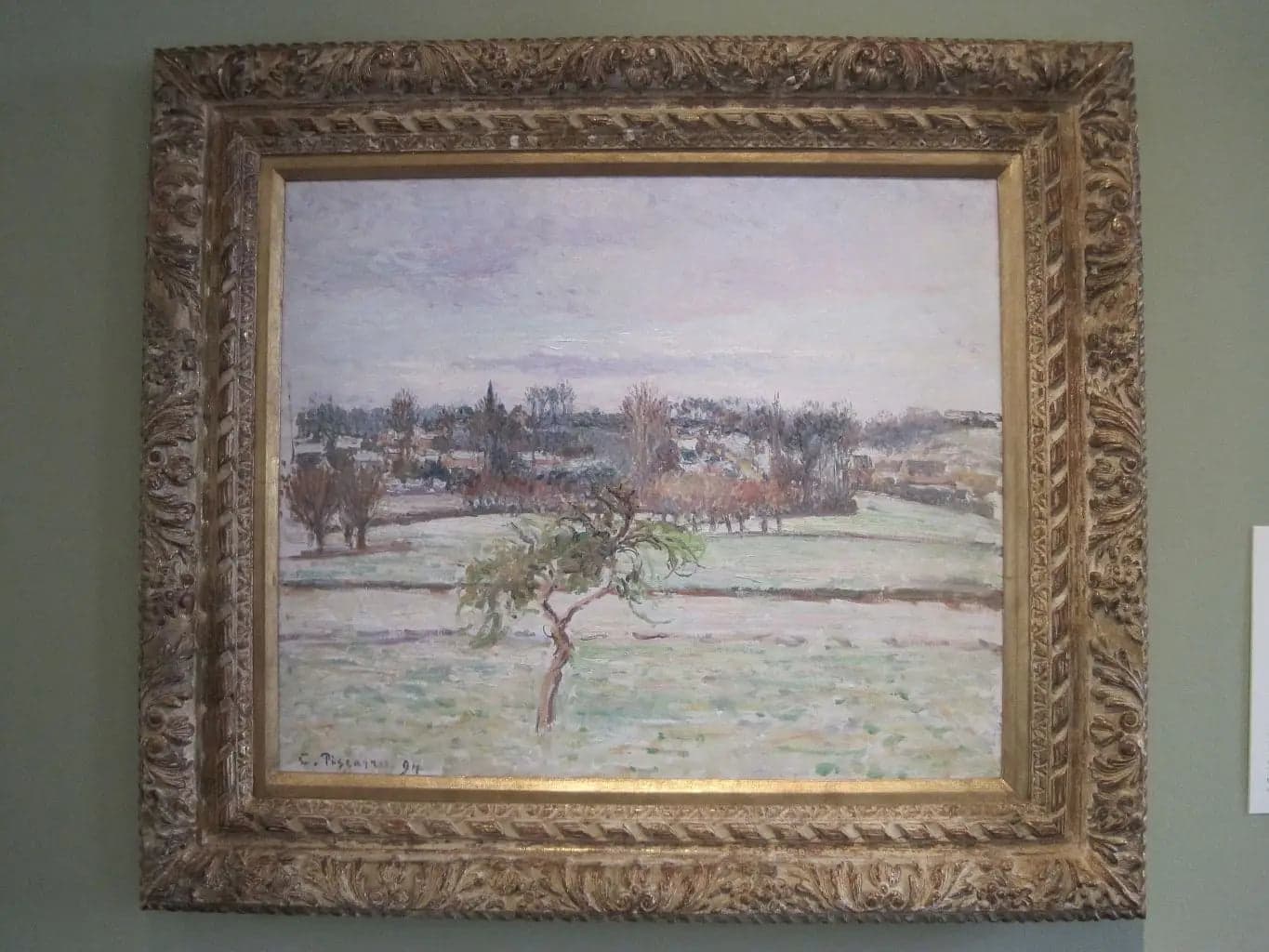
The Apple Tree, Snow Effect at Éragny
- Original dimensions
- 65 x 54 cm
- Museum
- Dixon Gallery and Gardens
- Year
- 1894
Scene depicted
This painting offers a poetic vision of an apple tree laden with snow, bathed in soft, diffused light. The branches, weighed down by winter, create a living tableau where each snowflake seems to dance. The intimacy of the scene invites the viewer to imagine the sweet scent of fresh snow, while the almost palpable silence draws the soul towards a deep serenity.
Historical context
Created in 1894 in the charming village of Éragny, this painting is part of the Impressionist movement that celebrates nature and changes in light. In the heart of France, this iconic piece captured by Pissarro not only showcases his exceptional talent but also embodies the essence of a time when art opened up to sensory perception. Today, this canvas finds refuge at the Dixon Gallery and Gardens, where it continues to fascinate visitors with its captivating dimensions.
Place in the artist's career
The Apple Tree, Snow Effect at Éragny, stands as a significant work in Pissarro's career, illustrating a period when he focused on the evolution of light and seasons. Compared to his other canvases , such as "The Apple Harvest" and "Boulevard Montmartre, Spring," this composition shows his technical refinement in plein air painting, while palpably conveying the emotion transmitted by each brushstroke.
Anecdote
Pissarro once stated: "Light is everything in painting." This sentiment inspired him one winter morning in Éragny, when the delicate cold mixed with the softness of snowflakes created a mystical atmosphere. It is in this ambiance that the masterpiece was born, awakening the emotions of passersby in the face of nature's ephemeral beauty.