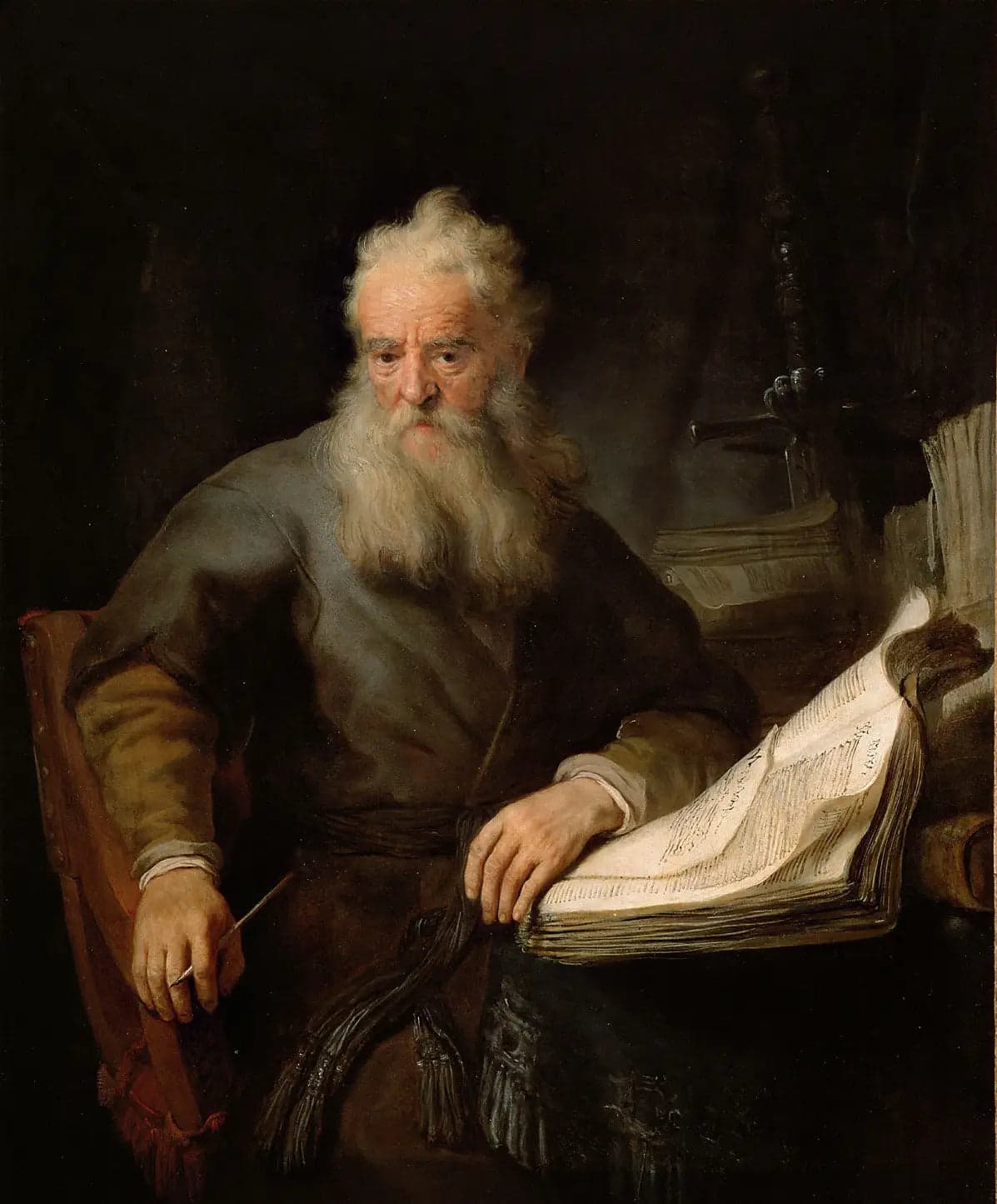
The Apostle Paul
- Original dimensions
- 112 x 137 cm
- Museum
- Museum of Art History in Vienna
- Year
- 1633
Scene depicted
In this pictorial work, Rembrandt immerses us in a crucial moment in the life of the Apostle Paul, capturing his spiritual intensity and determination. The canvas illustrates his conversion on the road to Damascus, a monumental turning point in the history of Christianity, where divine light and humanity meet, merging reality and the transcendent.
Historical context
Created in 1633, this painting is emblematic of a time when baroque dominated the European artistic scene. Rembrandt , based in Amsterdam, captured the spiritual essence of his time through a composition rich in details and emotions. This canvas currently resides in the Museum of Art History in Vienna, bringing a touch of light and history to this vibrant city.
Place in the artist's career
This painting is a milestone in Rembrandt's career, representing a period of artistic maturity. Alongside The Night Watch and The Anatomy Lesson of Dr. Tulp , “The Apostle Paul” shows a marked evolution in his technique and approach to human emotions, connecting light and shadow with unparalleled mastery.
Anecdote
“Light is the soul of painting ,” is said to have confided Rembrandt to a friend one sunny morning in Amsterdam. It is this deep connection with light that inspired the creation of the masterpiece “The Apostle Paul.” The artist observed the inspired face of a scholar in a quiet alley, where dawn broke the silence to envelop the scene in a golden warmth.