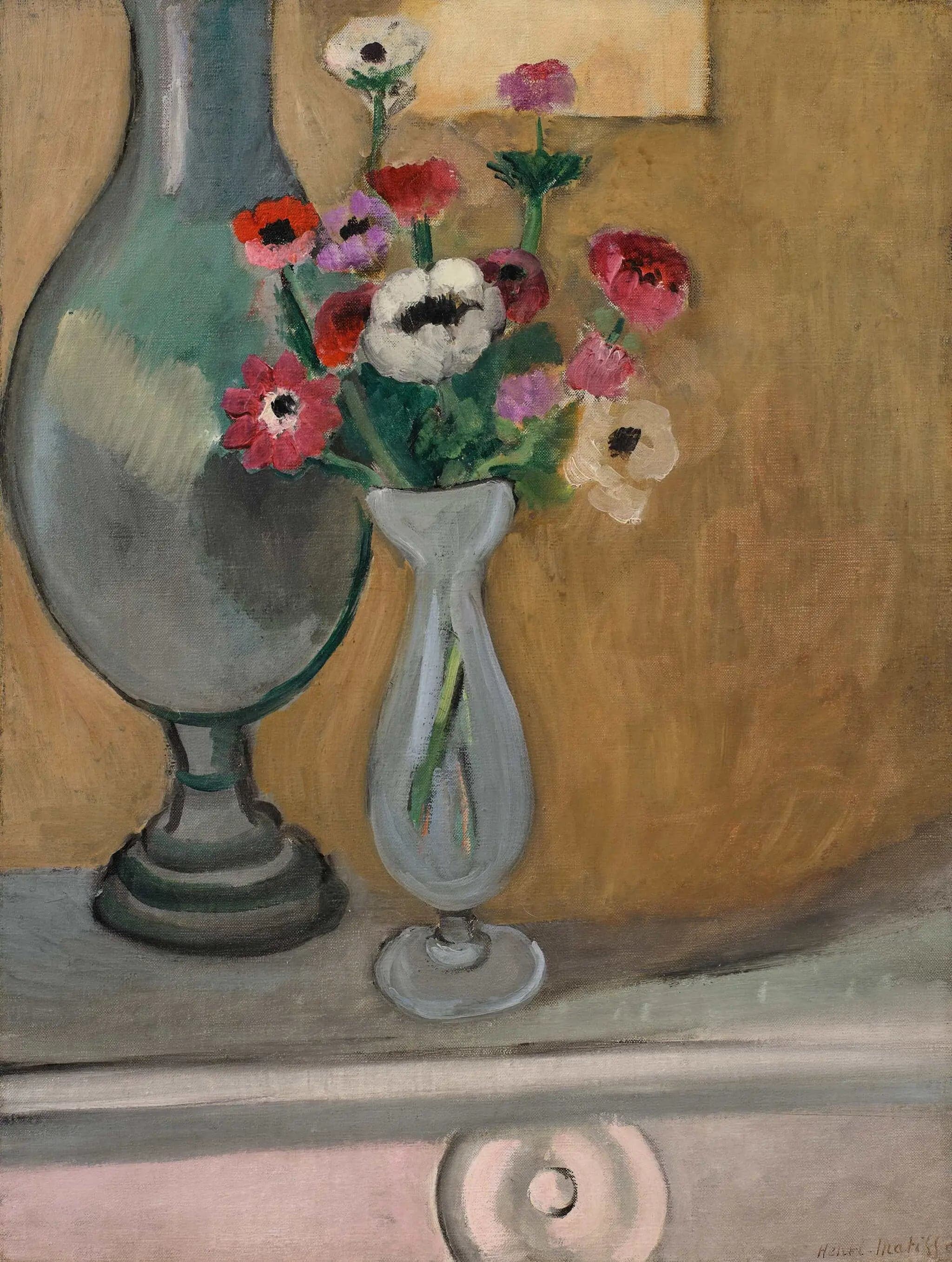
The Anemone Bouquet
- Original dimensions
- 47 x 61.6 cm
- Museum
- Not specified
- Year
- 1918
Scene depicted
The scene depicted in The Bouquet of Anemones is a celebration of nature, where each shape and color of the canvas interacts with light. The anemones, with their rich palette of red, blue, and purple, present themselves to the eye in a skillfully constructed arrangement. Matisse manages to capture the vibrant energy of these flowers, transcending simple floral representation to create a sensory experience, almost musical, a pictorial work that dances on the canvas.
Historical context
Created in 1918, the painting The Bouquet of Anemones is set in the dynamic framework of the city of Nice, then a true artistic refuge for Matisse. This masterpiece represents an enriching period of his journey, at the heart of Fauvism , a colorful and expressive movement that shook the pictorial art at the beginning of the 20th century. This canvas bears witness to a certain lightness, a lyrical escape at a time when the world was troubled by war. The star is currently in a private collection, where it is carefully preserved.
Place in the artist's career
The Bouquet of Anemones represents a key stage in Matisse's career, illustrating his growing mastery of colorism and composition. This painting is part of a series of famous floral compositions, where one can also mention The Dance and The Music, marking stages of his stylistic research. With this painting , Matisse reaches a peak, radicalizing his approach by giving primacy to color over form.
Anecdote
“The beauty of nature requires awake eyes to grasp it,” Matisse reportedly said during the creation of this masterpiece . Inspiration came to him one sunny morning when the spring light illuminated the flowers arranged in a vase, the anemones vibrating with an unparalleled brilliance. This fleeting moment captured the essence of the painting , a breath of life and color transporting the viewer to the heart of floral wonder.