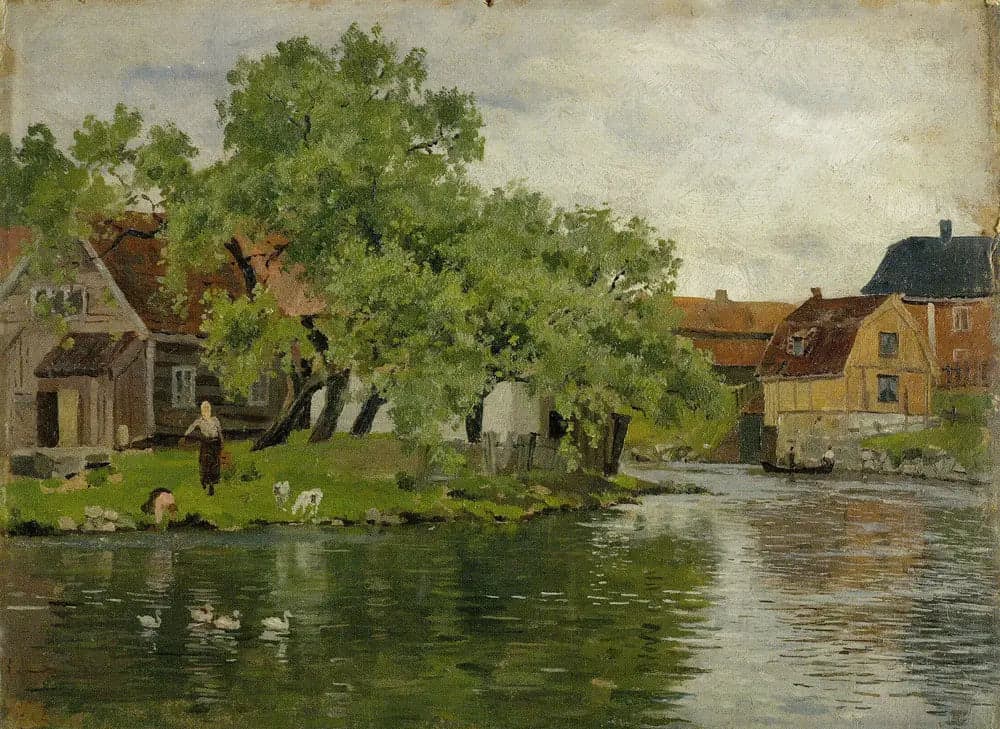
The Akerselva
- Original dimensions
- 31 x 24 cm
- Museum
- Munch Museum
- Year
- 1882
Scene depicted
The painting “L'Akerselva” immerses the viewer in a delicate landscape where the river, winding through a lush forest, whispers its secrets to us. The banks embraced by daylight reveal a moment of peace, a moment frozen in time. The symbiosis between water and greenery makes this painting a true ode to simple beauty, capable of soothing the soul.
Historical context
Created in 1882, this canvas is rooted in the vibrant artistic context of Oslo, the Norwegian capital, where Edvard Munch stands out in the expressionist movement. This painting captures the essence of the era, reflecting the turmoil and beauty of urban nature. Today, the work is housed in the Munch Museum, preserved for future generations as a testament to the emotional richness that emanates from this painting.
Place in the artist's career
“L'Akerselva” stands as a masterpiece at the heart of Munch's career, illustrating his promising beginning. Compared to works like “The Scream” and “The Madonna,” this painting reveals a stylistic evolution, moving from raw emotion to a refined yet poignant understanding of natural beauty.
Anecdote
“Nature is my greatest teacher,” said Munch. One sunny morning along the Akerselva River, the painter was struck by the golden cooking of the sun in the water. This reminiscence of tranquil beauty inspired the very essence of this painting , where each brushstroke evokes this harmony between man and nature.